You Can See It Happen
There’s a specific pause a student makes when they’re translating in their head. It’s half a second longer than a thinking pause. Their eyes go slightly unfocused. They’re not accessing the language — they’re running a translation. You’ve seen it. Every language teacher has seen it. The question most teachers ask is “how do I get them to stop?” — but that’s the wrong question. The right question is: what is actually happening in there, and why does it stop being necessary?
The phenomenon has a name in second language acquisition research: cognitive monitoring. Willem Levelt’s model of speech production describes how fluent speakers move from conceptualization through formulation to articulation without conscious intervention. In L1, this process is largely automatic — you don’t choose words so much as you find yourself saying them. In L2, especially for students who learned grammar explicitly before they had meaningful exposure, the process detours through the L1. The student has a thought, converts it to an English sentence in working memory, translates that sentence into Spanish, checks the translation, and then attempts to speak it. By which point the conversation has moved on, they’ve lost the thread, and they decide they’re “not a language person.”
The Grammar-First Problem
Traditional language instruction creates this problem systematically. When students learn a language rule before they encounter it in real use, they encode it as a rule — a cognitive procedure — rather than as a pattern. Rules require conscious application. Patterns don’t. A student who knows that ser is for permanent states and estar is for temporary ones will pause every single time to apply that distinction. A student who has heard “¿Cómo estás?” a hundred times in emotionally real contexts just says it.
Krashen’s monitor hypothesis is the research frame here, and it’s worth understanding precisely. Krashen distinguished between acquisition — the implicit, subconscious process that mirrors how we learned our first language — and learning — the explicit, rule-based process that most classroom instruction produces. The monitor, in his model, is the editor that applies learned rules to acquired output. It’s useful in low-stakes written tasks. It’s a bottleneck in live speech and in any task that requires fluency.
Students who translate in their head are over-monitoring. They’ve learned a lot and acquired a little. The translation habit is the monitor doing its job in a situation where its job is actively harmful.
Why Telling Them Not to Doesn’t Work
I’ve had students who knew they were translating. They’d even flag it mid-sentence: “Wait, I’m thinking in English.” And they’d try to stop, and they couldn’t. Because the monitor is not a habit you choose — it’s an architecture you built by learning language rules before you had the automatic forms to bypass them.
Telling a student not to translate is like telling someone with a limp not to favor their good leg. The accommodation exists because something else isn’t working yet. The fix is not willpower. The fix is building enough automatic access to the target language that the detour through L1 stops being the fastest route.
This is where most classroom interventions fail: they target the behavior instead of the cause. Speed drills, “no English” rules, pressure to respond faster — these raise the affective filter, which Krashen identifies as the single biggest barrier to acquisition. A student who is anxious about being caught thinking in English is not acquiring anything. They’re surviving the period.
What Film Does That Drills Cannot
Comprehensible input — Krashen’s i+1, language that is slightly above the learner’s current level but contextually grounded — is the mechanism for building the automatic access that makes translation unnecessary. The key word is “comprehensible.” Input that is incomprehensible produces no acquisition. Input that is too easy produces no stretch. The narrow band in between is where language is actually acquired.
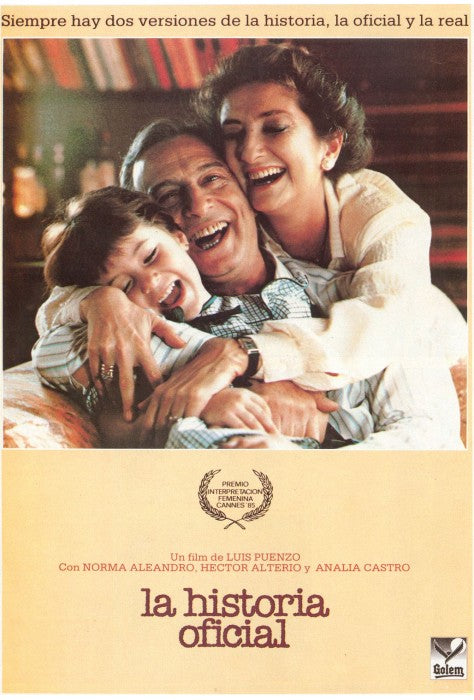
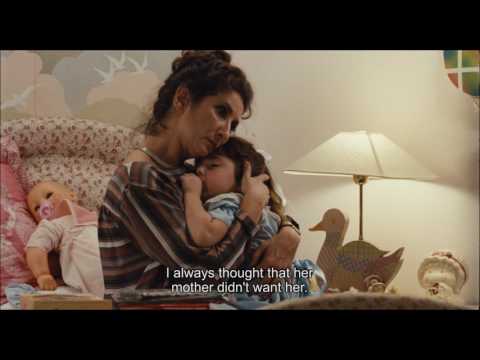
Film — well-selected film — sits in that band in a way that no other classroom tool does. When a student watches a scene where two characters argue about money and can follow the emotional arc, even if they miss individual words, they’re processing language in the context of meaning. The brain is not translating — it’s interpreting. That distinction is everything.
The research on processing fluency in bilinguals suggests that what separates an L2 user who translates from one who doesn’t is the density and emotional salience of their comprehensible input history. Students who have encountered a word or phrase in multiple emotionally significant contexts stop needing to retrieve it from a rule. It becomes available the way L1 words are available — directly, without the detour.
Three Classroom Moves That Actually Build Automatic Access
1. Repeated exposure with varying emotional register
The same construction appearing in three different emotional contexts in a film does more acquisition work than seeing it listed in a vocabulary chapter three times. “No lo sé” said by a character who’s frightened is a different acquisition event than the same phrase said by someone who’s dismissive, or someone who’s devastated. Each repetition builds a different neural association. Together, they build the pattern-density that enables automatic access.
When you’re structuring a film unit, look for constructions that recur across scenes. If a character uses a particular phrase in chapter two and again in chapter six in a completely different context, that recurrence is pedagogical gold. Flag it. Build around it. That phrase is going to stick.
2. Comprehension-before-production tasks
One of the most counterproductive instincts in language teaching is to ask for output before the input has been processed. If students watch a scene and immediately have to produce language about it, they’re translating because they have nothing else to draw from yet. Give the input time to settle. Comprehension tasks first — what did you notice? what surprised you? — before any production task that requires the target language.
This is not just good pedagogy. It’s what Nick Ellis’s implicit learning research describes: the brain needs exposure time before patterns consolidate enough to become automatically accessible. Rushing to production before exposure is sufficient produces exactly the monitor-dependent, translation-heavy output we’re trying to cure.
3. Meaning-focused speaking under low stakes
The conditions that dissolve the translation habit are exactly the conditions that Krashen describes as optimal for acquisition: low anxiety, meaning-focused, and just above the comfort level. Partner tasks immediately after a film scene — “tell your partner one thing you noticed, in Spanish, doesn’t matter if it’s perfect” — work precisely because the stakes are low enough that the monitor steps back. Students who can’t produce a sentence for the whole class will say something to a partner. That something, imperfect and unmonitored, is actual acquisition in action.
The goal isn’t to eliminate the monitor permanently — it’s to get students enough automatic access that the monitor becomes a proofreader rather than the primary engine. You want the monitor available for written tasks where accuracy matters. You don’t want it running every live speech event.
The Long Game
The translation habit doesn’t dissolve after one film unit. It takes sustained, high-quality input over time — which is why a single great film lesson matters less than a sequence of them. Each film adds to the pattern-density that makes the next one easier to process without the L1 detour.
Teachers who run film units consistently report something that the research predicts: around the third or fourth film, students start making spontaneous observations in the target language without being asked to. Not because the no-English rule finally worked, but because automatic access has started to function. The monitor is no longer needed at the front door because the house is finally familiar.
That trajectory is what film-based instruction is actually building toward — and it’s what structured lesson plans are designed to accelerate. If you’re teaching Spanish and want a unit architecture that sequences input, comprehension, and output in exactly this order, the FilmArobics Spanish lesson plans are built around this progression: from meaning-rich input through structured comprehension to low-stakes, then higher-stakes, production. The translation habit has nowhere to hide when the scaffold is right.
Until then: comprehension tasks before production tasks, meaning-focused partner work before whole-class output, and repeated exposure to the same constructions across different emotional contexts. The translation habit is not a character flaw. It’s a structural response to insufficient input. Give students enough of the right kind, and it goes away on its own.