There is a student in every advanced class who can argue about a film scene with real vocabulary and accurate verb tenses — and still sounds like they learned Spanish from a PDF. Every sentence ends. Then the next sentence begins. No connective tissue. No flow. It is grammatically correct and conversationally inert.
The research on this is actually quite clear. What we call "fluency" is not just speed or accuracy — it is cohesion. Halliday and Hasan identified this decades ago: fluent speakers use discourse markers to signal relationships between ideas. Words and phrases like sin embargo, o sea, es que, aunque, por lo tanto, al final. Not the vocabulary of topic areas. The vocabulary of thinking out loud. And textbooks, almost universally, do not teach it.
Why Textbooks Cannot Teach Discourse Flow
I have watched this gap widen every year. A student will produce a perfect present subjunctive clause and then stand there in silence, because they do not know how to start the next thought in the target language. They are not missing grammar. They are missing the connective layer that sits on top of grammar — the words that say and here is why, or but here is the complication, or which brings me back to.
The problem is structural. Textbooks organize language into topics: food, family, travel, school. Discourse markers do not belong to any topic. They belong to discourse itself — to the act of thinking and speaking simultaneously. And because they do not fit the unit structure, they tend to appear in a single vocabulary box in chapter seven, get quizzed once, and disappear.
Schmidt's noticing hypothesis gives us the theoretical explanation: for a linguistic form to move from input into the learner's interlanguage, the learner has to consciously register it. The problem with discourse markers in textbooks is that the learner sees them once, in a list, without any communicative pressure. There is nothing to notice. They are just words on a page.
What Film Does That Textbooks Cannot
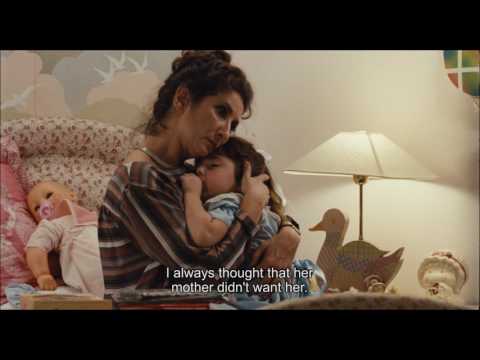
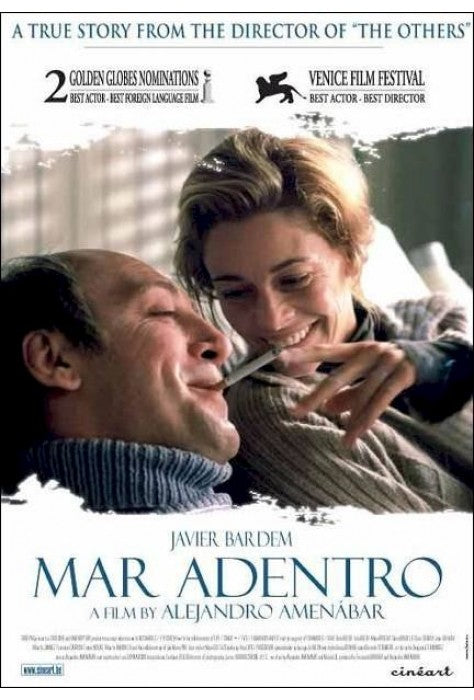
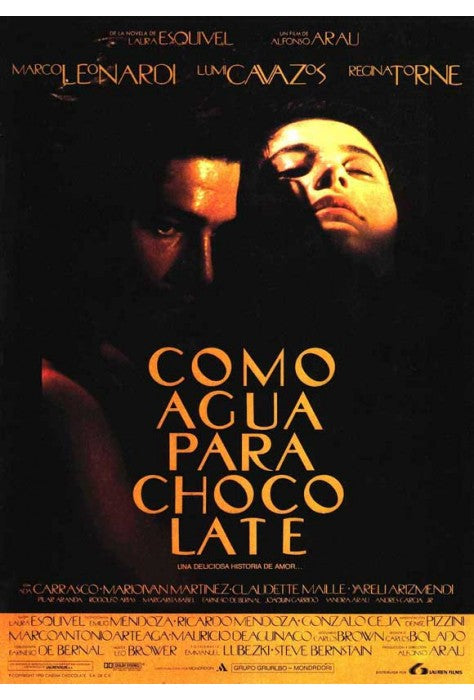
Film gives you something a textbook never can: a native speaker thinking out loud under pressure. Characters argue, persuade, backtrack, concede, and pivot — and they use discourse markers to do all of it in real time. A well-chosen scene is a discourse marker tutorial with stakes attached.
The key is what Krashen called the affective filter. When a learner is emotionally invested in an interaction — when they actually want to know what happens next — the brain is primed to process language differently. That scene where two characters are arguing about whether to leave the city, and one of them says es que no lo entiendes — that phrase lands. The student hears it. They notice it, in Schmidt's sense of the word. And then they hear it again three scenes later in a different context, and the pattern begins to solidify.
I started keeping a running tally once of how many times a single discourse marker appeared in a feature film. In one Spanish-language thriller I used with my AP class, the phrase o sea appeared eleven times. Not in a list. In arguments, confessions, explanations, deflections. By the end of the film, my students were using it — not because I drilled it, but because they had heard it eleven times in contexts where it mattered.
The Three Categories Worth Teaching Explicitly
Not all discourse markers are equally teachable, and not all of them reward the same kind of attention. After years of running film units, here is the rough taxonomy that works in class:
1. Fillers and Hesitation Markers
These are the words speakers use to hold the floor while they think: o sea, bueno, pues, este (in Mexico), beh (in Italian), ben (in French). Linguists call them pragmatic particles, and they are enormously important for two reasons. First, they signal to the listener that the speaker has not finished — they prevent interruption. Second, they are the most reliable markers of regional and social register. A student who produces pues naturally sounds like someone who has spoken Spanish in the world. A student who never does sounds like someone who has only spoken Spanish in class.
The teaching move here is simple: stop the film when a filler appears and ask students what function it is performing. Is the character buying time? Softening what they are about to say? The analysis itself is the acquisition event.
2. Contrastive and Concessive Markers
These are the structural ligaments of argument: sin embargo, aunque, a pesar de, de todos modos. Students know pero. They do not know the twelve ways to say "but" that carry different weights and registers. In any film with real conflict — which is every good film — these markers appear constantly, because characters are constantly negotiating positions.
There is a specific pedagogical opportunity in conflict scenes that I think is underused: instead of asking students to summarize what happened, ask them to reconstruct one character's argument using at least three contrastive markers. It forces them to move beyond comprehension into production, and it gives them a reason to use language they have heard but never deployed.
3. Evidential and Epistemic Markers
These signal the speaker's relationship to what they are claiming: creo que, dicen que, es obvio que, resulta que, se dice que. This is where film pulls far ahead of any textbook activity, because film gives you characters who have opinions, uncertainty, received information, suspicion. A character saying resulta que él sabía todo el tiempo is not just using a phrase — they are expressing a specific epistemic relationship to new information. That is something students cannot get from a fill-in-the-blank exercise, no matter how well it is designed.
The Practical Task Structure
The risk with all of this is that the noticing becomes the lesson — that you stop the film so often to analyze discourse markers that the emotional thread snaps and students stop caring. I have made this mistake. Period three will forgive you for stopping twice. They will not forgive you for stopping eight times.
The structure that actually works is a separation between first and second viewing. On the first pass, students watch for comprehension and emotional engagement. They are not looking for discourse markers. They are watching a story. On the second viewing — which can be selective, using specific scenes rather than the whole film — you give students a short observation task: track one category of marker. Fillers only. Or contrastives only. Not all three. The constraint is what makes the noticing sharp.
The output task that follows should require use, not just identification. A structured debate about a scene, a character's internal monologue written in the target language, a peer explanation of what just happened in the film — any task that puts students in the position of having to connect ideas will naturally demand discourse markers. The students who have noticed them have something to reach for. The students who have not will feel the gap themselves, which is often the best teaching moment of all.
The Deeper Payoff
Input processing theory, developed by VanPatten, suggests that learners tend to process meaning before form — they grab content words first and let grammar and function words wash past them. Discourse markers sit in a difficult zone: they are high-frequency, but they carry meaning that is relational rather than referential. Students' brains have to be trained to track them, and that training requires repeated, emotionally salient exposure in contexts where the meaning of the marker actually matters.
Film is the only classroom tool that provides that. A well-structured film unit does not just build vocabulary and grammar. It builds the connective tissue of language — the part that makes a student sound like a person rather than a learner. That is the payoff that shows up months later, when a student in a conversation stumbles toward the right contrastive marker because they heard it eleven times in a film they actually cared about.
If you are looking for ready-made lesson plans built around authentic Spanish-language films — with structured pre-film, during-film, and post-film tasks that include exactly this kind of discourse-level language work — take a look at the FilmArobics Spanish line. Every plan is designed around the film's actual language, not a generic worksheet dropped on top of it.