The Student Who Knows More About the Culture Than You Do
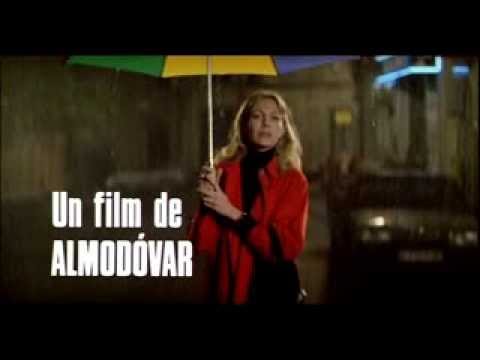
It happens, and if you teach long enough it happens more than once. You are running a French film unit, you set up the context — Paris in the 1980s, certain neighborhoods, certain social tensions — and a student in the third row raises her hand and says, quietly but clearly: "That is not really how it was."
She is right. You know she is right. And every other student in the room just watched you get corrected in your own classroom.
The question is not how to prevent this. You cannot, and you should not want to. The question is what you do next — because the next thirty seconds determine whether that moment becomes your worst class story or your best teaching one.
The Research Case for Not Pretending You Know More
Moll, Amanti, Neff, and Gonzalez coined the term "funds of knowledge" in the early 1990s to describe the cultural and intellectual resources that families — particularly immigrant and working-class families — carry and transmit. The research finding, replicated across dozens of studies since, is not subtle: classrooms that draw on those funds produce stronger engagement and stronger outcomes. Classrooms that ignore them lose a real resource and often lose the students who hold it.
Language classrooms have a specific version of this problem. The teacher is, by professional identity, the language authority. The textbook validates that authority. The curriculum validates it. And then a student walks in who has actually lived in the country, or whose parents go back every summer, or who grew up speaking the language at home — and the authority structure is immediately complicated.
What the research does not say, but every experienced teacher knows: the student who corrects you is usually trying to help. She is engaged. She cares about accuracy. She wants the class to have real information. That is not a discipline problem. That is a pedagogical resource showing up with its hand raised.
What Actually Happens in the Room
Here is the honest version of what I have seen go wrong. Teacher gets corrected. Teacher gets defensive, even slightly — maybe says "well, that is one perspective" in a tone that closes the door. Student reads the room, does not raise her hand again. The class loses the most culturally informed voice in it for the rest of the unit. The teacher finishes with less accurate cultural content than she started with.
Here is what can go right. Teacher gets corrected. Teacher says: "Tell me more about that." Student explains. Teacher asks: "Can you watch that scene again with that context in mind and tell us what you are noticing?" Suddenly the student with direct cultural knowledge is doing what Vygotsky would recognize as expert-guided participation — except she is the expert. The class follows her, not the teacher, through the cultural layer of the film. And they remember it, because it was real.
Film Makes This Easier to Navigate Than Anything Else
Here is why film is the right medium for this specific challenge: the film is the shared object. The teacher is not the source of truth. The film is. When a student says "that is not how it was," the next move is to go back to the film together — not to defend a lecture, not to revisit a textbook reading, but to look at a scene and ask: what are we each seeing? What are we each bringing to it?
Krashen's affective filter framework is usually applied to the anxious student who shuts down under pressure. But the filter runs both ways. A classroom where the teacher is visibly comfortable with not knowing everything — where expertise is distributed, where the student with lived experience is genuinely valued — is a classroom where the affective filter drops for everyone. Students who thought their outside knowledge was irrelevant start offering it. The class gets richer.
The teacher who handles correction well in a film discussion is modeling something that has a name in SLA research: interactional competence. The capacity to navigate language and meaning-making with other people across asymmetries of knowledge. That is a skill students need. Watching a teacher demonstrate it in real time — saying "I do not know that as well as you, teach me" — is more powerful than any lesson plan about how to handle not understanding.
Four Moves That Turn This Into Your Best Class
Appoint the Expert
If you know you have a student with direct cultural expertise before the unit starts, give her a role. Not in a tokenizing way — not "as our student from Mexico" — but as a cultural consultant for specific scenes. "Can you watch this sequence and flag anything that strikes you as accurate, inaccurate, or complicated?" This legitimizes her knowledge before anyone has to correct you, and it distributes the cultural authority visibly from day one.
Build in the Comparison Task
Before the film, ask students to write two or three things they know or expect about the culture from their own experience or background. After the film, revisit. Where did the film confirm? Where did it complicate? Where did it get it wrong? This task structure means that student knowledge is always on the table — not waiting to emerge as a correction, but invited as comparison data from the start.
Treat Corrections as Comprehension Events
When a student corrects cultural content, the response that works best is curious and specific: "What in this scene is giving you that impression?" or "Can you point to where it breaks down for you?" This moves the correction from the register of evaluation — the teacher was wrong — into the register of analysis — the film is doing something we should examine. That is a much more productive place to be, and it validates the student's knowledge without making the moment about anyone's authority.
Say It Out Loud
There is no more powerful sentence in a classroom than "I do not know that as well as you do — can you help me understand it?" Said genuinely, once, it changes the social dynamics for the rest of the unit. Students who have been editing themselves start contributing. The student who corrected you becomes an ally rather than a complication. You lose nothing. You gain a co-teacher who knows things you do not.
The Honest Part
This is not comfortable every time. There is a version of the correction where the student is testing you rather than helping you, and reading that distinction in the moment takes practice. There is also a version where the correction is itself incomplete — the student's family experience of life in one city at one time is real and valuable and also not the whole story of the culture the film represents.
The task is not to accept all corrections uncritically. It is to treat cultural knowledge — wherever it lives, including in your students — as real evidence rather than noise. Film units, structured well, create the conditions for that kind of collaborative meaning-making. The cultural complexity is in the frame. Your job is to invite everyone in the room to look at it together.
If you are teaching film-based ESL units with culturally diverse classrooms, FilmArobics lesson plans are built around exactly this challenge — structured tasks that hold space for multiple cultural perspectives rather than flattening the film into a single reading. The ESL lesson plans are worth a look if you are navigating this in a multilingual room.