There is a specific kind of silence in a language classroom that every teacher learns to recognize. It is not the silence of concentration. It is the silence of students waiting for you to rescue them. You asked a question in Spanish. Or French. Or German. And you can feel the room collectively willing you to switch to English so they can answer properly and everyone can move on.
The moment you do, you have taught them something — not Spanish, but a rule: when this gets hard, English is coming. And they will wait for it every time after that.
Stopping translation is one of the most effective moves a language teacher can make. It is also one of the most genuinely stressful, because the first few weeks feel like cruelty. This article is about why that discomfort is worth it, what the research actually says is happening in students' heads during that silence, and how film changes the conditions enough that students stop needing the rescue.
What Happens When You Cut the Translation Lifeline
Krashen's comprehensible input hypothesis doesn't argue that difficulty is good for learners. It argues that comprehensible difficulty is good for learners — input at the i+1 level, just beyond what they can currently produce. The key word is comprehensible. When students can't understand what you're saying and there's no contextual support to help them make sense of it, the affective filter goes up. Anxiety increases. Acquisition stops.
This is why a blanket "English-only" policy without scaffolding often backfires. Students aren't avoiding English because they're lazy. They're avoiding the target language because the conditions don't give them enough to work with. When comprehension collapses, silence isn't stubbornness — it's a rational response to an impossible task.
The research from Merrill Swain on the comprehensible output hypothesis adds another layer: students don't just need input they can understand — they need output situations that push them to notice the gap between what they want to say and what they can actually produce. That noticing moment is where acquisition accelerates. But noticing requires enough comprehension to know that a gap exists in the first place. You can't notice what you can't understand.
So the question isn't "should I stop translating?" The answer to that is yes. The question is: what do you put in the gap where translation used to be?
Film Fills the Gap That Translation Used to Fill
This is the structural insight that changes how target-language immersion actually works: translation is a comprehension support. Students reach for it because they need meaning, not because they're resistant to the target language. When you remove translation without providing another comprehension support, you create a void. When you fill that void with something richer — visual context, emotional stakes, narrative momentum — the equation shifts.
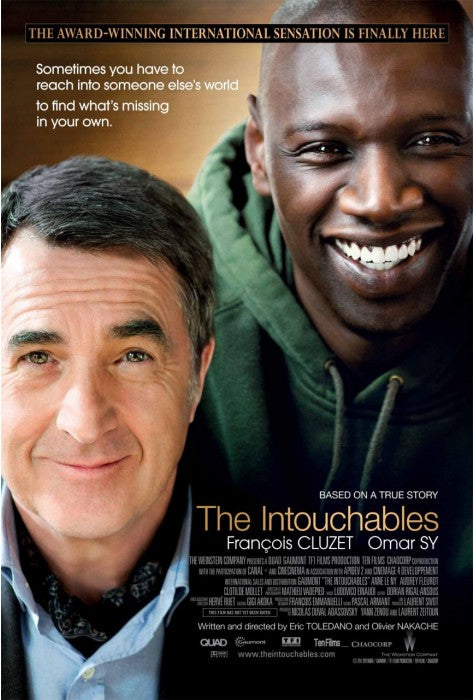
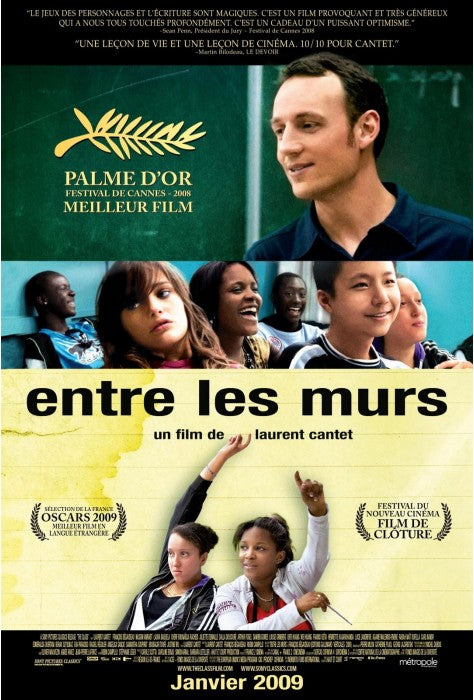
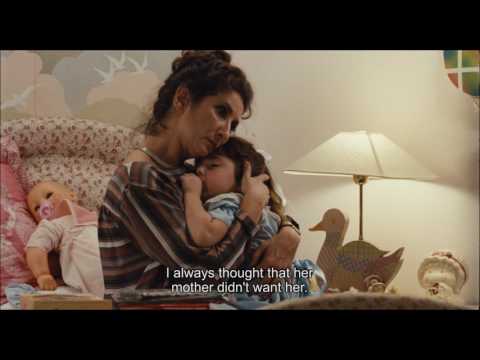
A film scene gives students access to meaning through multiple simultaneous channels. The dialogue is in French. But the faces, the setting, the body language, the narrative context they already understand from watching the previous twenty minutes — all of that is comprehension scaffolding that exists independently of the words. A student watching a scene where a character is clearly angry at someone across a table doesn't need a translation of the word furieux to understand what's being communicated. They have the whole scene.
I started noticing this about a year into doing film units consistently: students who struggled in conversation activities were significantly more fluent in discussions that were anchored to a specific scene. Not because the scene was easier, but because it gave them something to hold onto. The comprehension was already there. They could spend their cognitive energy on production instead of understanding.
The Three Weeks After You Stop
Here's what the first three weeks of cutting translation actually look like, because nobody warns you about this and it matters:
Week One: The Waiting Game
Students will wait you out. They've learned that silence produces English, and they'll test whether that's still true. This is not resistance — it's a reasonable hypothesis based on past experience. Your job in week one is simply to not rescue them. Use wait time (research suggests seven to ten seconds minimum in L2 contexts, which feels like forty-five minutes when you're standing there). Use gesture. Point. Draw on the board. Use other students to model. Do not switch to English. The silence is information — it tells you the comprehension scaffolding isn't yet strong enough, and that's useful data.
Week Two: The Functional Workarounds
Students will start developing approximations. They'll gesture back at you. They'll use the target language imperfectly but productively. This is exactly what Swain means by pushed output — students reaching beyond their current level to communicate because communication is actually required. These imperfect approximations are acquisition in progress. Do not correct the grammar. Respond to the content. The form comes later.
Week Three: The Shift
Somewhere in week three, most classes cross a threshold. The silence becomes shorter. Students start helping each other. Film discussions get longer because students have accumulated enough comprehension from the visual context that they can sustain more target-language conversation. It doesn't happen uniformly — period three on a Tuesday with the class that has three IEPs and a student who keeps asking if they can go to the bathroom is going to take longer than the honors section. But it happens.
What You Say When a Student Asks What a Word Means
This is the moment that breaks most teachers who are trying to run target-language classes: a student asks, sincerely and earnestly, what a word means. In English. Looking directly at you. The rest of the class is watching.
There are three moves here. First: act it out, draw it, or point at something in the room that illustrates it. Second: give a synonym or definition in the target language — even a simple one. Third: if neither works and the word is genuinely blocking comprehension of the whole scene, write it on the board. In the target language. With a contextual example, not a translation. This is not defeat. This is scaffolding. The difference between scaffolding and translation is whether you're building comprehension in the target language or replacing it.
What you never do is translate on demand, because the moment you do, you've confirmed that asking in English produces the English answer. The policy collapses.
Film as the Permanent Infrastructure
The reason film-based language teaching supports target-language immersion better than any other approach isn't about interest or engagement, though both matter. It's structural. The film provides a persistent, shared comprehension context that exists independently of teacher explanation in English. Students can check their understanding against what they're seeing on screen. Teachers can refer to scenes rather than explain in the L1. The visual narrative is a comprehension scaffold that never gets tired, never goes inconsistent, and never accidentally over-explains.
Krashen called this kind of richly contextualized input the ideal acquisition environment. Film doesn't just approximate it. For many students, particularly those with lower tolerance for ambiguity, it's the only environment where target-language immersion actually works without the teacher having to be superhuman.
If you're running ESL classes and looking for film units that are built for target-language immersion from the ground up — structured tasks that give students something real to work with in English, without the lifeline of the L1 — the FilmArobics ESL line was built for exactly this. Each lesson plan scaffolds comprehension across fourteen sections so teachers can stay in the target language, and students have enough support to stay there with them. Take a look at filmarobics.com/collections/esl.