The Grammar Is Perfect. The Register Is Wrong.
You know the student. She aces every assessment. Her written work is immaculate. She can conjugate in three tenses without pausing. And then she opens her mouth to speak Spanish and says something like: I desire that you accompany me to the cinema this evening.
Grammatically? Bulletproof. Socially? She sounds like a Victorian telegram.
The research on input-based acquisition has a name for this: register failure. And it is one of the most predictable outcomes of textbook-heavy language instruction. When learners get most of their comprehensible input from written materials — dialogues, grammar exercises, reading passages — they unconsciously calibrate their output to that register. Formal. Deliberate. Correct in every technical sense, and alien in every social one.
What Register Actually Is (And Why Textbooks Cannot Teach It)
Halliday's framework is useful here. Register is not just formal vs. informal — it is a complex intersection of field (what you are talking about), tenor (who you are talking to), and mode (how the language is being used). Native speakers navigate all three automatically. They know that quiero que vengas lands differently than me gustaría que pudieras venir even when both are grammatically correct subjunctives. One is what you say to your roommate. The other is what you say to your boss.
Textbooks cannot model this. They try — with formal vs. informal columns and dialogue labels like "at the office" or "with friends" — but the modeling is inert. Nobody is nervous in a textbook dialogue. Nobody is flirting, or deflecting, or choosing words because of the power dynamic in the room. The emotional and social stakes that make register legible are simply absent.
Which is exactly why film works where textbooks do not.
What Film Actually Shows
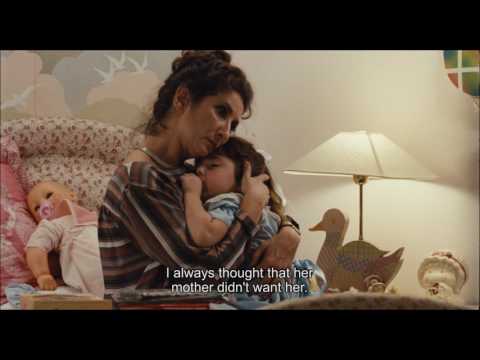
I had a junior last year — sharpest student I have had in a decade, will absolutely major in linguistics — who wrote beautiful Spanish and sounded like a university press announcement every time she spoke. We were doing a unit on a film with a scene where a mother is angry at her adult son. Not screaming — the contained, deliberate anger that is actually more frightening. The mother's language was clipped. Short sentences. Near-absent subjects. Lexical choices that landed hard precisely because she was not elaborating.
My student stopped the discussion and said: "She is not using any of the vocabulary we learned for expressing frustration."
That is the moment. That is when register instruction actually happens — when a student notices that a character who is clearly expressing something intense is doing it with words they already know, arranged in a way they would not have predicted. The gap between what she expected and what she saw was the lesson.
The Research Permission Slip
Schmidt's Noticing Hypothesis gives us the framework: acquisition requires that learners consciously register the gap between what they know and what they encounter. Input floods past without landing unless something triggers attention. Emotional salience is one of the most reliable triggers we have.
When a scene carries weight — when students actually care what happens — they pay different attention to the language. They notice the short sentence that cuts. They notice the term of endearment used with edge. They notice that the formal register a character uses when nervous shifts when they finally relax. That noticing is doing real acquisition work. The emotional stakes are not decoration. They are the delivery mechanism.
Swain's Output Hypothesis adds the other half: learners need to attempt production in order to discover what they cannot yet say. Register failure surfaces during production. The Victorian-telegram student does not know her register is off until she hears herself next to a native speaker saying the same thing more casually. Film creates the contrast she needs to hear.
Three Tasks That Teach Register Through Film
The Register Renegotiation Task
Pull a short exchange from the film — something with clear social stakes. Ask students to rewrite it for a different relationship. Same information, different power dynamic. A conversation between two strangers becomes two old friends. A tense workplace exchange becomes two siblings. Students cannot do this task without thinking hard about register — and the rewrites that land wrong tell you exactly what has not been internalized yet.
The Oddity Spot
Prepare a short transcript of a scene where one character's register is notably different from the others — more formal, more clipped, more elaborate than the moment calls for. Ask students: which line sounds wrong? Why? What does it tell you about the character? This works because register violations in good filmmaking are usually intentional — a character who sounds out of place socially is often being written that way on purpose. Students end up doing character analysis and register analysis simultaneously.
The Dub Yourself Task
Students record themselves delivering a line in three different registers — speaking to a friend, to a parent, to a teacher or boss. Same propositional content, different social positioning. Then compare to the original. This is the task that most reliably surfaces what advanced students cannot yet control: the specific lexical and syntactic adjustments that mark register shifts in the target language as opposed to their L1. The differences are always different between languages, and students are usually surprised.
For Your Advanced Learners Specifically
This work matters most for your highest students. The learner who is still building basic comprehension has other priorities. But the learner who is grammatically solid and producing correct-but-stilted language is stuck in a specific way — and usually cannot see it. Film gives them the mirror they need. Not a grammar correction. A social model. Something that shows, not tells, what fluency actually sounds like when it is working.
There is something satisfying about watching that click happen. The student who has been producing perfect formal Spanish suddenly hears a character say something in three words that she would have said in twelve, and something shifts. The goal is not just accuracy anymore. The goal is sounding like a person.
If you are working on register with advanced Spanish learners, FilmArobics lesson plans are built around authentic film dialogue — structured tasks that use the language on screen, not invented dialogue that flattens it. Worth looking at the Spanish lesson plans if you are building a unit around an advanced class.