The Two-Sentence Problem
Ask a group of language students to write about a film scene they’ve just watched — one they clearly understood, one they clearly cared about — and a predictable thing happens. Two sentences. Maybe three. Then they stop, look up, and wait for permission to be done.
The research on writing stamina in second language acquisition is unambiguous about why this happens: it is not a motivation problem. It is not a content problem. Students who have just watched a high-stakes scene in a film — an argument, a loss, a reconciliation — have plenty of content. What they lack is the language endurance to sustain written expression past the first idea they can easily encode. Stephen Krashen’s input hypothesis explains the input side of this well, but the output gap is where it gets painful: when a learner’s productive vocabulary is thinner than their receptive understanding, they stop — not because they have nothing to say, but because they’ve exhausted the forms they can deploy with confidence.
What that looks like in class is a student who understood the entire film, responded enthusiastically during discussion, and wrote two sentences.
Why Film Is Not Automatically the Fix
Here’s where most film units go wrong: they generate rich comprehension and then hand students a blank page. The comprehension is real. The engagement is real. But without a structural bridge, the writing task measures a different skill than the one the film developed.
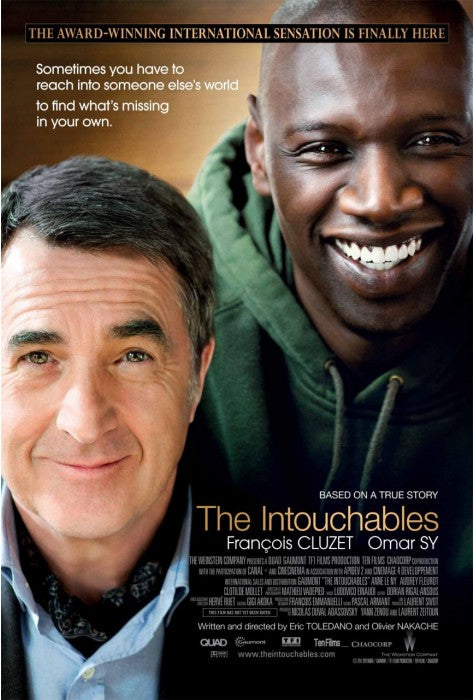
I learned this the hard way with a French class watching Les Intouchables. The scene where Philippe and Driss have the first real conversation in the apartment — students were riveted. We paused, we discussed in French, they were there. Then I said, “Now write a paragraph about what you think Driss is feeling in this moment.” Silence. Pencils tapping. Four minutes later, one student had written: “Driss est surpris. Il ne comprend pas pourquoi Philippe est riche.” She had about forty seconds worth of language for a scene that could fuel an essay.
The problem wasn’t the prompt. The problem was that I had given her content without giving her the linguistic scaffolding to spend it.
What Writing Stamina Actually Is (And Isn’t)
Merrill Swain’s output hypothesis gives us a precise frame for this. Swain argued that producing language — not just receiving it — forces learners to notice gaps in their own competence. The act of trying to write triggers what she called “pushed output”: the learner attempts to say something, discovers they don’t have the form, and is suddenly in exactly the right cognitive position to acquire it.
But pushed output only pushes if the learner has enough momentum to reach the wall. Two sentences is not pushed output — it’s output that stopped before the learner hit anything worth acquiring. Writing stamina, in SLA terms, is the ability to stay in productive mode long enough for the gaps to emerge and get filled.
Film builds content stamina automatically — students have a full narrative in their heads, with characters, stakes, and emotion. What they need is language scaffolding that matches the depth of their comprehension.
Three Structural Fixes That Actually Work
1. Pre-writing phrase banks — curated, not generic
The generic word wall does not help. “Emotions” and “feelings” written on the board before a writing task tells students nothing useful. What works is a scene-specific phrase bank: ten to fifteen constructions anchored to the scene they just watched. Not vocabulary — constructions. “Lo que me sorprendió fue…” “Aunque parece que…” “Se nota que ella quiere decir…” These are launchpads, not training wheels. A student who has five different ways to begin a second sentence will write a second sentence.
The key is that the phrases match the emotional and narrative register of the scene. A tense confrontation needs different constructions than a moment of quiet understanding. If your film unit doesn’t provide these, you’ll spend ten minutes every time improvising them at the board.
2. Timed incremental drafting
A technique I’ve used for years that actually works: instead of “write a paragraph,” try “write for three minutes without stopping — if you run out, write the same sentence again until something new comes.” Then pause, share one sentence aloud with a partner, then write for three more minutes.
This sounds too simple. It isn’t. The research on automaticity in language production — particularly work by Nick Ellis on fluency and formulaic sequences — suggests that continuous writing pressure, even brief, activates language stored at the procedural level that students don’t have conscious access to when they’re staring at a blank page. The act of writing continuously forces them past the deliberate retrieval stage. Students consistently write more in the second three-minute sprint than the first, because they’ve primed the pump.
3. The “say it differently” revision cycle
After a first draft, instead of asking students to “add more,” ask them to go back to any sentence and say it a completely different way — different verb, different structure, opposite angle. “He was nervous” becomes “You could see in his face that something was wrong” or “The way he looked at the door gave him away.”
This is not a trick — it is the core of what Swain means by pushed output. Forced reformulation makes students reach for synonyms, alternative structures, and lexical chunks they wouldn’t have deployed the first time through. Film gives them the emotional anchor for why they’d want to say a thing differently. That motivation is what distinguishes a film-based reformulation task from a grammar exercise.
The Real Problem With Writing Prompts
Most language writing prompts ask students to produce without first giving them enough productive language to sustain the task. The irony is that the richest source of productive language in the room is the film they just watched — and most units don’t mine it for the writing phase.
Character speech is a direct source of writeable constructions. If a character in a film says “No puedo creer que hayas hecho eso” in an emotionally charged scene, and students have heard that phrase with context and feeling, they can use it in writing in a way that a flashcard never enabled. The phrase arrived with meaning attached. The writing task can spend it.
This is not about copying. It is about how vocabulary and syntax enter productive use — through emotionally saturated, contextually grounded exposure. Krashen’s input hypothesis describes how this works on the receptive side. The writing task is where that acquisition becomes visible.
What This Looks Like in Practice
Here is a sequence I’ve used that actually produces writing stamina: before the film, prime students with five questions about a character situation — not about the film, just about the situation (what do you do when someone asks you for something you can’t give?). During the film, one structured pause at a key scene to note one thing a character is feeling and one thing they’re not saying. After the film, timed incremental drafting with a scene-specific phrase bank, followed by one round of reformulation.
With this structure, writing lengths roughly triple compared to a cold prompt. More importantly, the quality changes — students write about what they actually noticed, because the scaffolding tracked the film rather than running parallel to it.
A well-designed film lesson plan builds this scaffolding into every phase — pre-film, during-film, and post-film — so the writing task lands in the right cognitive and linguistic context. If you’re building that architecture from scratch every time, it’s worth knowing that structured film lesson plans exist that do exactly this work. The FilmArobics Spanish lesson plans are designed around this sequence — fourteen sections that move comprehension into production without the two-sentence collapse.
In the meantime: phrase banks that match the scene, timed sprints, and forced reformulation. Those three moves will extend your students’ writing further than any prompt revision.