The Three-Day Cliff
Ask any language teacher about the worst moment of the week, and a lot of us will say the same thing: Monday. Not because the students are difficult. Because of what happened to everything you taught on Friday.
You spent Thursday doing a beautiful scene analysis. Students were pulling vocabulary from context, using the subjunctive correctly in discussion, noticing the tense shifts in the dialogue. It felt like acquisition. Then the weekend happened, and Monday looked like amnesia.
This is not a discipline problem. It is not a motivation problem. It is memory architecture — and the research on it is blunt.
What the Research Actually Says
Ebbinghaus mapped the forgetting curve in 1885, and over a century of replication has not dislodged the core finding: without reinforcement, humans lose roughly 70% of new information within 24 hours. By day three, that climbs toward 80%. By the following Monday, you are often back near baseline.
Krashen's input hypothesis gives us one piece of the answer. Comprehensible input at i+1 — just beyond current competence but within reach — produces acquisition, not just learning. But acquisition still requires encounter, and a single encounter is rarely enough. The research on spaced retrieval, developed by Bjork and extended by Nation in the L2 context, is consistent: distributed practice across multiple time points dramatically outperforms massed practice in a single session. Three encounters with a word or structure spaced across a week produces significantly stronger retention than three consecutive encounters in one class period.
The problem is that most language classrooms are organized around units, not encounters. You do the vocabulary. Then you do the grammar. Then you move on. The brain is designed for something different.
Why Film Is Different — When It's Structured Right
Here's where it gets interesting. Film has a property that worksheets and textbook exercises do not: emotional encoding.
The research on memory consolidation — Cahill, McGaugh, and colleagues working on the amygdala's role in long-term retention — shows that emotionally salient experiences are prioritized during sleep consolidation. The brain flags them as worth keeping. A scene where a character makes a devastating choice, where the music drops at exactly the right moment, where students are genuinely unsure what happens next — that scene gets processed differently than vocabulary list item #14.
But emotional encoding alone is not enough. You still need the encounter architecture. A single powerful scene, watched once, is still a single encounter. The forgetting curve does not care how much students felt it.
What works is combining the emotional salience of film with deliberately spaced retrieval tasks. Not review for its own sake — retrieval. The difference matters. Asking students to recognize vocabulary they've seen is weaker than asking them to produce it, reconstruct a scene, or deploy a structure in a new context. Retrieval with effort is what builds durable memory.
Three Moves That Actually Compress the Gap
1. The 48-Hour Callback
Two days after any significant scene or language-heavy sequence, build a short callback task into the warm-up. Not "let's review what we watched" — something that forces retrieval. Without looking at your notes, describe what the character said when she refused to leave. Use at least two of the expressions from that scene.
The gap between Thursday and the following Tuesday is where most classroom language evaporates. A two-minute retrieval prompt on Monday — before new content lands — is structural. It cues the neural pathways that consolidation built over the weekend and keeps them active. These work best as quick writes: ninety seconds, no notes, in the target language. Students groan. Then they find out they actually remember more than they thought, which is its own small piece of motivation.
2. The Scene Return
Watch a key scene twice — not back to back, but separated. First viewing: global comprehension, emotional engagement. Second viewing, three to five days later: linguistic focus. This is not repetition for its own sake. It is a deliberately staged second encounter with the same language in a context the student already owns emotionally.
Nation's research on extensive reading vocabulary acquisition suggests that most learners need somewhere between seven and twelve meaningful encounters with a word before it enters active lexicon. Film gives you the emotional context. Spaced re-viewing gives you the additional encounters. Together, they do what neither does alone.
3. Vocabulary in a Story, Not a List
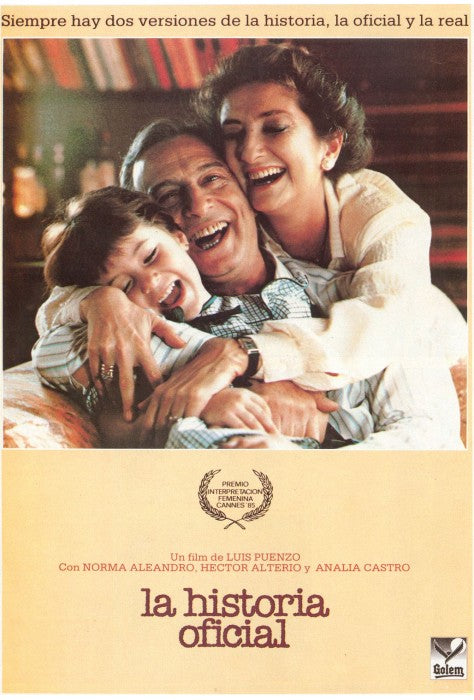
When students encounter target vocabulary woven into the narrative — character names, specific scenes, plot stakes — the word carries retrieval cues that a list entry does not. Culpa is not just "blame." It is the word from the scene where the brother stands in the doorway and says nothing. Students remember the scene and arrive at the word through it.
This is not an argument for avoiding explicit vocabulary instruction. It is an argument for anchoring it. When you pre-teach vocabulary before the film rather than after, you give students something to listen for. The scene becomes the first spaced encounter, not the only one.
What This Looks Like in Practice
A well-structured film unit is not three weeks of watching and then an essay. It is a series of staged encounters: pre-film vocabulary and prediction work, first viewing with limited tasks, callback in the next class, language focus on a second viewing, production tasks that deploy the language in new contexts, and a final output that requires students to reconstruct or extend what they've acquired.
That is not accidental architecture. It is the spaced encounter structure the research actually calls for — and it is what separates a film unit that produces acquisition from one that produces memories of watching something in Spanish.
The forgetting curve is real. But it has a known counter-architecture. Film, structured right, is one of the most powerful tools available for delivering that architecture in a way students do not experience as drill.
FilmArobics lesson plans are built around this encounter logic — pre-film, during-film, and post-film tasks spaced to create the retrieval conditions the research supports. If you're building film units from scratch and want to stop reinventing that architecture every time, explore the Spanish lesson plans here.