There is a moment every language teacher knows. You are explaining gendered nouns to your Spanish class, and a student raises their hand and says, genuinely: "But why is a table feminine?" You explain. They nod. Two weeks later, it is still wrong — not because they forgot, but because nothing in their brain had a hook for it in the first place.
This is not a comprehension problem. It is a transfer problem. And the research on it has been sitting in SLA literature since the 1950s.
What the Research Actually Says About L1 Transfer
Robert Lado's contrastive analysis hypothesis established the framework we're still working inside: the difficulty of learning a new language feature is proportional to how different it is from the learner's first language. When there's a direct equivalent — say, English past tense mapping onto Spanish preterite — learners acquire it faster. When there's no equivalent at all, the cognitive work is qualitatively different, not just quantitatively harder.
Krashen's comprehensible input model layers onto this cleanly. Input can be i+1 in terms of vocabulary or complexity, but if a grammatical concept has no L1 schema to anchor to, even perfectly level-appropriate input can feel opaque. The learner isn't failing to comprehend — they're missing the mental filing cabinet the feature needs to live in.
More recent work by Nick Ellis on emergentism makes this explicit: grammar isn't stored as rules, it's built from patterns of use over time. If a learner's L1 never required them to track grammatical gender, tense aspect, evidentiality, or case, there's no pattern-detection system in place. You can't accelerate that with more explanation. You need more encounter, more context, more meaningful use.
The Classroom Version of This Problem
I taught a French class a few years ago with three Korean speakers, two Chinese speakers, and a mix of native English learners. The English speakers struggled with gendered articles — but the struggle was manageable. The Korean and Chinese speakers? An entirely different category of confusion. Not because they were less capable. Because Korean and Chinese have no grammatical gender, no article system, and a radically different relationship between word order and meaning.
When I explained that "le" and "la" weren't interchangeable based on meaning but based on the noun's grammatical category — a category that doesn't correspond to anything natural or logical — I watched three students have the same look. Not confusion. Incredulity. Like I'd told them the table was angry.
The temptation is to explain harder. Find a better analogy. Draw a chart. But the research doesn't support that. What it supports is exposure — massive, contextualized, emotionally salient exposure — until the pattern builds itself.
Why Film Is the Right Tool for This Problem Specifically
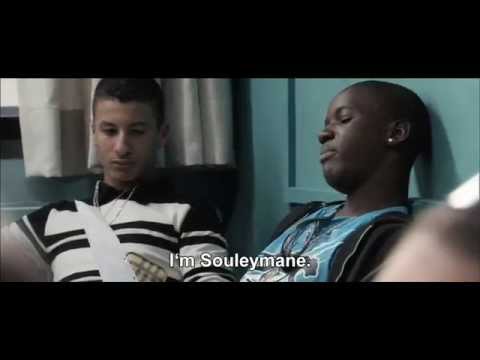
Film provides something a grammar chart never can: repeated, natural, contextualized encounter with a feature in a way that doesn't require the learner to consciously apply a rule. When a student watches an entire film in French and hears "le professeur," "la directrice," "le bureau," "la fenêtre" hundreds of times in meaningful contexts, the gender isn't being explained — it's being modeled. The pattern detection system doesn't need a rule. It needs input.
This is precisely what Krashen means when he says acquisition happens through comprehensible input, not through learning. A student who can recite the rule for German dative case but freezes in conversation has learned, not acquired. A student who has watched thirty scenes where dative constructions appear in emotionally charged moments — someone asking for help, expressing gratitude, giving directions under pressure — has begun to acquire.
The affective filter matters here too. When a student feels singled out for not understanding something that "should" make sense, anxiety rises. When they're watching a film and the same feature appears naturally, in a context they care about, anxiety stays low. The input can actually land.
Three Practical Moves for Features With No L1 Equivalent
1. Stop explaining the rule. Start saturating with examples.
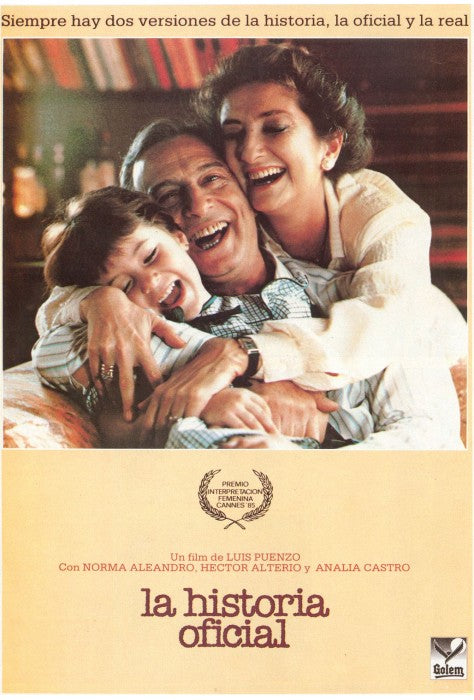
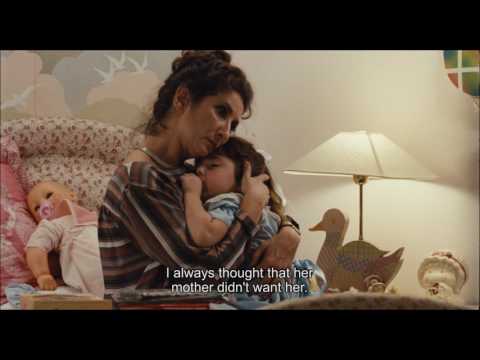
If a feature has no L1 equivalent, another explanation won't create the missing schema. What creates it is massive contextualized input. Select film scenes that are rich in the target feature. For grammatical gender in French or Spanish, that means dialogue-heavy scenes where characters reference objects, places, and people constantly. For aspect (the preterite/imperfect distinction in Spanish), narrative scenes where characters describe ongoing states while recounting past events. Let the exposure do the work the explanation can't.
2. Build a noticing task, not a comprehension task.
Schmidt's noticing hypothesis holds that acquisition requires conscious attention to form — not explicit instruction, but attention. Design a simple viewing task: students mark every time they hear a specific feature. Not to analyze it. Just to notice it's there. This primes the pattern-detection system without raising the affective filter. The question isn't "what is the rule?" but "how often does this happen?"
3. Use character consistency to build implicit categories.
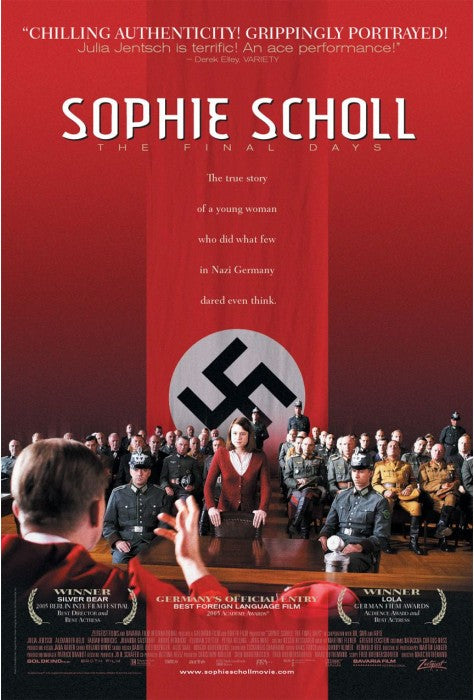
Pick one character and one recurring feature. In a German film, follow how one character uses dative constructions across every scene. Students aren't tracking grammar — they're tracking a person. But what they're building, without knowing it, is the implicit case map that no chart ever successfully installed. The character is the anchor the rule was never able to be.
What to Say to the Student Asking Why the Table Is Feminine
Tell them the truth: there is no reason. The feature doesn't correspond to anything in the physical world or in English. Their brain is going to have to build a new kind of detector, and that takes time and lots of input — not a better explanation. Then show them the film, and let their pattern-detection system do the work they're trying to do consciously.
That's not a defeat. That's pedagogy that works.
If you're looking for film units built to deliver exactly this kind of saturated, contextualized input — structured across 14 sections from pre-film to post-film — the FilmArobics ESL lesson plan library is built around authentic films with the scaffolding already designed. The input architecture is done. You bring the class.