It happens mid-lesson, usually during a discussion or a post-film activity. A student asks a question — a genuine one, a good one — and you realize the answer is going to take forty words in English and you have absolutely no idea how to say it in Spanish. Or French. Or German.
The clock is ticking. Twenty-nine other students are watching. And for a brief, excruciating moment, you are calculating: do I answer in English and undermine the target-language immersion I have been building all week? Do I attempt it in the target language and risk being incomprehensible? Do I deflect with a grammatically correct non-answer and hope they forget what they asked?
Most teachers answer in English. Then feel guilty about it for the rest of the period.
Why This Is Harder Than Anyone Admits
The research on teacher language use in the classroom is pretty clear on what the ideal looks like: sustained, comprehensible, contextually rich exposure to the target language, delivered by a speaker who can adjust complexity in real time. That is the teacher. And that is a tall order when you are also managing behavior, tracking pacing, responding to unpredictable questions, and remembering which students have IEPs.
Krashen's comprehensible input model — the foundation of most modern SLA theory — depends on learners receiving input that is slightly above their current level, structured in ways they can parse with effort. A teacher who panics and switches to English every time a complex idea surfaces is not giving comprehensible i+1 input. They are giving comprehensible i+0 input — which is comfortable but does not push acquisition forward. The zone of productive struggle collapses.
But here is the thing nobody says out loud in the methods courses: not every language teacher is operating at C2 in their subject language. Many are highly competent B2 or C1 speakers who have legitimate gaps. Others are fully fluent but freeze under pressure in ways that even native speakers recognize. The anxiety is real. And telling teachers to just "stay in the target language" without a structural solution is advice that does not survive contact with period four on a Wednesday.
What Actually Happens in the Room
There are a few patterns I have seen play out repeatedly. The first is the English-switch guilt spiral: you answer in English once, feel bad, overcorrect by refusing to explain something a student genuinely needed explained, and then have three confused kids for the next two weeks. The second is the target-language non-answer: you say something technically in Spanish that communicates approximately zero information, the student nods politely and remains entirely lost, and you both pretend it worked. Neither of these is good pedagogy.
The third pattern — the one that actually functions — is what I think of as strategic redirection. The teacher does not try to answer the question in real time in the target language. Instead, they redirect the question to the material: "Let us look at how the film handles this" or "Does anyone remember a moment where a character explained exactly this?" The answer comes from the source, not from the teacher.
This is not avoidance. It is, in SLA terms, exactly correct. The input that matters most is input from the target language environment — authentic speech, in context, with all the paralinguistic cues intact. When the teacher is the sole source of target language input, the teacher's gaps become the class's gaps. When the film is the primary source and the teacher is the guide, the class's ceiling is set by native speakers.
Why Film Restructures This Problem Entirely
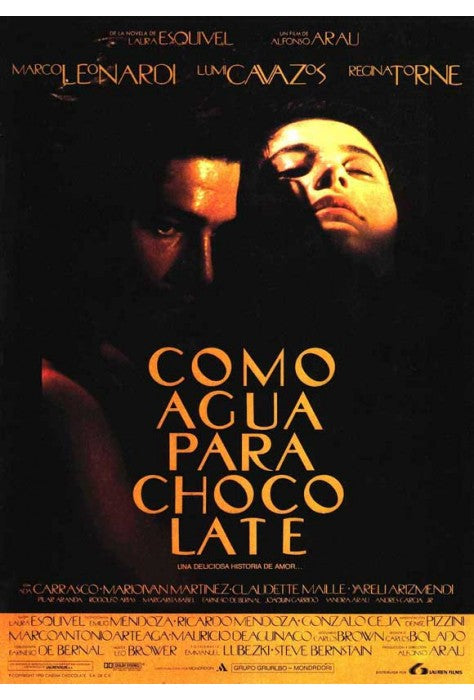
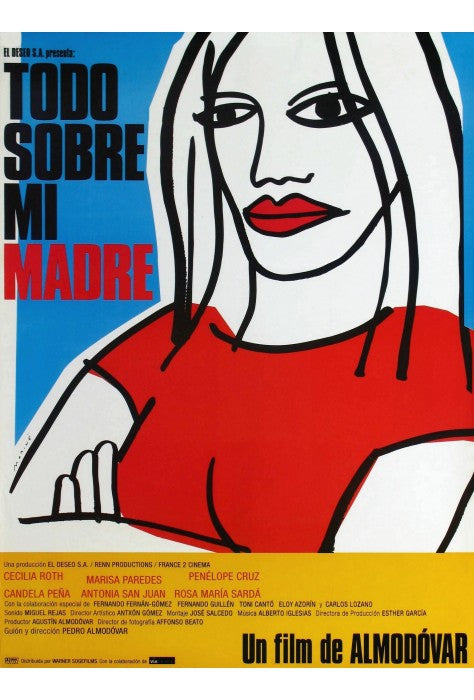
Here is what changes when you teach with a structured film unit. The primary source of target language input is not you. It is the screen. The characters in the film are fluent, affectively compelling, contextually rich, and infinitely patient about being rewatched. Your job shifts from being the language model to being the pedagogical guide — which is, ironically, the job you were actually trained for.
When a student asks a complex question, you have options you do not have in a purely teacher-delivered lesson. You can say, in simple target language: "Let us return to that scene." You can replay thirty seconds of film that answers the question better than you could. You can put the student in the position of researcher: "Watch the next scene and see if the character addresses this." The complexity lives in the film. You curate access to it.
This is not a workaround for teacher limitations. It is better pedagogy full stop. Research on input quality consistently shows that learners benefit more from varied, naturalistic input than from a single speaker's version of the target language, however fluent that speaker may be. The teacher who says "let us see how a native speaker handles this" is not admitting weakness — they are modeling the most important habit a language learner can develop: going to the source.
The Practical Fix
Build a Small Toolkit of Redirect Phrases
Develop five or six target-language phrases you are completely comfortable with that redirect student questions to the material. Yours will be different from mine, but the inventory looks something like: "Interesting question — let us see what the film shows us," "What does the character say when she faces this same situation?", "I want you to hold that question and watch the next scene — I think it answers you." These are all comprehensible, all in the target language, and all pedagogically honest. They also train students to treat the film as a source of information, not just entertainment.
Normalize the Written Bridge
For questions that genuinely require explanation — grammar clarifications, cultural background, vocabulary precision — have a written bridge ready. A brief note on the board in the target language, translated underneath. You are not abandoning immersion; you are using literacy to support oral comprehension, which is itself an evidence-based strategy for intermediate learners. The shame is not in the English gloss. The shame would be leaving a student genuinely lost because you were performing fluency instead of teaching.
Let the Lesson Plan Carry the Load
The best structural solution to this problem is a lesson plan designed to anticipate and answer the questions students are likely to ask — before they have to ask them. Well-designed film-based materials build cultural context, vocabulary, and grammatical scaffolding into the pre-film and during-film phases precisely so that mid-lesson comprehension crises are less frequent. The lesson does the explaining; you do the guiding.
If you are currently writing all of this yourself — building the scaffolding from scratch for every film — that is where the energy drain is. FilmArobics lesson plans are built to carry this load for you: 14 structured sections that do the anticipatory work so that the questions your students ask during the film are questions the lesson has already positioned them to answer themselves.
The Bigger Point
The question a student cannot answer in the target language is not a failure of immersion. It is a diagnostic: they have reached the edge of what the current scaffolding supports. A well-built film unit extends that scaffold continuously, so the edge keeps moving outward. The teacher's job is not to be a perfect language model. It is to build an environment where the language can do its own work.
You do not have to be fluent in every register of the target language to be a great language teacher. You have to be skilled at curating the input that is. That is a different, more achievable, and arguably more important job.