May Is a Different Country
If you've been teaching for more than two years, you know what the last two weeks feel like. The seniors have senioritis so advanced it qualifies as a clinical condition. The juniors are halfway through AP season and checking out of everything else. The sophomores have figured out that nothing from here until June is going on their transcript in any meaningful way. And you still have instruction days left on the calendar, a grade to submit, and the creeping awareness that whatever you planned in September is not going to survive contact with this room.
The question isn't whether end-of-year engagement drops. It's what to do about it without abandoning your students' language development entirely for two weeks.
The research here is unambiguous and also a little grim. Motivational research in applied linguistics — Ryan and Deci's self-determination theory, Dörnyei's L2 motivational self system — consistently shows that intrinsic motivation is the only kind that survives under low-stakes conditions. When external motivators (grades, tests, advancement) lose their teeth, the only students still engaging are the ones who find the activity itself meaningful or enjoyable. You cannot manufacture extrinsic motivation at the end of May. But you can create conditions for intrinsic engagement. And that is exactly what film is built for.
Why Film Works Specifically Here
The end-of-year slump is an affective problem more than a content problem. Students aren't failing to learn because they've hit their cognitive ceiling — they're failing to engage because their motivational reserve is empty. Krashen's affective filter goes up under fatigue, under low stakes, under the particular combination of "I survived this year and I do not care anymore." A film lowers the filter differently than almost any other classroom activity.
Narrative engagement is one of the most robust phenomena in cognitive psychology. When we're inside a story — genuinely invested in what happens next — the brain allocates attention differently. The cognitive load of processing the target language actually decreases when it's embedded in story we care about. The students who checked out in March for grammar practice will often re-engage in May for a film, because the film gives them something to want to know.
I ran a film unit in the last three weeks of school almost every year for the last decade of my teaching career, and I'll tell you honestly: those were often my best weeks of the year for actual production. Students who had been grudging participants in structured activities would suddenly be asking each other questions about the film — in Spanish, because the film was in Spanish and the characters were in Spanish and that was just the world we were in. The low-stakes window is a different kind of opportunity than we usually treat it as.
The Architecture for the Last Two Weeks
Two weeks is enough for a real film unit if you structure it correctly. Here's a sequence that works.
Days One and Two: Pre-Film
Don't skip the pre-film work just because you're tired and they're tired. The pre-film phase is where you build the schema that makes the film comprehensible, and at the end of May, comprehensibility is doing serious motivational work. Students who can follow what's happening are students who stay in the room with you.
Keep it short and high-engagement. Visuals, not readings. Character prediction based on a photo or a clip. One or two key vocabulary clusters, introduced through images rather than lists. The goal is to arrive at day three with students who know the main characters' names, have a rough sense of the setting, and are genuinely curious about what happens. That's achievable in two days.
Days Three Through Seven: Viewing
Build in pause points. Not many — three or four per hour of film is about right. Each pause should be a brief task: a prediction ("¿Qué va a hacer ahora?"), a comprehension anchor ("¿Por qué hizo eso?"), or a quick reaction in writing. These are not tests. They're keeping students anchored to the story instead of drifting. The pause-and-predict structure also does something motivationally useful: it creates a sense of forward momentum, of wanting to find out whether the prediction was right.
The during-film tasks are where many teachers improvise and many teachers lose the room. Ad hoc questions mid-film require you to be doing two things at once (watching and assessing) and result in uneven engagement across the class. A prepared task sheet — even a simple one — keeps the activity self-directed and frees you to circulate and observe rather than manage.
Days Eight and Nine: Output
Two output tasks, sequenced. The first should be lower-stakes and oral: a structured pair discussion about a specific scene, a character comparison, a moment of moral choice. Something with a clear task and a limited scope. Students are not going to write a five-paragraph essay in Spanish in the last week of May. They will talk about whether the main character made the right decision, especially if they've been watching that character for a week and have an actual opinion.
The second task can be written, but keep the frame tight. A character letter (writing to a character in the target language about what they should have done differently) is one of the most productive end-of-year writing tasks because it's personal, it has a real recipient to imagine, and it requires students to actually take a position. Swain's Output Hypothesis again: precision of meaning. A letter demands more precision than a reflection. That demand is productive.
Day Ten: Metacognition
End with something that asks students to look at their own learning. Not a test. A short piece — in English is fine for this one — where they identify three words or phrases from the film they're going to remember. This is more than a feel-good exercise. Metacognitive awareness of vocabulary acquisition is associated with stronger long-term retention (Flavell, and a fairly long line of researchers since). Students who can say "I'm going to remember this word because of this scene" are students who actually remember the word in September.
It also gives you a nice window into what actually landed. After a decade of doing this, the words my students consistently remembered were never the ones I'd planned to teach. That's the film working the way it's supposed to.
A Word About Grade Entry
The end-of-year gradebook problem is real and I'm not going to pretend it isn't. What I will say is that the film unit tasks described above are all genuinely gradeable — the pair discussion with a brief observational rubric, the character letter with a production-based analytic rubric, the metacognitive piece for completion and specificity. None of them require you to grade thirty identical essays on the same prompt. They are things students actually want to do, which means the quality of work you receive is often better than what you get in March from a motivated class doing something they dread.
That is not a small thing. End-of-year grades often drag a student's average in the wrong direction because the tasks we assign when we're exhausted are the tasks they can't take seriously. A film unit is a rare case where what's good for them is also what's good for you.
Film Is the Right Tool for the Right Window
We are sometimes embarrassed, as teachers, to admit that the end of year is different. That we're tired. That they're tired. That the normal machinery of the classroom runs on motivation that has been mostly depleted by Memorial Day. The research on motivation and language acquisition doesn't ask you to pretend otherwise — it tells you to meet students where their motivation actually lives. At the end of May, that's story. That's character. That's wanting to know what happens next.
Build your last unit around a film and you get acquisition in the window when most teachers are just trying to get through. That's a significant pedagogical advantage and it costs you nothing except a willingness to treat the end of year as an opportunity rather than a countdown.
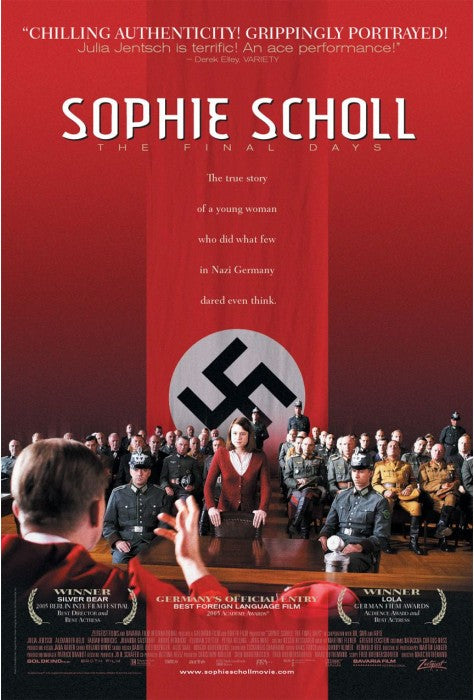
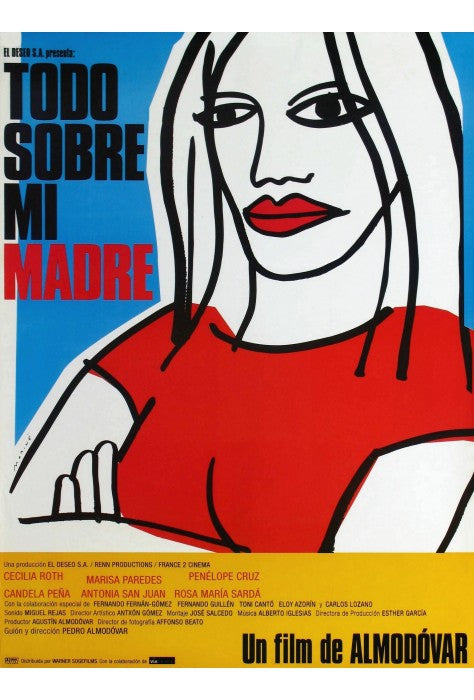
If you want a film unit that's already sequenced — pre-film, during-film, output — without building it yourself during the most exhausted stretch of the school year, the FilmArobics Spanish lesson plans give you the full structure at $29.95 per film. Pick something your students will actually watch, hand them the lesson plan, and spend the last two weeks of school watching them produce language you didn't think they had left in them.