There is a scene in almost every Italian film — and plenty of Spanish ones, and French ones — where nobody says anything. Two people sit across from each other. One raises an eyebrow. The other looks at the wall. And every Italian viewer in the world knows exactly what just happened.
Your students have no idea.
This is the gap most language teachers don't talk about because we weren't trained to talk about it. We were trained to teach what mouths do. Grammar, vocabulary, conjugation, accent. But communication is not just verbal, and the research has been saying so for decades. The question is what we do about it in a classroom.
The Nonverbal Iceberg
Krashen's comprehensible input hypothesis has always implied something most of us underweight: that input is not just acoustic. When a learner processes language in context, they are processing everything — the speaker's posture, eye contact, proximity, gesture, the speed of a shrug. Albert Mehrabian's research on communication, however misquoted it becomes, made an important point: affect is communicated largely through nonverbal channels. When learners can't read the nonverbal, they're missing the affective layer. And when they miss the affect, Krashen's other hypothesis kicks in — the affective filter rises, anxiety increases, and acquisition slows.
In other words: students who can't read the room in the target culture aren't just socially awkward. They're acquiring less language.
The research on gesture and language acquisition is consistent on this point. Ellen Bialystok's work on bilingual cognitive processing, and more recently the embodied cognition work coming out of Goldin-Meadow's lab at the University of Chicago, makes the case clearly: gesture and speech are processed together. They are not separate systems. When a learner attaches a word to a gesture they've observed — in context, in an emotionally salient scene — retention improves measurably compared to the same word presented in isolation.
This is not soft pedagogy. It's neuroscience.
The Classroom Problem
Here's the honest version of what happens in most language classrooms: we teach words. We might teach pronunciation. We test comprehension. And then we wonder why students who score an 87 on the unit test still sound like they're reading from a script when they try to have an actual conversation.
Part of the answer is that they've never been taught to listen with their eyes.
I had a student — sharp kid, studied hard, conjugations were immaculate — who came back from a month in Mexico and told me, dead serious, that nobody had understood her when she apologized for bumping into someone. She'd said perdón correctly. The word was right. But she'd said it looking directly at the person she'd bumped into, which in certain Latin American contexts reads as confrontational, not contrite. The word was perfect. The body was wrong.
That student had learned Spanish. She had not learned how Spanish-speaking bodies communicate.
Why Film Is the Only Tool That Actually Teaches This
You cannot teach nonverbal communication from a textbook. Full stop. You can list the facts — Italians gesture more, Latin American cultures have different proxemics than Northern European ones, direct eye contact means different things in different contexts — and students can memorize those facts the same way they memorize vocabulary. Which means they'll produce them on a test and forget them in the room.
Film gives you something no textbook can: the embodied, emotionally loaded, culturally situated performance of language. When a character in an Italian film does something with their hands before they speak, they're not illustrating a grammar point. They're doing what people do. Students who watch that scene — especially with structured attention — are not reading a description of gesture. They're observing human beings communicating in a culture. That's the difference.
The affective salience matters here too. A student who watches a heated argument in a Spanish-language film and notices that the angrier character actually speaks more quietly and moves closer — rather than louder and farther away, which is the English-speaking American script — will remember that. Not because they wrote it in their notes. Because it surprised them. Surprise is a learning event.
Three Structured Approaches That Work
1. The Muted Scene
Play a high-stakes scene with the audio off. Ask students to write down — in the target language, if they can; in English if they must — what they think is happening. Who has the power? Who is afraid? Who wants something? What do you know from what you're seeing?
Then turn the audio on. The gap between what they guessed and what happened is the lesson. That gap is cultural knowledge they didn't have, and now they want it.
I've run this with French films where the body language gap was relatively subtle, and with Italian films where it was enormous. With the Italian films, sophomore students who could not have told you what proxemics meant were suddenly arguing about why the character kept moving closer when the other person was clearly uncomfortable. That argument — in class, about a film — is acquisition. That's Krashen's i+1 happening in real time.
2. The Gesture Log
During a viewing, give students a simple two-column log: what did the character do with their body, and what do you think it meant? Not what the subtitle said. What the body did.
This does something important: it teaches students to watch language, not just hear it. Most students, left to their own devices, read subtitles and tune out the performance. The gesture log forces them to split their attention in a productive way. After viewing, the debrief — comparing logs across the class — surfaces the misreads, which is exactly where cultural learning happens.
3. The Reenactment with Rules
Pick a thirty-second exchange from the film. Students read the dialogue. Then they perform it — but you give them a constraint: replicate the nonverbal choices as closely as you observed them. Not the words. The distance, the eye contact, the gesture, the pacing.
This is uncomfortable for most students, which is pedagogically useful. The discomfort is the affective filter working against them. Working through it — trying to do what the character's body did — is noticing at the embodied level. That's the kind of noticing that produces durable acquisition.
Teenagers will make it funny. That's fine. Let them. The laughter is affect, and affect lowers the filter. They're still doing the work.
What to Watch For
Not every film is equally good for this purpose. The best scenes for nonverbal teaching are ones with clear emotional stakes and minimal dialogue — arguments, reunions, confessions, silences that contain something. Long expository scenes where characters explain things to each other are less useful; the body is mostly just illustrating speech. You want scenes where the body is doing its own communicating.
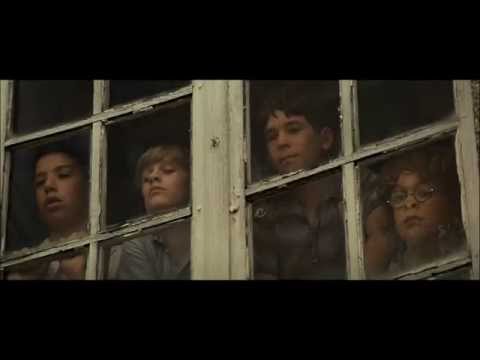
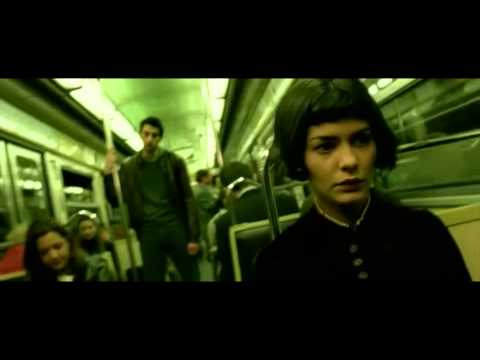
Italian cinema is particularly rich here — directors like Tornatore and Comencini build enormous emotional weight through nonverbal performance. Spanish-language cinema varies by region and director, but family drama tends to be a reliable genre. French cinema tends toward restraint, which is itself a cultural teaching point: the controlled face is not a blank face.
If you're working from a structured lesson plan, look for the during-film tasks that build in observation pauses — they're specifically designed to catch the moments that carry this kind of cultural weight. A well-designed unit should be doing some of this work for you.
FilmArobics lesson plans for Italian are built around exactly this kind of layered attention — pre-film, during-film, and post-film tasks that treat the visual language of film as seriously as the spoken one. If you've never run a unit where students are watching the hands as carefully as they're listening to the words, it's worth a look.
The body has been talking all along. We just haven't been teaching students to hear it.