It is the third week of September and you have already figured it out. The student who was building compound sentences in May is back to one-word answers. The kid who held a full conversation at the end of last year is staring at you like you are speaking a language she has never heard — which, to her nervous system, you essentially are.
Language attrition over summer break is real, it is well-documented, and it is one of the most demoralizing things a language teacher encounters each fall. You did the work. It happened. And now here you are, trying to figure out how much ground you actually lost and whether you have to reteach all of it or just most of it.
Here is what the research actually says — and here is what to do about it.
What Attrition Research Tells Us
The forgetting curve, first described by Ebbinghaus in the 1880s, remains one of the most replicated findings in cognitive psychology: without reinforcement, memory traces decay exponentially in the first few days after learning, then level off. For explicitly learned material — vocabulary lists, conjugation tables, grammar rules — this decay is steep and predictable. A student who memorized 80 words for a final exam in May will retain perhaps 20–30% of those words by September without any intervening exposure.
But here is where it gets more interesting, and more relevant to what you are dealing with right now. The research on incidental acquisition — language learned through comprehensible input rather than explicit instruction — shows a dramatically different retention curve. VanPatten's work on input processing and Krashen's distinction between acquired and learned language point to the same phenomenon: language that enters through comprehension and meaning is stored differently than language that enters through memorization. It is more robust, more resistant to attrition, and more quickly reactivated after a period of disuse.
In plain terms: the vocabulary your students drilled for the exam is mostly gone. The language they acquired through genuine communication and comprehensible input is mostly still there, waiting to be turned back on.
The September Re-Entry Problem
I have seen this play out in two very different ways in September, and the difference is almost entirely a question of how you structure the first two weeks.
In the first scenario, you spend September reviewing. You go back to the vocabulary from last year. You reteach the conjugations. You apologize, implicitly, for the summer — as if you could have prevented it and didn't. Students feel like they are failing before the year has even started. The affective filter spikes, the anxiety settles in, and some of those students decide that this is the year they stop trying.
In the second scenario, you re-enter through comprehensible input. You do not review; you reactivate. You give students language they can access — slightly below where they were in May, positioned carefully at i+1 relative to where they actually are right now — and you let the acquisition machinery warm back up. The vocabulary they genuinely acquired comes back faster than you expect. The vocabulary they memorized is gone, and you let it go, because it was never really there.
The difference in student energy between these two approaches in the first three weeks of school is not subtle.
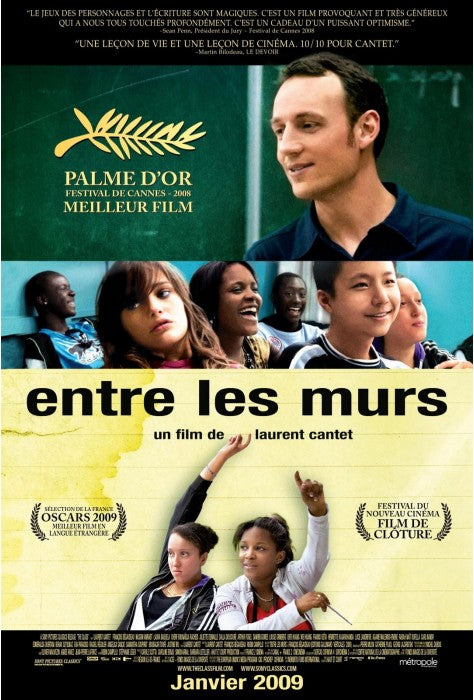
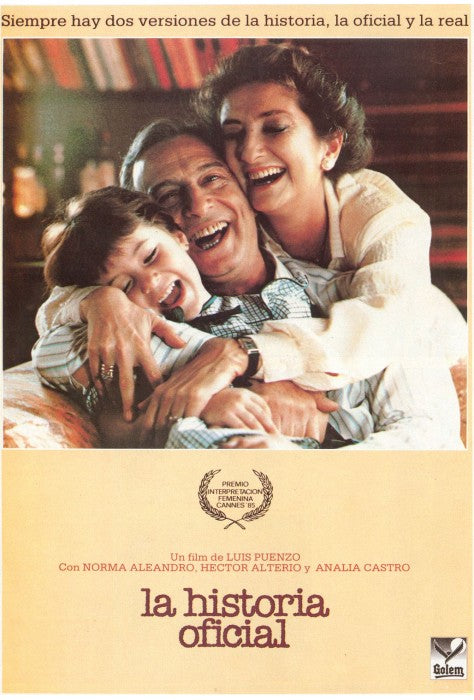
Why Film Is the Best Re-Entry Tool in September
This is not a coincidence. Film works for re-entry for the same reasons it works for acquisition in the first place — and those reasons are particularly powerful in September when the affective filter is high and the stakes feel real.
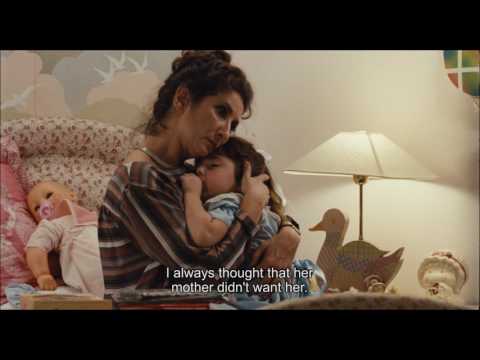
First, film provides comprehensible input with built-in contextual support. A student who cannot parse a sentence verbally can still understand what is happening from the visual context, the character behavior, the emotional register of the scene. That understanding lowers anxiety immediately. They are following the story. They are not failing.
Second, film is not associated with the testing and drilling that produced the attrition in the first place. There is no conjugation table in a film. There is no vocabulary list to memorize before Friday. There is a story, and people are speaking in the language, and something is happening that your students want to understand. That is the environment in which reactivation happens fastest.
Third — and this is the part most teachers underestimate — the emotional engagement of film actively works against the affective filter. Krashen's hypothesis is not just that low anxiety helps acquisition; it is that genuine emotional investment in the input creates the optimal conditions for it. A student who is invested in what happens to a character is not monitoring her own Spanish production. She is just following the story. And while she is following the story, the language is coming back.
What a Re-Entry Film Unit Actually Looks Like
The architecture is simpler than you might think. The goal in September is not to teach new material — it is to reactivate what is already there and establish that this year, the class is a place where language happens for real reasons.
Start with a film that is emotionally accessible and linguistically appropriate for where students are, not where they were in May. One level lower than you think you need. The goal is not to challenge them in the first week; it is to let them experience comprehension without effort, which is the fastest way to reactivate the acquisition system.
Use pre-film tasks to activate schema — the knowledge about genre, setting, and character type that students bring from their general film experience, not from the language class. This works at any proficiency level because it draws on a resource that did not atrophy over summer: the ability to watch films and understand how they work.
During viewing, keep the tasks light. Comprehension questions, not production demands. The goal is to confirm that they are following, not to extract output before the system is warm. You will get more usable language out of a five-minute discussion after a scene they understood than from a full-period production task they are not ready for.
After the first week, you will know something important: which students have substantial reactivatable acquisition and which students are genuinely starting closer to zero. That information is worth the week. It changes everything about how you plan the next eight months.
The Long Game: Designing Against the Next Summer
Here is the question worth asking now, in September, before you start planning the year's curriculum: how much of what you teach this year will still be there next September?
The honest answer, if the year is built on textbook chapters and vocabulary tests, is: not much. The honest answer, if the year builds real acquisition through comprehensible input and genuine communicative tasks, is: most of it. The attrition curve is real, but it only destroys learned language. Acquired language is far more durable.
A film-based language curriculum is not just better pedagogy in the moment. It is an investment in retention that pays out next September, when you can re-enter at a higher level instead of starting over.
If you are thinking about how to structure a film unit for re-entry this fall — or how to build the kind of curriculum that survives summer — FilmArobics lesson plans are designed for exactly this kind of deliberate, sequenced comprehensible input instruction. Each plan walks through pre-film, during-film, and post-film phases in a way that builds genuine acquisition, not surface-level recall. Browse the Spanish catalog at filmarobics.com/collections/spanish.