Here is a question worth sitting with: what percentage of a language is actually carried by words?
Linguists have been arguing about the exact number for decades, but the consensus is that somewhere between 60 and 93 percent of communicative meaning in face-to-face interaction is conveyed nonverbally. Gesture, posture, facial expression, eye contact, proxemics — the physical architecture of meaning that wraps around every spoken sentence. Albert Mehrabian's research from the 1970s put the figure famously at 93 percent for emotional communication, a number that has been contested and refined ever since, but the direction of the finding has held up: words are a minority partner in live human communication.
Now ask yourself: what does your vocabulary list teach?
The Paralinguistic Gap Nobody Talks About
There is a student — and you have taught this student, because every language class has one — who can produce grammatically accurate sentences, has good vocabulary range, reads fluently, and still sounds completely wrong in real interaction. Not wrong in the way that marks a grammatical error. Wrong in a softer, harder-to-name way. Too direct. Tonally off. Somehow using perfectly correct language to say the wrong thing.
The research category for this is paralinguistic competence, and it sits inside the broader framework of communicative competence that Canale and Swain defined in 1980. Alongside grammatical competence, sociolinguistic competence, and strategic competence, there is the full embodied layer of how language is delivered — timing, gesture, facial matching, physical proxemics — that never appears in a curriculum document but is constantly assessed by native speakers in real interactions.
Textbooks cannot teach this layer. They do not have a body. They can tell students that Spanish speakers tend to stand closer together than North American speakers, or that French formal register involves specific eye contact conventions, but knowing a fact about embodied communication is not the same as having an embodied model to observe and internalize. That requires watching a person actually do it.
What Film Provides That Nothing Else Can
Film gives students a sustained, repeatable window into the paralinguistic layer of a language, and it does so in emotionally loaded contexts where the nonverbal communication is doing the most work.
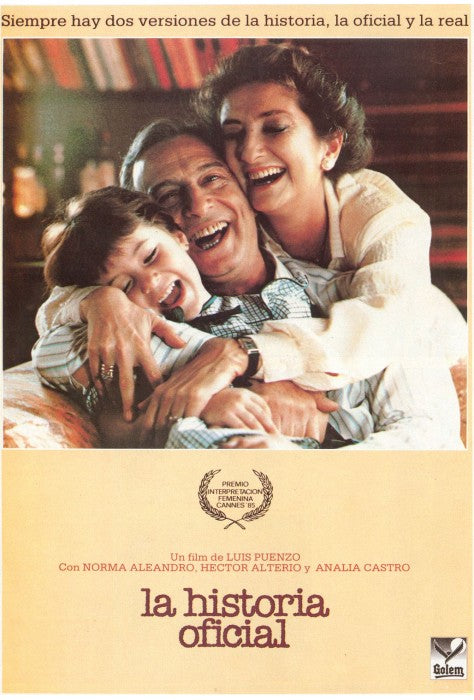
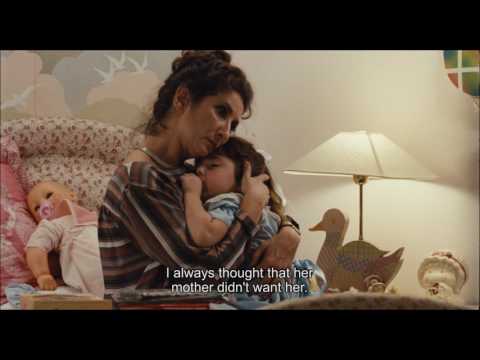
Consider what happens in a scene where two characters are arguing in Spanish. The student is tracking the vocabulary, processing the grammar, reading the subtitles. But they are also watching: the distance between the characters, the gesture that undercuts a denial, the eye contact that breaks at the moment of vulnerability, the body turn that signals a conversation is ending before anyone has said a word. All of that is comprehensible input. Krashen did not specifically mean gesture when he described comprehensible input, but the logic holds — meaning that is accessible to the learner at their current level of comprehension gets processed and retained.
Research on multimodal input in SLA — particularly work by Wagner (2010) and Sueyoshi and Hardison (2005) — shows that learners who have access to visual channel information (facial expression, gesture, body language) demonstrate significantly better comprehension and retention than those receiving audio alone. The visual channel is not a supplement to language input. It is a co-equal carrier of meaning, and for the paralinguistic layer specifically, it is the primary carrier.
Three Scenes Worth Stopping For
Not every scene teaches the paralinguistic layer equally well. The ones that do tend to share a characteristic: the nonverbal communication is doing work that the words alone cannot accomplish. Here are three types worth deliberately pausing for.
The Scene Where Characters Say One Thing and Mean Another
This is the richest territory. Two characters exchange pleasantries; the body language tells you they despise each other. Or a character agrees to something while every physical signal in the scene screams refusal. The gap between the verbal and nonverbal layers is itself the lesson. Ask students: what are the words saying? What is the body saying? Which one do you believe? This activates exactly the pragmatic attention that native speakers deploy automatically — the skill of reading below the verbal surface — and it does it in a context that is immediately comprehensible and emotionally engaging.
The Scene Where No Words Are Needed
Most good films have at least one scene that carries significant emotional weight with minimal dialogue. A look across a room. A hand gesture that changes everything. A character who walks away without speaking. Turn the audio off and ask students to narrate what is happening in the target language. This task forces attention to the visual grammar of the scene and requires students to produce language around what the body is doing — which is exactly the vocabulary and syntax that their standard instruction has probably never touched.
The Scene Where Cultural Proxemics Are Visible
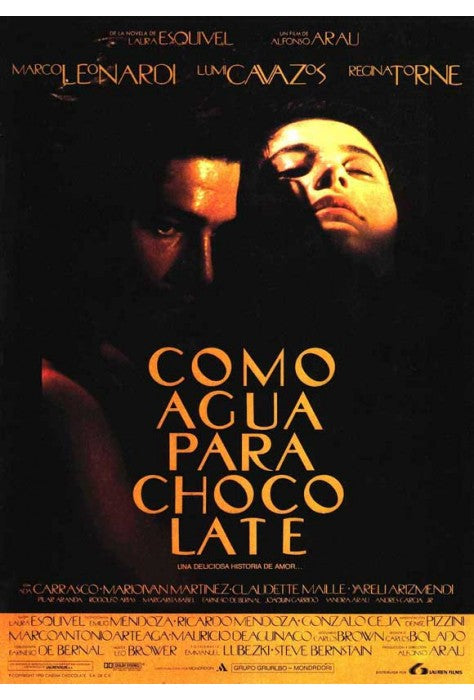
Different cultures organize physical space differently in conversation, and those differences are constantly misread as rudeness, coldness, or aggression by speakers from different cultural backgrounds. A scene from a Mexican film where characters stand very close together in a casual exchange — closer than American high school students would stand — is not just a cultural note. It is input. Students who have watched twenty hours of authentic film from a Spanish-speaking country have a more calibrated bodily sense of proxemics than students who have read a textbook paragraph about it. The body learns from observation in ways that propositional knowledge does not reach.
The Task That Unlocks It
The single most effective task I have found for teaching the paralinguistic layer is what I call a muted scene response. Play a two-to-three minute scene with audio off. No subtitles. Ask students to write, in the target language, what is happening — not what they think the characters are saying, but what the scene is communicating. Emotion, relationship, power dynamics, what just changed.
Then play it again with audio and subtitles. Ask: what did the body language tell you that was right? What surprised you? What did you misread?
This task does several things simultaneously. It forces active visual attention, which is a transferable skill for the rest of the film. It generates vocabulary around human behavior, relationship, and emotion — exactly the register that is hardest to teach through drills. It creates a specific comprehension gap — between what the student inferred and what the dialogue confirmed — that primes noticing when the scene plays again. And it is, in my experience, genuinely interesting to almost every student in the room. Nobody is checking their phone during a muted scene task. They want to know if they were right.
The Layer That Stays
The paralinguistic layer of a language is not a soft add-on to the real curriculum. It is part of what makes a speaker recognizable as a speaker of that language rather than someone performing a translation. Gesture inventory, physical register, the embodied habits of a language community — these are acquired through observation, not instruction. Film is the only classroom tool that provides authentic, emotionally rich, repeatable models of the full embodied human being speaking the target language.
FilmArobics lesson plans are built around this understanding. Every unit includes structured tasks designed to direct student attention to the full communicative signal of a scene — not just the words, but the body language, the cultural context, and the gap between what characters say and what they mean. If you teach Italian and want lesson plans that treat the language as something people actually live in, FilmArobics Italian lesson plans are built for exactly that classroom.