The Moment the Rule Fails
You taught it. You explained it clearly. Tu is informal, vous is formal. Tú is everyday speech, usted is for bosses and grandmothers. Du is a friend, Sie starts with a capital S and you use it with strangers until told otherwise.
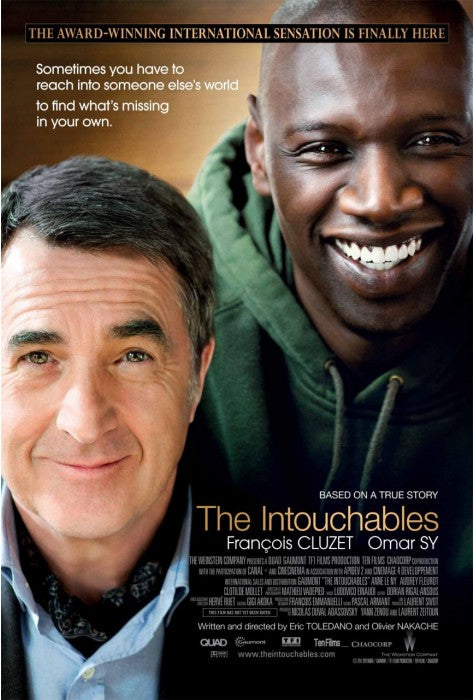
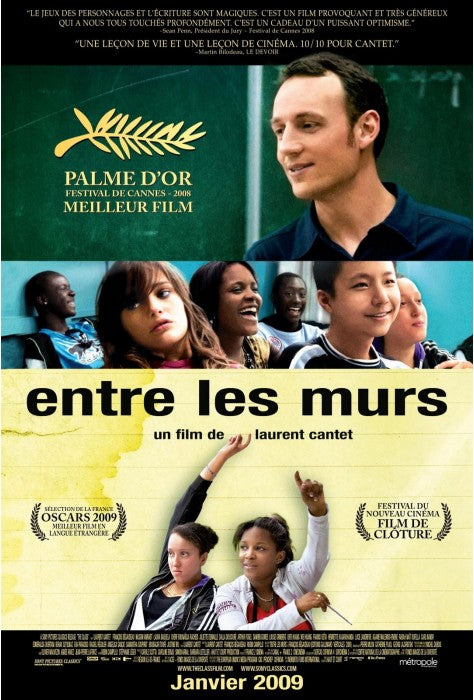
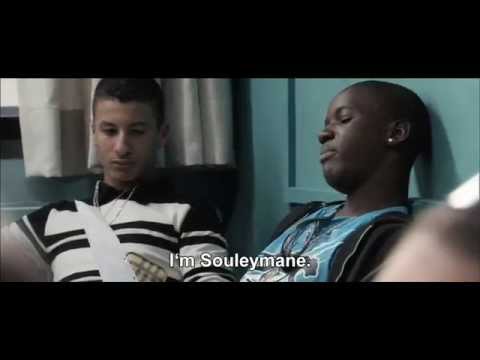
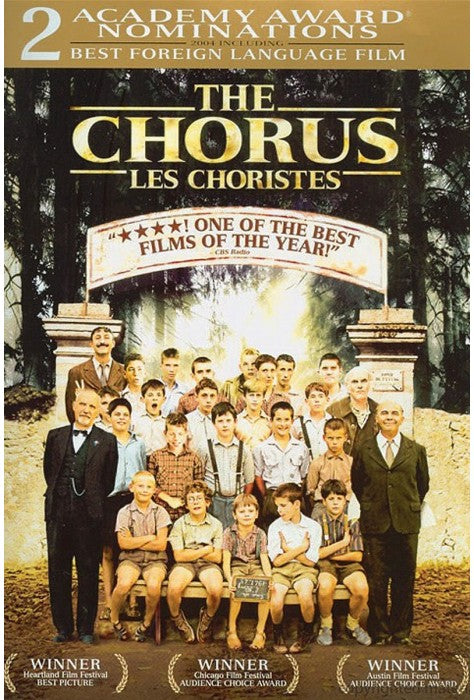
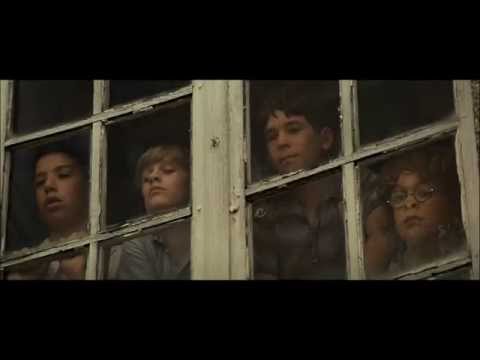
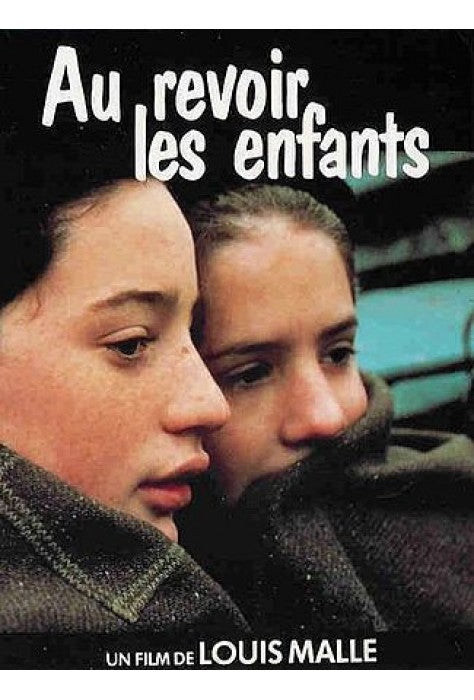
Then you watch a scene from a French film where two strangers use tu with each other immediately — and three students raise their hands.
"But I thought —"
Yes. You thought. And you were right about the rule, and the rule was right about textbook French, and the film is also right about how French people actually talk. This is the register problem, and it is far more interesting than the conjugation chart implied.
What Register Actually Is — And Why It Is Not a Grammar Rule
The research on sociolinguistic competence — what Canale and Swain identified in 1980 as one of the four pillars of communicative competence — distinguishes between what a grammar rule says and what a speaker actually does. Register is the social layer of language. It encodes relationship, power, solidarity, age, geography, and situation simultaneously. And it is constantly shifting.
Krashen's input hypothesis was designed around comprehensible input — language at i+1, just above current level. But i+1 applies to grammar, not to register. Register is not a progression from simpler to harder. It is a map of social relationships, and you cannot read it until you have encountered enough real speech to understand what the signals mean in context.
Textbooks handle register by assigning it to categories: formal situations call for formal forms, informal situations call for informal ones. That is technically correct and almost completely useless in real speech, because real speakers make real-time decisions about solidarity, irony, intimacy, distance, and provocation that the category system was never designed to capture.
A French teenager using vous with a parent is not following the rule for formal contexts. They are being withering. A Spanish boss who switches to usted with an employee mid-conversation is not respecting a hierarchy. They are furious. A German speaker who invites you to Duzen — to switch from Sie to du — is not applying a grammar rule. They are extending a social offer. None of this is in the conjugation chart.
Why Film Is the Only Medium That Can Teach This
There is a reason you cannot teach register from a textbook dialogue. The dialogue was written to illustrate the rule. It was not written to reflect how the rule operates in the wild — with stress, history, context, relationship, and stakes. A textbook example of usted usage is to register what a diagram of a handshake is to actual human contact.
Film gives you the face. The pause before the switch. The other character's reaction. The silence after a vous where a tu was expected. These are the signals that carry meaning, and they cannot be described. They have to be experienced. This is why the research on comprehensible input consistently finds that emotionally embedded language — language encountered in a context with real stakes — is retained and processed more deeply than language encountered in neutral examples.
When a student sees a character switch register in a moment of anger, or intimacy, or deliberate social maneuver, something clicks that a grammar note never produces. They do not just know the rule. They feel the difference. That is the gap between declarative knowledge (knowing that) and procedural knowledge (knowing how) — and film bridges it in a way that explicit instruction almost never does.
Three Scenes Worth Building a Lesson Around
You do not need a FilmArobics lesson plan to use this principle — though it helps to have the scaffolding built. What you need is a scene where register is doing visible work. Here are the three types worth hunting for:
The switch scene
A character who has been using formal register suddenly shifts to informal — or vice versa. This is the single richest register teaching moment in film. Stop before you reveal what comes next. Ask: why did they switch? What does it mean? Let students argue. The argument itself produces the pushed output Swain described — precision under social pressure, in the target language, about something that matters.
The mismatch scene
Two characters using different register levels with each other — one formal, one not. This one is particularly useful for intermediate students because the asymmetry is visible without being explained. One person is maintaining distance. The other is pushing for closeness. Students who have only learned the rule as a binary — formal versus informal — discover that it is actually a real-time negotiation. That discovery is worth more than a lesson.
The ironic formal scene
A character who uses exaggerated formality in an informal situation — or with someone they clearly know well — as a joke, a weapon, or a rebuke. This is the hardest one to teach explicitly and the easiest to teach via film, because the performance is right there. Students who miss it the first time almost always catch it on the second viewing, once you have flagged that something is happening. And catching it on the second viewing is a noticing event — Schmidt's hypothesis operating exactly as designed.
What to Do With the Confusion
When students are confused — when the film contradicts the textbook rule — that is the exact moment you want. Confusion is not a problem to resolve. It is a cognitive state that primes acquisition. There is a reason the error-correction research consistently shows that learners acquire more when they notice a gap between what they expected and what they encountered. The French film using tu between strangers is not a mistake in your lesson plan. It is the lesson plan.
The questions to ask after the confusion: What did you expect them to say? Why? What did they say instead? What does the difference tell you about their relationship, the situation, the country, the scene? Let students build the theory. Then give them the more accurate rule — which is not a rule at all, but a set of tendencies that are perpetually being renegotiated by real speakers in real situations.
That conversation is the language class. Not the chart.
A Note on Which Language You're Teaching
The register distinction in French is different from Spanish, which is different from German, which is different from Italian. Spanish has the added layer of Latin American variation — usted functions quite differently in Colombia than in Mexico, and neither is the same as Spain. (And if you are teaching Latin American Spanish, you already know you are not touching vosotros — that is Peninsular, and your students will not need it.) German's Sie system has its own social archaeology: workplace norms, generational shifts, the particular history of how and when the formal pronoun started eroding in younger professional contexts.
The point is that whatever language you teach, the register system is alive. It is not stable enough to be captured in a grammar rule that will remain accurate for thirty years. What film does is give students access to the living version — the form as it is being used now, by real speakers, in real situations. Textbooks, necessarily, lag. Films don't.
If you want a French film unit that already has the register work built into the discussion tasks — so you are not designing the instruction from scratch while also managing a class of sophomores — the FilmArobics French lesson plans include sociolinguistic tasks that target exactly these moments. You pick the film. The structure is already there.