Every language teacher has been in this moment. You ask a question in the target language. The room goes quiet. One hand goes up — reluctantly. The student starts to speak, stumbles on a verb ending, and immediately looks at the floor. Two kids in the back suppress a laugh. The hand-raiser doesn't go up again for a week.
This is not a motivation problem. It's not a discipline problem. It's not even a language problem. It's a mistake problem — specifically, how students understand their relationship to being wrong in public.
What the Research Says About Error and the Affective Filter
Krashen's affective filter hypothesis is one of the most well-supported frameworks in second language acquisition. The claim is simple: anxiety blocks input. When a learner is in a state of heightened self-consciousness or fear of evaluation, the cognitive resources they need for acquisition get diverted to self-monitoring. The filter goes up. Language stops getting in — and stops coming out.
Swain's work on pushed output adds the other dimension: learners need to produce language to acquire it. But pushed output only works when conditions are safe enough for genuine risk-taking. A student managing their social reputation and their grammar simultaneously isn't doing either well.
The research on error correction is instructive. Truscott's work from the late 1990s found that explicit error correction in writing not only failed to improve accuracy over time — it may have increased avoidance. Lightbown and Spada offer a more nuanced view: when and how you correct matters enormously. Recasts — implicit corrections embedded in feedback — show better acquisition outcomes than overt flagging. But even recasts require that the student be paying attention for acquisition purposes, not social survival.
Fear of public mistakes doesn't just make class uncomfortable. It actively interrupts acquisition at the cognitive level.
What It Actually Looks Like in a Classroom
I teach period three on Tuesdays, which means I teach adolescents at the worst possible moment in the day for social risk-taking. They've spent two periods establishing their standing. They're not blowing it for a Spanish verb form.
The students who won't speak in front of class fall into recognizable types. The perfectionist — usually high-achieving — who won't speak unless they're certain they're right. The student who got laughed at once (maybe in third grade, maybe in your class last October) and has been waiting for it to happen again. The kid who believes language talent is genetic and they didn't get the gene. And the English Language Learner who is making mistakes in two languages simultaneously and has become so proficient at strategic silence that it reads as attitude when it isn't.
All of them have the same problem: the stakes of speaking feel higher than the reward. Threatening them into participation doesn't change that calculation. It just makes them better at looking engaged while saying nothing.
Why Film Changes the Calculation
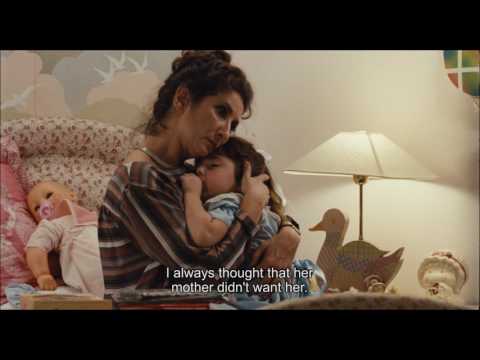
Here's the structural shift film makes possible: when a student responds to something that happened on screen, they're responding to the film — not performing for the teacher. The evaluative frame shifts. A student who hesitantly offers "he was — nervioso? — because of his father" isn't being tested on vocabulary. She's telling you what she observed. The distinction is subtle and it's everything.
Krashen writes about this in terms of acquisition versus learning. Acquisition happens when the learner is focused on meaning — when attention is on the message, not the form of the message. Film creates that meaning environment. When students are genuinely invested in what happens to a character, they reach for language to express that investment. The filter drops because the purpose is real.
Small-group pre-discussion before whole-class sharing also distributes risk. Students articulate a thought — imperfectly — in a lower-stakes setting before saying it to the room. The first draft of the idea lands in a pair, gets refined, and arrives in the whole-group discussion with some built-in confidence. This isn't pedagogical trickery. It's basic affect management, and it works.
Three Moves That Change the Mistake Culture
Separate comprehension from production explicitly. For students who are terrified of speaking, there's often a period where all you need is to confirm they're receiving the language. Comprehension checks — thumbs, quick written responses, ranking scales — let you assess what's going in without demanding public production. This isn't lowering the bar. It's building it high enough that they can eventually clear it.
Make your own mistakes visible. Not performatively, not as a lesson about "mistakes are okay." Just get the word wrong, correct yourself, keep going. Students who see that a mistake costs almost nothing — the film is still there, the class is still intact, nobody died — update their mental model of what the risk actually is.
Use the film as a script. Structured dialogue tasks where students know the frame before they speak — "I think the character felt X because of Y" — reduce the production load to something manageable. The preparation is acquisition work. The delivery in front of class is a low-stakes test of something they've already rehearsed internally. The filter stays lower because the outcome is more predictable.
What Not to Do
Don't cold-call students who haven't signaled readiness. The practice was never well-supported by SLA research on acquisition, and it actively models a punishment frame for speaking. Don't run whole-class oral correction on a student's error in front of their peers — if you hear a fossilized error that matters, handle it through a subsequent writing task or task redesign, not in the moment of someone's public vulnerability.
And don't confuse participation grades with acquisition evidence. A student who speaks confidently and incorrectly may be acquiring more than one who rarely speaks and always gets it right. Correctness and courage are measuring different things.
The Longer Game
Students who are afraid of mistakes are usually afraid of being seen as someone who can't do something. Film units address this over time because every student — regardless of proficiency level — is experiencing the same thing together. The advanced student noticed the irony in a scene. The struggling student noticed the music shifted. They both have something to contribute. That shared observational ground gradually becomes a shared communicative ground, and students who felt they had nothing worth saying start to find that they do.
It takes more than one unit. But units with structure, emotional stakes, and reduced public risk are how the shift begins.
If you want lesson plans with this scaffolding already built in — tasks that sequence from low-stakes comprehension to public production across 14 structured sections — the FilmArobics Spanish lesson plans are designed with exactly that architecture. Because the affective filter research says it has to work this way, and the architecture follows the research.