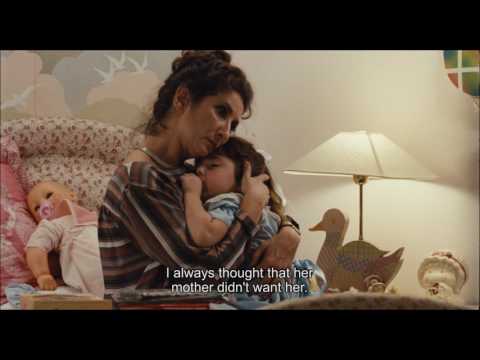
Every language teacher who has ever shown a film in class knows both students. They're sitting in the same room, watching the same screen, and they could not be having more different experiences.
The first student has decided, somewhere between the opening credits and the first scene, that the subtitles are the enemy. They're staring at the actors' faces, leaning into the sound, trying to catch words. They'll understand about 40% of what's happening. The other 60% will be body language and guesswork. When you ask a comprehension question, they'll describe the emotional arc of the scene with surprising accuracy and miss the actual plot entirely.
The second student has their eyes welded to the bottom of the screen. The subtitles are doing all the cognitive work. Their ears have effectively stopped. They're reading a foreign-language film in English. When you ask a comprehension question, they'll answer it fluently — and it will be obvious they didn't process a syllable of the audio.
The research on input-based acquisition is clear that both of these students are losing. They're just losing differently, and the mistake most teachers make is treating the subtitle problem as a single problem with a single fix.
Why the Subtitle Avoider Is a Different Problem Than You Think
The subtitle avoider isn't performing heroic target-language immersion. They're doing something closer to educated guessing at a comprehensible input rate that's nowhere near i+1 — it's more like i+3 or i+4. Krashen's acquisition framework is explicit on this: input that's too far above current competence doesn't push acquisition, it just produces anxiety and noise. The student is working extremely hard to understand almost nothing.
What's interesting is that these students often have strong affective motivation. They want to understand in the target language. They've internalized the message — maybe from a well-meaning teacher — that subtitles are cheating. And they're now working against their own acquisition.
I've had this student. She was a motivated Spanish III student who refused subtitles on principle and would come to class the next day genuinely proud of herself for not using them — even though she'd gotten about half the story. The real tell was her journal entries: emotionally rich, linguistically thin, consistently missing the actual language from the film. She was watching with her heart and not her ears.
Why the Subtitle Reader Is a Different Problem Than You Think
The subtitle reader is doing something the subtitle avoider would envy: they're genuinely comprehending. The plot is clear. The characters make sense. The humor lands. But the target language is essentially decorative — a soundtrack they're not listening to while they read along in their first language.
The research on this is specific and worth knowing. Markham, Peter, and McCarthy (2001) found that L1 subtitles improve comprehension scores but actually suppress lexical noticing in the target language. Students comprehend the narrative but miss the words. The input is happening at the bottom of the screen in a language they already know, and the ear simply stops doing its job.
This is the student who aces your comprehension quiz and bombs the vocabulary task. They've outsourced the listening to the text, and the text let them.
The Fix That Works for Both: Structured Subtitle Scaffolding
The solution isn't to ban subtitles or to mandate them. It's to vary them deliberately — and to make the variation visible to students so they understand what they're practicing and why.
Here's the architecture that actually works across a film unit:
First Viewing: Target-Language Subtitles
This is the most important move and the most misunderstood one. L2 subtitles — subtitles in the target language, not English — serve both students correctly at the same time. The avoider gets enough anchor to comprehend without falling back on English. The reader is still reading in the target language, which means the text they're processing and the audio they're hearing are aligned. The input is doubled, not substituted.
Borras and Lafayette (1994) found that L2 subtitles produced significantly better lexical acquisition than either L1 subtitles or no subtitles at all. The reason is that the student is getting visual and auditory input in the same language simultaneously. The word they see and the word they hear are the same word. That dual-coding moment is powerful.
For the avoider, this is permission to use the subtitles without guilt. For the reader, it's a gentle force to engage with the audio, because the text they're reading is also the text being spoken.
Second Viewing: No Subtitles, Specific Task
The second viewing should be shorter — a key scene, not the whole film — and it should have a narrow task attached. Not "pay attention to the dialogue." Something like: "Write down three words you recognize from last class." Or: "Listen for any sentence with the word quiero and write what follows it."
The narrow task is what makes the subtitle removal survivable. Without a task, the no-subtitle viewing is just anxiety. With a task, it's a hunting exercise. Students can tolerate not understanding everything when they know exactly what they're looking for.
Third Viewing: English Subtitles for Confirmation
This is the one teachers avoid, but it's pedagogically honest. Sometimes you need students to fully understand what was said — especially for a complex scene — so you can do rich language analysis afterward. English subtitles as a final-pass verification tool, followed immediately by a task that goes back to the target language, is legitimate scaffolding.
The key is sequencing. English subtitles first means you've substituted the target language. English subtitles last, after students have already struggled productively with the audio, means you've confirmed comprehension and can now build analysis on solid ground.
What to Say to Both Students
The avoider needs to hear that using subtitles in the target language isn't cheating — it's actually more linguistically demanding than watching without them, because you're processing two streams of the same input simultaneously. Frame it as a skill, not a concession.
The reader needs to hear something different: that the subtitles are doing their work for them, and that the goal this year is to build an ear, not just comprehension. Frame the reduction of subtitle dependence as a progression, not a punishment. Tell them you'll be pulling the crutch slowly, not all at once.
Both conversations work better if you have the SLA reasoning behind them. Students respond to being told the actual science. "The research shows that when you read L1 subtitles, your auditory processing drops significantly" lands differently than "put the subtitles away."
The Structural Bottom Line
Subtitle strategy is a curriculum decision, not a classroom management decision. It belongs in the unit plan, not in an improvised moment when you notice half the class is reading the bottom of the screen. If you've built subtitle progression into the unit — first viewing L2, second viewing no subtitles with a narrow task, third viewing for confirmation — you've removed the problem before it starts.
The student who won't read subtitles and the student who can't stop are both telling you the same thing: they don't know what role the subtitles are supposed to play. That's a design gap, not a student gap.
FilmArobics lesson plans build the subtitle progression in from the start — each phase of the unit specifies what kind of subtitle support students should have and why. If you're looking for a structured Spanish film unit that handles this for you, the Spanish collection is a good place to start.