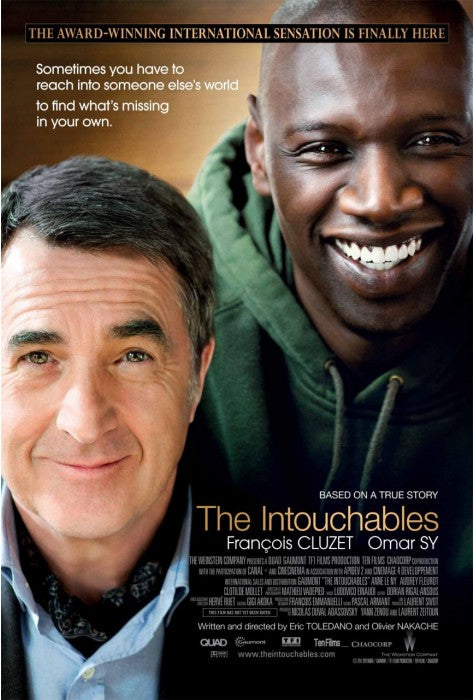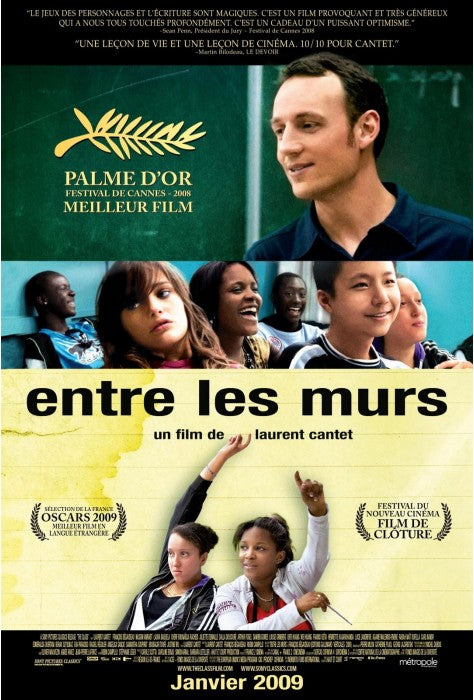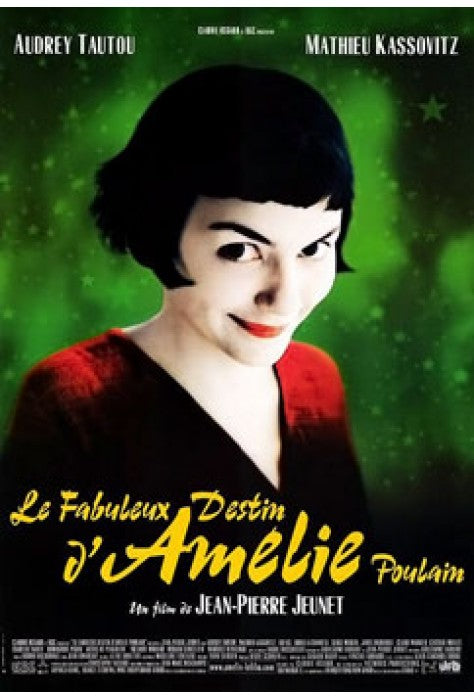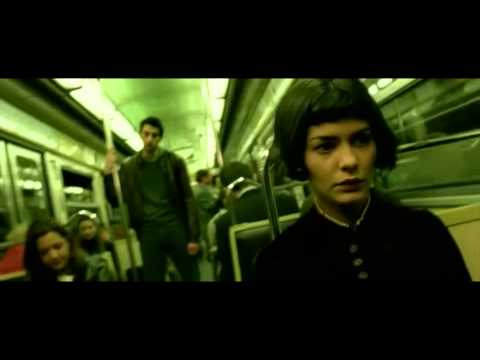
There's a scene in almost every great film where things go wrong between people. Someone says the thing they've been holding back. A door slams. Two characters stare at each other across a room and everything changes. These are the scenes teachers fast-forward through.
I understand the instinct. You've got thirty teenagers, a department head who walks through your room unannounced, and a parent who complained last year about the film you chose for a completely unrelated reason. Conflict scenes feel like liability. So you skip to the safer parts — the establishing scenes, the travel montages, the dialogue that's been pre-vetted for classroom comfort.
The problem is that you just skipped the best language instruction in the film.
Why Conflict Scenes Are Linguistically Rich
From a second language acquisition standpoint, the case for conflict scenes is almost embarrassingly strong. Krashen's affective filter hypothesis tells us that emotional engagement is not a distraction from language learning — it's a prerequisite for it. When learners are emotionally invested in what they're watching, input moves from the short-term working memory into the deeper processing that leads to acquisition. A scene that makes you feel something is a scene your brain remembers.
But there's more to it than emotional salience. Conflict scenes are linguistically dense in specific, pedagogically useful ways. You get:
- Register shifts — characters moving from formal to informal, polite to blunt, controlled to raw. This is exactly the kind of register variation that textbooks cannot manufacture.
- High-frequency emotional vocabulary — the words for anger, hurt, fear, and relief get used when things go wrong between people. These are words students need.
- Pragmatic structures — interruptions, hedges, rhetorical questions, silences. The grammar of disagreement is different from the grammar of everyday narration.
- Connected speech at natural speed — people in conflict don't slow down and enunciate for language learners. They talk like people who mean it.
Research on input processing confirms that learners who encounter vocabulary and grammar in emotionally charged narrative contexts retain them significantly longer than learners who encounter the same items in neutral exercises. The emotion is not incidental. It's the encoding mechanism.
The Real Reason Teachers Avoid These Scenes
It's not usually the content itself. Most of what teachers skip is perfectly age-appropriate — a heated argument between family members, a confrontation between friends, a scene where a character says something cruel and regrets it. That's the human condition, not an R-rating.
The real fear is discussion management. Once you open a conflict scene for analysis, you've invited your students to have feelings about it. Period 3 on a Tuesday is not always the place where you want 28 teenagers processing their feelings about a family argument. Things can go sideways fast, and you can spend the rest of the period doing relationship repair instead of language instruction.
I've been in that room. The student who starts responding to the scene with something personal and you have to make a split-second call about whether to honor it or redirect. The kid who decides this is a good time to be provocative. The student who genuinely shuts down because something in the scene hit too close.
These are real risks. The answer isn't avoidance — it's structure.
The Framework That Actually Works
The key insight is that you don't open conflict scenes to open-ended emotional discussion. You open them to specific linguistic tasks. The task is the container that keeps the discussion productive.
Before you play the scene, give students a clear observational job. Not "watch and tell me what you think," but something like: "I want you to track every time one character interrupts another. What word do they use to interrupt? What does the other character do?" Or: "Listen for the moment the tone changes. What word or phrase marks that shift?" The task focuses attention on language rather than personal response, and it gives students something concrete to report back — which keeps the discussion analytical rather than emotional.
Play the scene once for global comprehension. Let them process the narrative. Then play it again with the linguistic task active. The second viewing is where acquisition happens, because students are now listening for specific things rather than just following the story.
After the scene, structure the discussion as a language debrief, not a feelings debrief. "What did you notice about how Character A used pero versus sino?" moves the room differently than "How did that scene make you feel?" You can acknowledge the emotional content — briefly, genuinely — and then redirect to the language. "That scene is hard to watch. It's also a masterclass in how Spanish speakers express frustration. Let's talk about what they actually said."
Specific Scene Types That Work Well
Not all conflict scenes are equal for classroom use. The ones that tend to work best have a few things in common: the conflict is between people who care about each other (family, friends, colleagues — stakes are high, vocabulary is rich), the outcome is ambiguous enough to generate analysis, and the language itself is doing real work rather than serving as backdrop to action.
Scenes where characters negotiate or persuade are particularly useful — someone trying to convince another person of something, or two people trying to find middle ground. These scenes naturally generate conditional structures, subjunctive mood, and the pragmatic vocabulary of hedging and conceding. In French, these scenes are gold for teaching quand même, pourtant, and tout de même — the little discourse markers that signal "I hear you but." You can't teach those from a textbook example. You need to see them earning their keep in a real exchange.
The Classroom Culture Question
All of this assumes a classroom culture where students feel safe enough to engage analytically with emotionally charged material. If you don't have that yet, conflict scenes aren't the place to start. Build toward them. Use lower-stakes scenes first, establish the pattern of linguistic observation tasks, and let students learn that the job in this room is to analyze language — not to perform feelings about it.
Once that culture is established, conflict scenes become some of the most productive class time you'll have. Students are engaged, the language is real, and the analysis goes deeper than anything a textbook unit can generate. I've had discussions sparked by a single thirty-second argument scene that lasted the rest of the period and sent students to the dictionary on their own time.
That's the goal. Not a perfectly managed lesson. A lesson they kept thinking about after the bell rang.
One More Thing
If you're going to use conflict scenes, preview them yourself first. Not for content concerns — for pedagogical focus. Decide before class which specific language features you're teaching. The scene will offer you fifteen things. Pick two. Students learn more from two well-chosen features taught thoroughly than from a general "look at all the interesting language happening here."
If you teach French and want lesson plans that already have this work done — scenes identified, linguistic tasks written, vocabulary scaffolded — the FilmArobics French collection is built for exactly this. Every plan is organized so you can see what each scene is teaching before you decide to use it. Browse the French collection and find a film worth arguing about.