The Monday After the Film
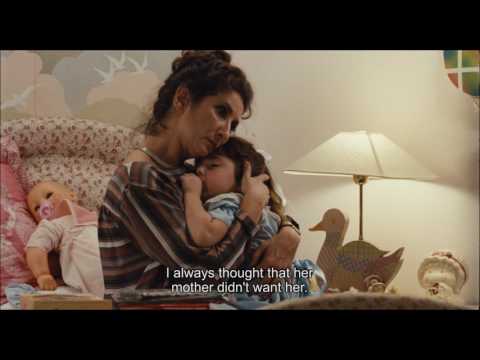
You know the feeling. The film unit was good — genuinely good. Students were engaged in a way that doesn't happen in October when you're on chapter four of the textbook. They were talking in the target language, noticing things, caring about what happened to the characters. Then the unit ended, you handed back the textbook, and by Wednesday it was like the film had never happened.
This isn't an imagination problem or a "they were only engaged because it was easy" problem. It's a transfer architecture problem. And understanding why it happens is the first step toward designing against it.
What the Research Says About Transfer — and Why It's Encouraging
The question of how language acquired in one context transfers to another is one of the more studied problems in SLA. The short version of what the research shows: transfer is real, it's measurable, but it's not automatic. Acquisition that happens in high-affect, high-context conditions — like following a narrative you're emotionally invested in — encodes more deeply than acquisition from decontextualized drills. But that deep encoding doesn't automatically activate in different contexts without what researchers call "transfer-appropriate processing."
In plain terms: if students acquired a word in the emotional context of a film scene, they'll retrieve it most easily when that emotional context is present or invoked. When you switch to a textbook chapter on future tense conjugation, the retrieval cues disappear. It's not that the acquisition evaporated — it's that the classroom environment stopped providing the conditions for retrieval. The language is still there. You're just not giving students the key.
Krashen's affective filter hypothesis adds another layer. The film unit lowered the filter — students were emotionally engaged, anxiety was reduced, they were taking communicative risks they wouldn't normally take. The textbook raises the filter again. The institutional cues of explicit instruction, conjugation charts, and vocabulary lists signal to students that they're back in "school language" mode — the mode where getting it wrong has consequences and where most of them already have a story about themselves as language learners. That story is usually not a flattering one.
The Crash Is Predictable — Which Means It's Preventable
I've made the mistake of treating the film unit as a standalone event. Incredible three weeks, satisfying outcome, flip back to the textbook, wonder why the energy died. It took me longer than I'd like to admit to realize I was designing the crash myself by treating the unit as a closed container.
The transition back to regular instruction is not a neutral event. It is a high-risk moment for acquisition — a point where recently acquired language either gets integrated into students' developing interlanguage or quietly retreats to passive storage, where it will technically be retrievable on a vocabulary test but functionally unavailable for real communication.
The fix is not to extend the film unit indefinitely. It's to build a deliberate bridge — a transition architecture that keeps the emotional and contextual hooks alive even as the content shifts.
Four Things That Actually Bridge the Gap
Reference the characters deliberately and often
The most underused tool in post-film instruction is the characters themselves. Students formed genuine attachments. Those attachments are retrieval cues. When you're teaching a grammar point six weeks later, you have the option of using invented textbook sentences or using the characters students already know. ¿Qué habría dicho [personaje] si hubiera sabido la verdad? That's the conditional perfect, presented in a context that immediately activates emotional memory. The grammar is the same. The retrieval is completely different.
This sounds minor. It is not minor. Named characters from a film students cared about are among the most durable encoding cues available to a language teacher. Use them past the unit. Deliberately.
One film-connected warm-up per week
Not a full film task — just a connection. A quote from the film, a still image, a two-sentence scenario involving a character. The warm-up takes four minutes. What it does is keep the affective thread alive — it signals to students' brains that the emotional context of the film is still relevant, which keeps the language from retreating behind the institutional filter.
Think of it like keeping a fire from going out between logs. You don't need to add a whole new log. You just need to keep the oxygen moving.
Recast textbook vocabulary in film scenarios
Whatever vocabulary your textbook chapter introduces, spend five minutes at the start of that unit asking: where would these words have appeared in the film? Or: what would [character] do with this concept? This is not a stretch — it's a retrieval bridge. Students access the new vocabulary through an emotional schema they already have, rather than building a brand new one from scratch. Encoding is stronger, retrieval is faster, and the textbook chapter doesn't feel like it arrived from a different planet.
A short "what stuck" writing task two weeks out
Two weeks after the film unit ends, before students have fully forgotten, ask them to write — in the target language — one thing from the film that they still think about and why. This is not a comprehension check. It is a consolidation task. The act of retrieving and producing language about an emotionally salient experience strengthens the encoding of that language. Schmidt's noticing hypothesis is relevant here: conscious attention to language in emotionally significant contexts drives acquisition in ways that passive exposure does not. This task creates that attention.
Keep it short. A paragraph is enough. The point is the retrieval, not the length.
The Bigger Picture
The goal of a film unit is not for students to love the film. That's nice, but it's not the goal. The goal is for students to acquire language in conditions that make that language durable — retrievable not just on the post-unit quiz but in conversation, in writing, in the next level of the course, and eventually, optimistically, in the world.
That durability doesn't happen by accident. It happens when the teacher treats the transition out of the film unit as a design problem, not a calendar event. The crash is not inevitable. It just requires a plan.
The FilmArobics lesson plans include post-film sections specifically designed to consolidate acquisition before transitioning back to regular instruction. If you want to see how a structured lesson plan handles the Monday after the film, the Spanish lesson plans are a good place to start — or French, if that's your line.