
The speaking problem in language teaching isn't what to teach — teachers know the structures, the vocabulary, the pronunciation targets. The problem is giving students something real to say. "Tell your partner about your weekend" produces stilted performance because nobody cares about the partner's weekend in the way they'd need to care in order to actually speak. A character from a film they've just watched is different. Students have opinions. They have evidence. They want to say them.
📬 Stay in the loop. New lessons added regularly — join the list to hear when your film is available.
What Speaking Practice in a Film Lesson Actually Looks Like
A FilmArobics lesson plan builds speaking tasks at two levels, always grounded in the film students have watched.
Controlled speaking works with the film's actual dialogue. Students take a scene they've watched, hear the lines again, and reproduce them — with substitutions, with variations, with role reversal. This is not performance for its own sake; it's a way to get grammar structures into the mouth, which is different from getting them into the head. The body learns different things than the mind does.
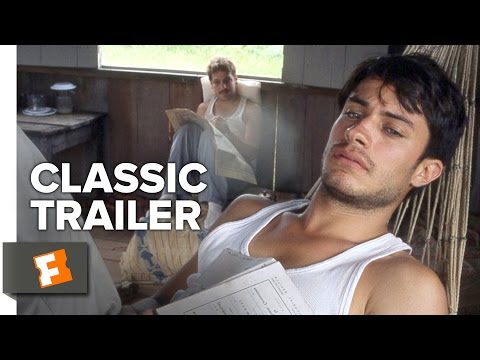
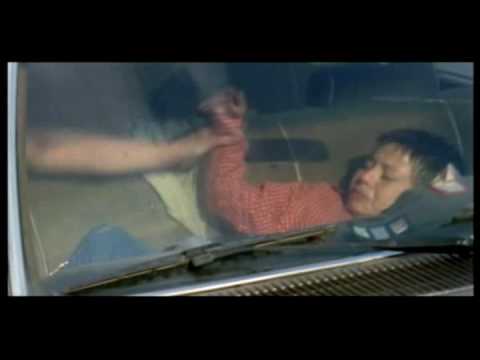
Free speaking uses the film as a springboard. "What would you have done in Chava's situation?" is a speaking prompt because Voces Inocentes has made Chava's situation specific and real. Students who answer that question are not performing Spanish; they are using it to say something they mean.
The Confidence Problem
Many students don't speak in class because they're afraid of being wrong in front of their peers. Film helps with this in two ways that are easy to overlook. First, when a student's Spanish isn't quite right, the correction feels less personal — they're talking about a character, not about themselves. Second, students who are emotionally invested in the story keep going even when they make mistakes, because the story is more important to them than the error.
This is not a trick. It is how language acquisition works: motivation carries learners past mistakes that would stop them if motivation were absent.
Pronunciation and Film
One thing film gives speaking practice that scripts and recordings can't match: emotional authenticity. Students hear how native speakers sound when they're frightened, or in love, or furious, or trying not to cry. They hear that anger sounds different from fear even when the words are the same. Shadowing those scenes — repeating lines with the same emotional color — produces pronunciation gains that mechanical drilling doesn't. Students aren't mimicking a sound; they're mimicking a human being.
Building Toward Independence
The goal of FilmArobics speaking tasks is a student who doesn't need the scaffold anymore. Early tasks are controlled and close to the text. Later tasks move toward independent speech: debate, presentation, improvised dialogue based on what students have learned about the characters. By the end of a FilmArobics unit, students should be able to talk about the film's themes in the target language without looking at the lesson plan — because they internalized the vocabulary by using it to say real things.
The full FilmArobics catalog — Spanish, French, Italian, German, and ESL — is at filmarobics.com.
📬 Stay in the loop. New lessons added regularly — join the list to hear when your film is available.
The best speaking lesson is the one where students forget they're practicing and start actually talking. Film is how you get there.