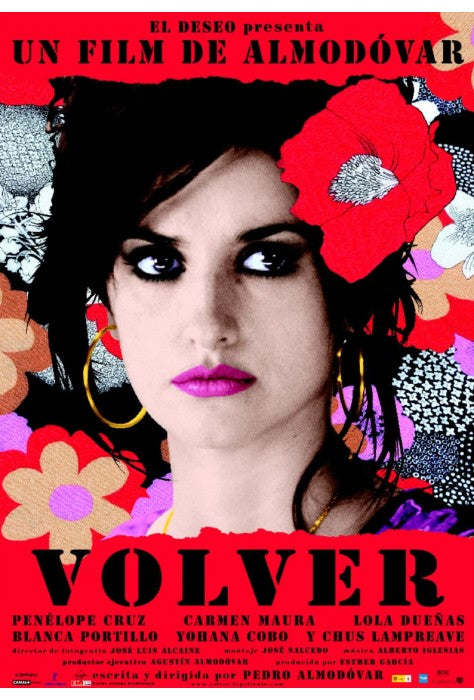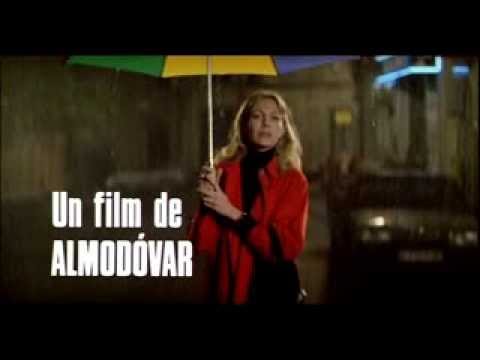

Raimunda runs a restaurant out of necessity, raising her daughter alone in a Madrid apartment, maintaining the dignified chaos of a working-class Spanish family. Then her dead mother shows up — not as a ghost exactly, not as a hallucination exactly — and Raimunda does not have time to process this because there is also a dead body in the kitchen that needs to be dealt with. Your students will watch Pedro Almodóvar's Volver and discover that Spanish women are funny, fierce, practical, and capable of handling almost anything — which happens to be one of the most accurate things any film has ever shown about anyone.
Volver (Pedro Almodóvar, 2006) is set in contemporary Madrid and rural La Mancha — giving students both urban Spanish and the flatter, broader vowels of the Spanish interior. The film's language is domestic, feminine, and fast: women talking across kitchens, across funerals, across secrets kept for decades. It is also one of the few Spanish films in which women are entirely in charge of the narrative — which makes it essential for any classroom working on the gap between how Spanish textbooks portray women and how Spanish women actually speak.
📬 Stay in the loop. New lessons added regularly — join the list to hear when your film is available.
Key Themes for the Classroom
- Matrilineal bonds: Raimunda, her daughter, her mother, and her aunt form the film's emotional architecture. Ask students: what does the film say about what women inherit from each other — not money or property, but character, capacity, resilience?
- Secrets and survival: The film involves a secret kept for decades that, when revealed, reframes everything that came before. Discuss: are there secrets it's right to keep? What Spanish vocabulary describes the weight of a secret: el secreto, callar, guardar, el silencio, proteger?
- Death as ordinary: Almodóvar treats death with a matter-of-factness that is distinctly Spanish — and specifically connected to La Mancha's wind-haunted, ghost-tolerant rural culture. Ask students what their own culture does with death. Then compare.
- The body and labor: Raimunda works physically — cooking, cleaning, carrying — and the film honors that work. Ask students: how does Spanish express the dignity of physical labor? What words does the film use?
One Scene to Use
The scene where Raimunda sings "Volver" — the tango — at a party outside the restaurant, with Penélope Cruz giving one of the greatest performances in any language film of the decade, is the movie's emotional center. Even students who understand no Spanish will feel what is happening. After watching it, give students the lyrics. Go through them line by line. The song is a complete grammar lesson in the future, the conditional, and the vocabulary of longing and return.
One Low-Prep Classroom Activity
The film's title means "to return" — and every major character is returning to something: a village, a secret, a relationship, a version of themselves. Before the film ends, give students five minutes to write in Spanish: what is Raimunda returning to, and why does that matter? The activity requires them to synthesize what they've seen into a coherent narrative claim — in Spanish — before the film tells them whether they're right.
The full Spanish lesson plan for Volver is ready at filmarobics.com/products/volver — $29.95.
📬 Stay in the loop. New lessons added regularly — join the list to hear when your film is available.
Students who work through this unit leave with the Spanish of real women — not textbook women — talking about real things that matter.