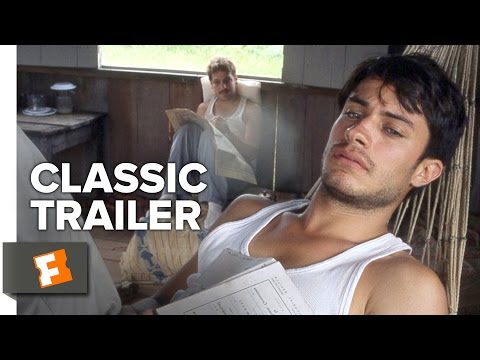
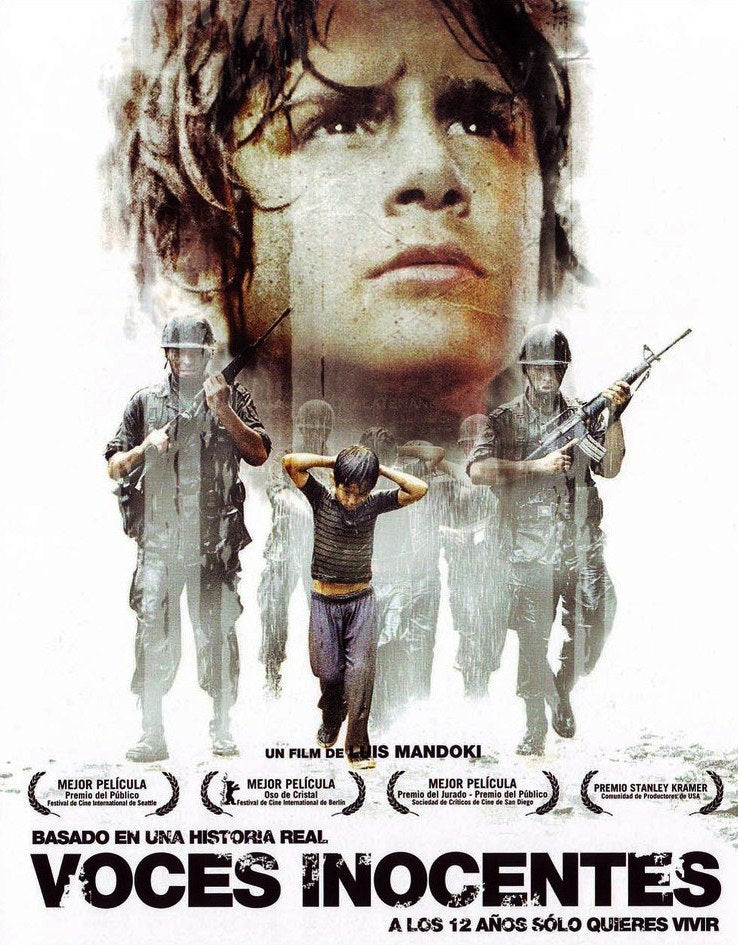
Monday morning. The army truck pulls up to the school gates. A soldier walks in with a list. The boys who turned twelve over the weekend stand up. Chava watches from his seat — he is eleven, still safe, and he knows exactly what he is watching. That moment, repeated through Luis Mandoki's Voces Inocentes (2004), is one of the most teachable in the Spanish catalog: urgent, comprehensible, and devastating in a way that drives language acquisition because students need to understand what they're seeing.
For Spanish class, Voces Inocentes works because of its language range. Chava and his friends speak the childhood Spanish of El Salvador — fast, abbreviated, full of play — while the adults around them speak the formal, bureaucratic Spanish of military authority. Students hear both registers occupying the same space, and they understand why they're different. The film is based on the true story of screenwriter Óscar Orlando Torres, which grounds every vocabulary exercise in something real.
📬 Stay in the loop. New lessons added regularly — join the list to hear when your film is available.
Key Themes for the Classroom
- Childhood under pressure — Chava works to stay a child in a country that has decided children are soldiers. Discussion: ¿Qué hace Chava para mantener su infancia? What specific things does the war take from him, piece by piece?
- Family and adult responsibility — Chava's mother is holding the family together with almost nothing. Discussion: ¿Cómo protege la madre a sus hijos? What does protection look like when you have no power?
- Language and survival — The children develop their own code for talking about danger. Students can track how the vocabulary of play and the vocabulary of fear begin to merge as the film progresses.
- History and witness — The Salvadoran Civil War ended in 1992. Many students know nothing about it. The film is one of the most accessible entry points into that history in the Spanish classroom.
One Scene to Use
The scene where Chava and his friends play soccer at night — during a firefight, because if they stop being children they lose something they can't get back — is extraordinary. The noise of the game and the noise of the guns occupy the same audio space. Have students transcribe what the kids say to each other during that scene. What they choose to talk about, right then, tells you everything about the film's argument.
One Low-Prep Classroom Activity
Give students a split vocabulary list: one column of words from Chava's world (jugar, amigos, escuela, pelota), one column from the war (reclutamiento, soldado, ejército, guerrilla). After watching the first thirty minutes, ask them to add words they heard to each column — and flag any that crossed over. The crossover words are where the film lives.
The full Spanish lesson plan for Voces Inocentes is ready at filmarobics.com/products/discover-war-childhood-with-voces-inocentes — $29.95.
Students finish this unit with vocabulary for war, history, and family — and the understanding that language carries the weight of what it's used to survive.
The full Spanish lesson plan for Voces Inocentes is ready at filmarobics.com/products/discover-war-childhood-with-voces-inocentes — $29.95.
📬 Stay in the loop. New lessons added regularly — join the list to hear when your film is available.
Students finish this unit with vocabulary for war, history, and family — and the understanding that language carries the weight of what it's used to survive.