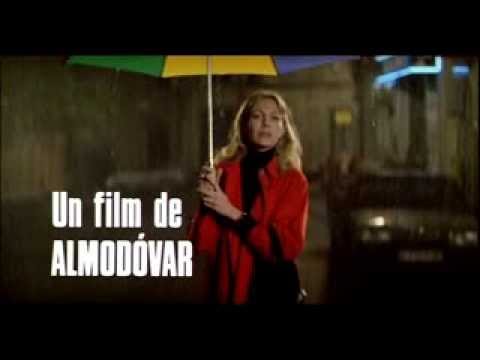
There's a moment that happens in every intermediate language class, usually somewhere around month three. A student is doing fine — they can conjugate, they can ask for directions, they can probably order food — and then a native speaker says something like no tiene pelos en la lengua and their face goes completely blank. Not because the words are hard. Because the words mean nothing like what they mean.
Figurative language is the wall. It's where intermediate competence stalls, where students who've been feeling good about themselves suddenly feel like beginners again. And it's almost entirely absent from language textbooks.
Why Textbooks Can't Teach This (And Film Can)
The research on idiom acquisition is pretty humbling. Work in the processing instruction tradition has documented that idioms aren't processed the same way as literal language — the brain treats them as chunks, not as meaning built from individual words. That's why you can know every word in "it's raining cats and dogs" and still not understand it the first time you hear it.
What makes idiom acquisition work is repeated, meaningful exposure in emotionally loaded contexts. Krashen's comprehensible input hypothesis, and the research on incidental vocabulary acquisition that followed, keeps pointing the same direction: when learners encounter an expression while they're genuinely invested in what's happening, retention is dramatically higher than when they encounter it on a list. The emotional salience is doing actual neurological work.
I've tried idiom units. Matching activities, fill-in-the-blank, "use this expression in a sentence" homework. I can tell you exactly what happens: students memorize the list well enough to pass the quiz, and by the following Tuesday they can't tell you what any of them mean. What I hadn't tried — until I started using film deliberately for this — was giving them the idiom in the middle of a scene they actually cared about.
The Difference Between Hearing It and Feeling It
Here's a specific example. In the middle of a confrontation scene in a Spanish-language film, a character turns on someone who's been talking behind his back and delivers a line — something close to no me vengas con cuentos. Don't feed me that line. Don't come to me with your stories. The subtitles render it loosely. The body language carries everything else.
Students who watch that scene remember that phrase. Not because you told them to. Because with the frustration and the accusation and the relationship tension all playing out, it lands. They felt the register before they were told anything about it — they understood this is not polite conversation, this is someone at the end of their rope. That's information no definition can give you.
This is what the affective filter research has been telling us for decades. When the emotional stakes are real — even through fiction — language filters down in ways that drill-based approaches can't replicate. The scene does the teaching. You're not explaining the idiom. The scene already explained it.
Three Types of Figurative Language Film Handles Well
Idioms Under Pressure
Argument scenes, confrontation scenes, high-stakes negotiation — these are where idiomatic language clusters. Native speakers under emotional pressure reach for idioms the way English speakers reach for profanity: automatically, and expressively. Film gives you that authenticity in a way a scripted textbook dialogue simply cannot manufacture.
The practical move: don't pause mid-scene. Let the whole thing breathe, then circle back. "That phrase he used — what did you think he meant, based on the scene?" Let students work it out before you confirm. That inference process is part of how it sticks.
Metaphors Built Into the Culture
Every language has metaphors so embedded in the culture that native speakers don't even register them as metaphors anymore. In Spanish, the body of idiomatic expression around family relationships, loyalty, and honor reflects centuries of meaning. Film is the only medium that gives students enough cultural surround to start inferring that weight on their own.
A colleague once spent fifteen minutes on a single throwaway line from a film — something a grandmother says dismissively that the adult children in the room all react to with a specific, contained look. The expression only lands if you understand the relationship dynamic. But because the students watched it play out, they understood the phrase and what it encoded about family structure simultaneously. You cannot build that out of a vocabulary list.
Register Markers Hidden in Plain Sight
This one is underrated: figurative language carries register information. The idioms a character chooses tell you immediately whether you're hearing formal speech, intimate speech, or street speech — often before a single grammar marker confirms it. Students who develop an ear for this are developing something that grammar instruction almost never touches: a feel for social context in the language.
Compare two characters in the same film speaking to the same third character. One is formal, one is casual. The figurative language they each reach for is completely different, and a class that's been watching closely starts to hear that distinction. That's metalinguistic awareness developing in real time, through actual exposure, not through a lecture about politeness levels.
What to Actually Do in Class
Before the film, don't pre-teach every idiom — that's the textbook reflex and it short-circuits the very exposure process you're trying to use. Instead, give students two or three anchor phrases: expressions you know are coming that are high-frequency or culturally loaded, with just enough context to make them curious. Then let the scene do the work.
After: reconstruction, not recall. Ask students to put the expression back into the scene in their own words, then transfer it to a different context they come up with themselves. Transfer is where the acquisition actually locks in. "Where else might someone say this? What situation would call for it?" That question is worth more than any fill-in-the-blank worksheet you've ever assigned.
If you want a lesson plan where this scaffolding is already built — the flagged expressions, the during-film tasks, the post-film transfer activities tied to the specific scenes where the language lands hardest — that's exactly what FilmArobics Spanish lesson plans are designed to deliver. You're not starting from scratch. Browse the Spanish collection here.
The figurative language will still surprise your students. That's the point. But it'll surprise them in a room where they've got enough context to work it out — and that's the difference between confusion that quits and confusion that learns.