There's a moment every language teacher recognizes. You've just finished a solid unit. The assessments came back fine — vocabulary quiz, grammar exercises, maybe a short written response. Numbers are good. You feel reasonably okay about things.
Then the exchange student visits.
The exchange student says something perfectly ordinary — asks where the library is, makes a comment about the weather — and your class freezes. Twelve students who just aced a unit on the present tense are staring at the floor. One kid says something that technically contains real words but arrives about forty-five seconds after it would have been useful. Nobody holds a conversation. Nobody comes close.
And you stand there thinking: we covered this. We tested this. What exactly did they learn?
Two Completely Different Things
The SLA literature has a name for what your students have: declarative knowledge. They know the rule. They can apply it on a worksheet. They can explain what the preterite is for. What they don't have is procedural knowledge — the automatic, real-time access to language that makes actual conversation possible.
Stephen Krashen's distinction between acquisition and learning was one of the early frameworks to take this seriously. Learned knowledge — the explicit stuff you consciously study — is useful for monitoring output when you have time to think. Acquired knowledge is what you actually draw on when someone asks you a question and you have 1.5 seconds to respond. Those are not the same cognitive resource. They don't automatically convert into each other, no matter how many drills you run.
Robert DeKeyser's skill acquisition theory sharpens this further. Declarative knowledge only becomes procedural through one thing: sustained, meaningful practice under real communicative pressure. The key word is meaningful. Worksheet practice does not count. Neither does choral repetition. The pressure has to be real — there has to be something at stake besides getting the right answer on the page. A message that needs to land. A person on the other end who needs to understand.
Why Knowing Feels Like Progress
The problem is that declarative knowledge is a lot easier to assess than procedural knowledge. You can write a test for it. You can grade it quickly. It produces the kinds of scores that go in the gradebook and make everyone feel like something was accomplished.
And knowing really does feel like progress — to students and teachers both. When a student can correctly explain that the imperfect is used for ongoing past states while the preterite marks completed events, that's real information. It's just not the information that lets them navigate a conversation with an exchange student.
I've watched bright, motivated students spend three years in Spanish class and leave unable to order food with any confidence. Not because they didn't work hard. Because almost all of the practice they did was declarative. They got very good at knowing, and almost no practice at using.
What Real Communicative Pressure Looks Like
Merrill Swain's output hypothesis tells us something important: production pressure — actually having to speak or write under communicative conditions — is not just a way to show what you've acquired. It's a mechanism of acquisition itself. When students are pushed to produce language for a real communicative purpose, they notice gaps in their own knowledge that passive input never reveals. That noticing is where learning happens.
The catch is that creating real communicative pressure in a classroom is genuinely hard. You can't manufacture stakes. You can't make students care about a task just because you've told them it's communicative. The message has to matter to them — which means the content has to matter to them first.
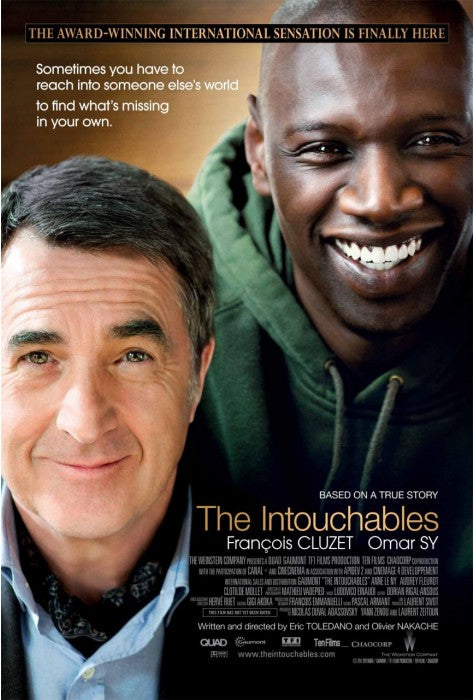
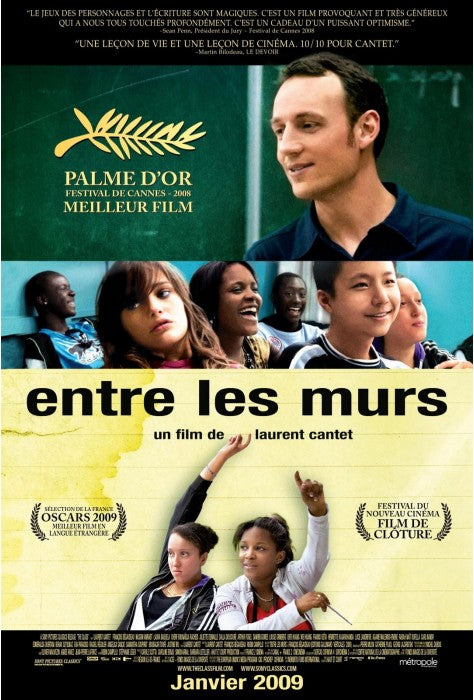
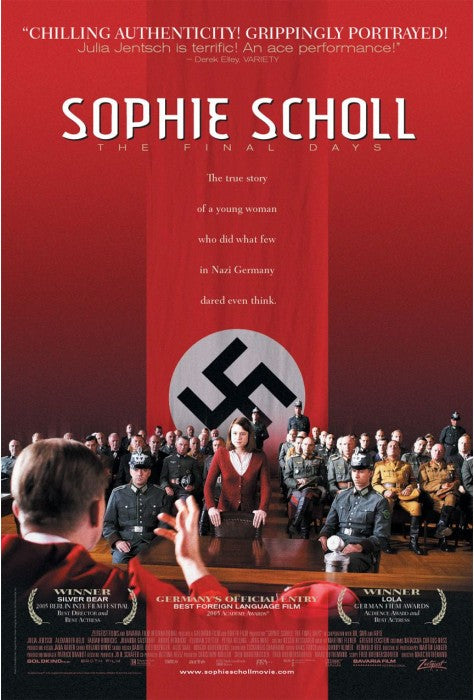
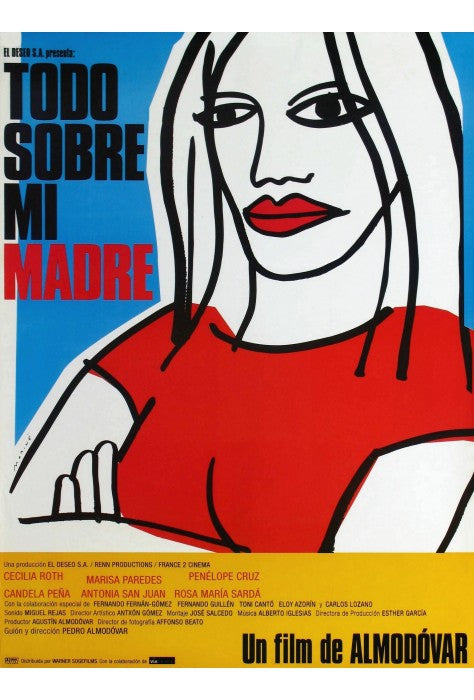
This is where the structure of a film unit changes everything. When students are working from a film, the content is already doing the motivational work. They care about what happened to the characters. They have things they want to say about the ending. They want to convince someone their reading of a scene is right. That's real communicative pressure — not manufactured, not performed. The language need is generated by the content, not by the teacher asking students to use the present tense in a sentence.
The Structure That Builds the Bridge
It's not enough to show a film and then ask students to discuss it. Unstructured discussion mostly produces silence, especially from students who don't already have strong oral fluency. The structure matters enormously.
Three moves that consistently close the gap between knowing and using:
Scene-based retrieval before discussion
Before you open up any discussion, ask students to reconstruct a specific scene in the target language. Not interpret it — just reconstruct it. What did the character say? What happened next? This is lower-stakes than opinion-sharing, it activates the relevant language from working memory, and it creates a shared reference point for the conversation that follows. It also shows you clearly whether students actually retained what they heard, or just sort of processed it as English in their heads.
Structured turns under time pressure
Spontaneous discussion rewards the students who already have procedural fluency and lets the others coast. Structured turns — each student gets thirty seconds to respond to a specific prompt about the film — change the math. Everyone has to produce. The time pressure is low enough to be manageable but real enough to prevent over-editing. You're building the automaticity that DeKeyser says only comes from repeated production under pressure.
The follow-up question as acquisition tool
One of the most effective moves is simply asking a follow-up question after every student response. Not to probe — just to keep them going. ¿Y por qué crees eso? or Et qu'est-ce qui se passe ensuite? The student who was going to stop after one sentence now has to keep producing. That second production is often where real acquisition happens — where they run out of their rehearsed answer and have to actually work with the language in real time.
The Test Is Not the Ceiling
The exchange student visit is uncomfortable precisely because it reveals something the gradebook doesn't: passing a test and being able to use the language are almost completely uncorrelated in most language programs. We have built instruction around the test rather than the use, and students have learned to be very good at exactly what we practiced — which turns out not to be conversation.
The fix isn't to stop testing. It's to build procedural practice into every unit alongside the declarative work — and to recognize that film-based instruction, done well, is one of the most efficient tools for doing that. The emotional and narrative context creates genuine communicative pressure. Structured tasks direct that pressure productively. And students who struggled through the quiz often turn out to be the ones with the most to say about the film.
If your students are ready to move from knowing to actually using — the FilmArobics Spanish lesson plans are designed exactly for this gap. Pre-film, during-film, post-film — fourteen structured sections that move students from comprehension into production, one scene at a time.