Ask any Spanish teacher what unit they dread most, and you'll hear the same answer within about three seconds: the subjunctive. It's the unit where previously confident students suddenly look at you like you've started speaking a third language. Where the kid who aced every quiz goes very quiet.
The frustrating part isn't that the subjunctive is complicated — it is — but that the way we usually teach it almost guarantees failure before the first conjugation hits the whiteboard.
Why the Standard Approach Backfires
Here's what typically happens: we introduce the concept, explain the mood, drill the forms, and practice with sentences like Espero que tú estudies. Students memorize the triggers. They conjugate correctly on the quiz. Three weeks later, in a different context, they freeze completely.
This is not a student problem. It's a sequencing problem. The research on implicit versus explicit grammar instruction is clear: explicit rule presentation followed by controlled practice produces short-term declarative knowledge. It does not produce the procedural fluency that lets a learner produce the subjunctive automatically in conversation. Krashen's distinction between "learning" and "acquisition" maps almost perfectly onto this failure mode. Students learn the rule. They never acquire the mood.
Acquisition requires repeated, meaningful exposure to the target structure in contexts where meaning — not form — is what the learner is chasing. You need learners focused on what is being communicated, not on which endings to use. That's the paradox of implicit grammar instruction: you learn grammar better when you're not thinking about grammar.
What Film Actually Does Here
I used to teach subjunctive the standard way — introduce, drill, practice, assess, watch half the class forget it by spring break. Then I started building film units around it, and something genuinely strange happened: students started using it. Not because I taught it more. Because I stopped announcing I was teaching it.
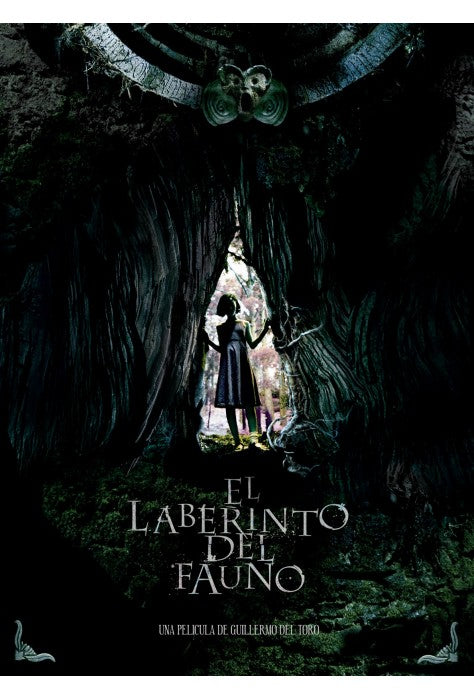
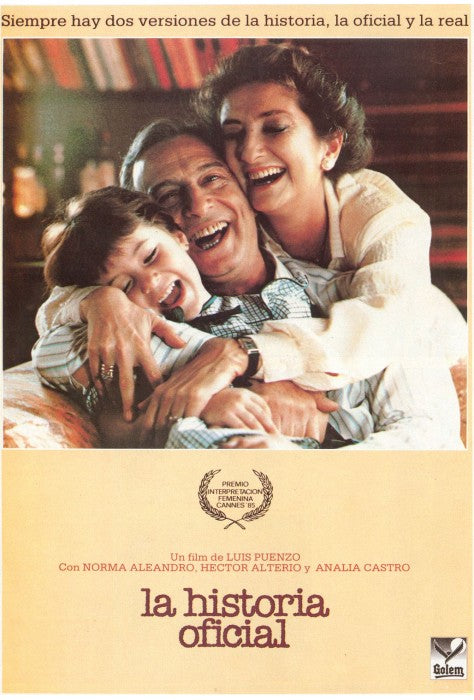
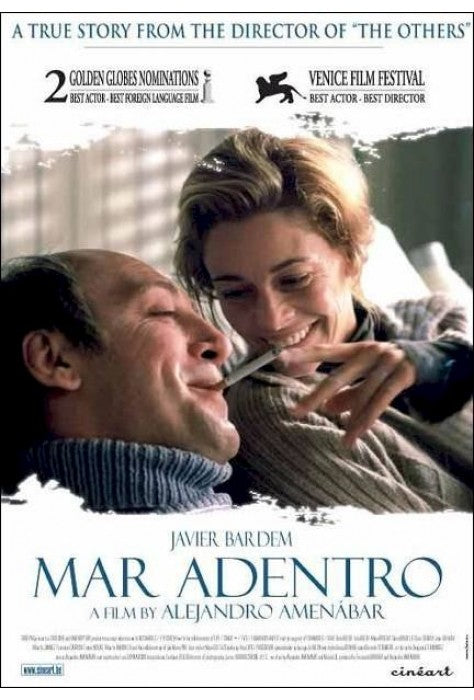
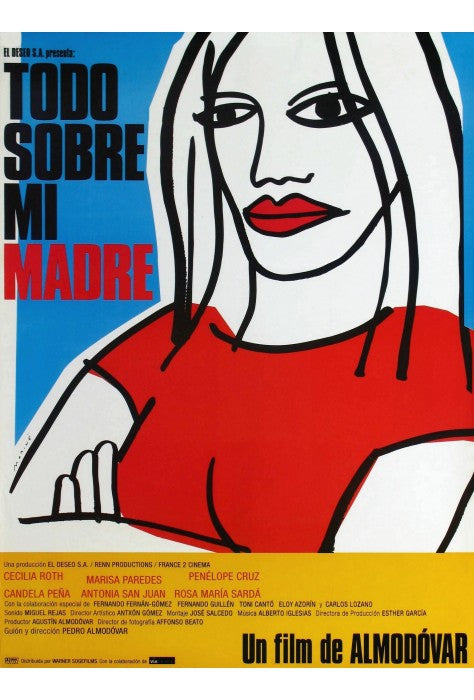
Film provides what you almost cannot manufacture in a textbook: a continuous stream of the subjunctive used naturally, in emotionally loaded moments, by speakers who are not thinking about grammar. Characters in Spanish-language films say quiero que vengas because they mean it. They say ojalá que todo salga bien because they're afraid. The subjunctive shows up exactly where it always shows up: in the expression of desire, doubt, emotion, and uncertainty — the most human parts of any story.
When students hear that language in context, they're not processing grammar. They're tracking a plot. And while they're doing that, their brains are doing the statistical work of noticing a pattern. Schmidt's noticing hypothesis — the idea that acquisition happens when learners consciously register a form in meaningful input — suggests that implicit exposure, especially when paired with structured attention, is exactly what builds durable grammar knowledge.
The Practical Architecture
Before the Film: Prime, Don't Pre-Teach
Instead of explaining the subjunctive before students watch, give them a different kind of preparation. Present three or four sentences from the film — moments where characters express strong wishes, fears, or doubts. Don't label them as subjunctive. Ask: what is this character feeling? What do they want to happen?
You're activating the emotional schema, not the grammatical one. Students who understand what a character wants or fears are primed to notice the language of wanting and fearing. That's the difference between a hook and a wall of verbs.
During the Film: The One Question
Give students a single tracking task: write down any sentence a character says that sounds like they're wishing for something, or doubting something, or feeling something strongly. Not "find the subjunctive." Just: write down the wish sentences.
You'll be surprised how many they catch. Because when students are listening for meaning — for the emotional texture of what a character wants — they gravitate naturally to exactly the constructions you need them to notice. After the film, you have a student-generated corpus of subjunctive examples. You didn't manufacture them. The film handed them to you.
After the Film: Make the Pattern Visible
Now you do the explicit work — but inductively. Put the student examples on the board. Ask: what do you notice? What do these sentences have in common? Who sees the verb change after que?
Swain's output hypothesis earns its keep here: structured noticing of forms in comprehensible, emotionally grounded input produces better encoding than starting with the rule. Students who discover the pattern from real examples they encountered themselves retain it longer than students who were handed a rule on day one. From there, productive tasks — a letter from one character to another expressing what they hope for, a rewritten ending using the character's wishes — give students a reason to use the subjunctive that isn't "because the worksheet says so."
A Note on Film Selection
Not every Spanish-language film is equally useful for this. You want films with high emotional stakes and characters who want things badly. Stories about desire, conflict, and uncertainty naturally generate subjunctive. Family dramas, coming-of-age films, stories about migration or loss — those hand you the subjunctive constantly, because those are the stories where people spend a lot of time saying what they wish, fear, and doubt. Even comedy works: characters in denial generate no creo que and dudo que almost continuously.
The key is that something has to matter to the characters. Language that matters to a character starts to matter to a learner.
The Honest Upside
The best thing that happens when you teach subjunctive through film isn't that students score better on the assessment — though that does happen. It's that they stop being afraid of it. The subjunctive becomes something they've heard, felt, and noticed, rather than a rule they've memorized and are waiting to forget. That's a different relationship with the language, and it's the one that survives past June.
If you want a structured film unit with all 14 sections scaffolded for pre-film, during-film, and post-film work — including targeted activities that surface grammar in context without announcing it — the FilmArobics Spanish lesson plans are worth a look. Built exactly for this kind of teaching: meaning first, form second, always in service of a story students actually want to watch.