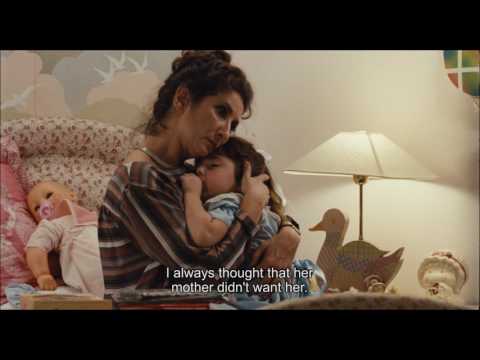
You know this student. You have known them every year. They tell you in the first week — sometimes out loud, sometimes just with their body language — that this is the class they are going to fail. They failed Spanish in middle school. Their older sibling is fluent and they are not. They have decided, somewhere between twelve and fifteen, that language acquisition is a talent they were not given.
They are wrong. But telling them that does not help.
Where the Belief Comes From
Stephen Krashen's work on the affective filter is now over forty years old, and it remains one of the most practically useful frameworks in SLA research. The core finding: anxiety, low self-esteem, and poor motivation create a psychological barrier that makes comprehensible input bounce off. The language is entering the room. It is not entering the learner. The filter is up.
What raises the filter? Performance contexts. Being called on. Being corrected in front of peers. Reading aloud. Anything that signals: your language is about to be evaluated publicly. For students who have already decided they cannot do this, every traditional language classroom activity is a performance context. They are not learning anymore. They are surviving the period.
Carol Dweck's fixed mindset research maps almost exactly onto what Krashen described in acquisition terms. A student who has internalized "I am not a language person" is not lazy or resistant. They have built a self-protective narrative from real evidence: they tried, they failed, the feedback confirmed the story. Telling them to try harder presses harder on exactly the thing that is not working.
What Actually Changes Things
I had a student — call him Marcus — who transferred in mid-October and within three days had declared himself mathematically unable to learn languages. He had a B+ in everything else and a D in Spanish 1. He had all the evidence he needed.
The first thing I noticed was that he laughed at the right moments during the film. We were watching a scene where two characters argue about directions — culturally specific humor that doesn't work unless you're tracking the subtext — and Marcus laughed before the subtitles caught up. He was understanding. He just did not know it yet.
That is the pedagogical opening. He was not "not a language person." He was a person whose affective filter had been raised so high by formal instruction that he could not feel his own acquisition happening.
Film lowers the affective filter for a structural reason: the primary task is not language. The primary task is watching a story. Students do not feel evaluated while they are watching. The emotional engagement — suspense, humor, character investment — pulls attention away from the performance anxiety that kills acquisition in formal contexts.
Krashen's i+1 model holds that acquisition happens when learners encounter language slightly above their current level in a low-anxiety environment. Film, scaffolded correctly, delivers exactly this. The student who insists they are not a language person is often encountering i+1 input already — they are understanding more than they think — but the filter is preventing them from feeling it and building on it.
There is also something important in Krashen's distinction between acquisition and learning. Students who have failed in language classes often failed in the learning track: memorizing conjugations, drilling forms, applying rules under test conditions. Acquisition — unconscious internalization of language through meaningful input — has never been properly activated for them. They have been playing a game they are structurally bad at. Film switches the game.
Three Moves That Work
Never require output from the film in the first session. The student who says they are not a language person has a hair-trigger exit reflex. The moment you ask them to perform — answer a comprehension question aloud, write a response — the filter goes back up. The first session is purely receptive. Let acquisition happen below the threshold of their awareness. You can assess later. Let them watch first.
Use their comprehension as leverage before they notice it. The student who laughed at the right moment, or winced at a plot twist, or asked "wait, what did she just say?" — they are already acquiring. The move is to name what just happened without turning it into an evaluation. "You caught that before I paused it — that was fast." Acknowledgment without a grade attached. You are building counter-evidence to their self-narrative, one moment at a time.
Krashen's affective filter work supports this directly: self-esteem is not just a prerequisite for acquisition, it is a product of it. When students notice they understood something, the filter lowers. When the filter lowers, more input gets through. It is a flywheel, and you have to start it spinning from the comprehension end, not the performance end.
Give them something to be the expert on that has nothing to do with grammar. Film gives you this for free. Ask the student who hates Spanish what the director was trying to do in that scene. Ask them what the character actually meant. Ask something culturally comparative — how is this different from what would happen in an American film? They have answers. They know they have answers. And the answers require target language engagement to discuss. You have just made language the tool, not the test.
What "Not a Language Person" Usually Means
When a student says they are not a language person, they are almost always describing one or more of the following: they have been taught entirely in the learning track with almost no acquisition opportunities; their affective filter is so elevated they cannot feel the comprehension they already have; or they have been corrected publicly enough times that the subject carries a pain association that overrides curiosity.
None of those are fixed traits. All of them are environmental. And environment is the one thing teachers actually control.
The research is not ambiguous: there are no non-language people. There are people who have been placed in conditions hostile to acquisition and told the failure was theirs. Film is not a magic fix. But it is a structural intervention that changes the conditions rather than demanding the student change themselves. That is, in practice, the only lever that works.
Marcus ended the semester with a C+ and watched the entire film twice — the second time because he wanted to. He did not become fluent. But he stopped being "not a language person," which is where it has to start.
The Unit Architecture Matters
If you teach Spanish and you know you are going to have students carrying past failure into the room with them, the structure of your unit matters as much as your classroom moves. A lesson plan that front-loads receptive tasks — pre-film vocabulary activation, low-stakes during-film observation, output only after comprehension is established — creates the conditions where the back-door acquisition Krashen describes can actually take hold.
The FilmArobics lesson plans at FilmArobics Spanish are built on exactly this sequence. They are worth a look, particularly for the classes where the "I'm not a language person" students are sitting in the back row hoping you do not call on them.
The student who says they are not a language person is often the one who surprises you by the end. They just need a door that does not look like the one they already walked through and failed.