The Scene That Was Supposed to Be Funny
You know the moment. You've watched the film a dozen times. You know exactly where the irony lands, where the character's deadpan delivery gets a laugh, where the sarcasm is so dry it practically crackles. You built the whole post-film discussion around that scene. And then you play it for period 3 on a Tuesday and you get — nothing. Thirty-two faces, completely blank. One student raises her hand and asks if the character was angry.
She wasn't wrong. And that's the problem.
Irony and sarcasm are among the most cognitively demanding linguistic acts a second-language learner can encounter, and they're also among the most culturally specific. The research on pragmatic competence — the ability to understand what is meant as distinct from what is said — is clear on this: learners at even high intermediate levels regularly misread speech acts that native speakers process automatically. They're not missing the words. They're missing the layer underneath.
What Grice Has to Do With Your Tuesday Lesson
H.P. Grice's cooperative principle describes how conversation works: we expect speakers to be relevant, truthful, and sufficiently informative. Irony and sarcasm violate these maxims deliberately — and fluent speakers interpret that violation as a signal that something else is being communicated. A native speaker hears "Oh, great, another pop quiz" and understands immediately that the speaker is not, in fact, pleased about the pop quiz. The mismatch between the words and the context triggers the pragmatic inference without any conscious effort.
For second-language learners, that automatic inference mechanism hasn't been built yet. The research on this — particularly work by Bouton on implicature acquisition and by Kasper and Rose on pragmatic development — shows that learners acquire pragmatic competence much more slowly than grammatical or even lexical competence, and they acquire it almost exclusively through exposure to naturalistic interaction. Not through rules. Not through drills. Through input — the same route as everything else.
The irony (genuinely intended) is that textbooks almost never include irony. Every dialogue is cooperative. Every utterance means exactly what it says. "Where is the library?" "The library is on the second floor." Nobody in a textbook is ever being sarcastic about the library.
Film is different. Film is full of characters who say one thing and mean another, who raise an eyebrow while their words say something polite, who use flatness of tone as a weapon. That layering is exactly what your students need — and exactly what they aren't getting anywhere else.
Why the Silence Happens
When a class goes quiet at an ironic scene, it's usually not because they didn't understand the words. It's because they processed the words as sincere — they took the surface meaning and moved on. Irony requires the listener to notice a mismatch, hold it, and resolve it. That's a three-step cognitive operation, and in a second language, the processing load of step one (just parsing the words) can consume enough cognitive bandwidth that steps two and three don't happen at all.
Krashen's affective filter framework is useful here: when learners are already working hard to parse the language, there's less capacity available for the higher-order inference that irony demands. They're not being dense. They're being cognitively maxed out, and the pragmatic layer is the first thing to drop.
I've started flagging ironic scenes before we watch them — not explaining the irony, just telling students: "This character is not saying exactly what she means. Pay attention to her tone and the situation, not just the words." That one instruction changes what they're listening for. It doesn't give anything away; it opens a perceptual channel they weren't using.
Three Moves That Actually Work
The Re-Dub
After watching an ironic scene, ask students to write or say what the character actually means — the sincere version of what was communicated. "He said he was fine with the decision. What was he actually communicating?" This surfaces whether the irony landed, and the discussion of divergent answers is where the pragmatic learning happens. Two students who heard the same line and came away with opposite interpretations are doing the most valuable work in your class.
The Tone Swap
Play the audio of an ironic line and ask students to identify whether the speaker is sincere or not — then replay it with the visual. Does seeing the face change the read? For most students, it does. This isolates the paralinguistic cues — the slight pause, the flat intonation, the too-wide smile — that carry the pragmatic signal. Those cues transfer. Students start noticing them elsewhere in the film, then in real speech.
The Culture Note
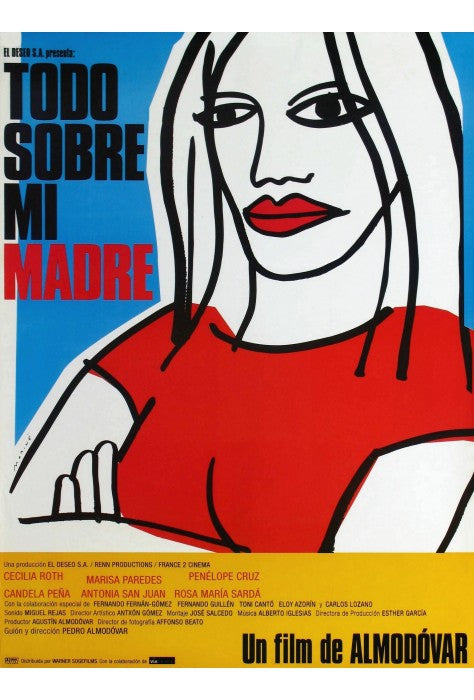
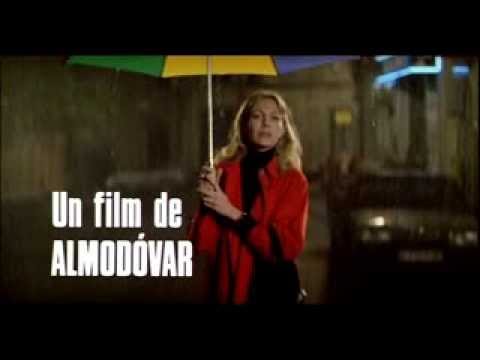
Some irony is culturally portable; some of it is not. A Spanish film playing a bureaucratic exchange for absurdist comedy may be doing something that requires cultural context about how bureaucracy actually works in that country — the frustration, the resigned humor — before the irony registers as irony rather than confusion. Build a one-paragraph context note into your pre-film work for any scene where the comedy depends on knowing something about how the culture operates. Not a lecture. A setup.
The Payoff Is Bigger Than You Think
Learners who acquire pragmatic competence sound dramatically more fluent, faster. The research on this — see Taguchi's work on pragmatic fluency in L2 — consistently finds that the ability to process and produce indirect speech acts is one of the strongest markers of advanced proficiency. Grammatically accurate students who can't read irony sound like learners. Students who can navigate indirect meaning sound like speakers.
You're not just teaching a comedy scene when you teach irony. You're teaching the learner to read the full signal — verbal, tonal, contextual — rather than just the words on the surface. That skill generalizes. It shows up in idioms, in politeness strategies, in the way a job interview works. It's one of the highest-return things you can spend 20 minutes on in a film unit.
If you're looking for lesson plans built around authentic film scenes that include structured pragmatic tasks — comprehension layers, not just comprehension checks — the Spanish lesson plan library at FilmArobics is a good place to look. The pre-film, during-film, and post-film architecture is designed for exactly this kind of work: building the inference skills that get lost when film is just a movie and not a lesson.
Period 3 on a Tuesday isn't always easy. But the blank-face moment can be the best teaching moment of your week, if you've got a structure to do something with it.