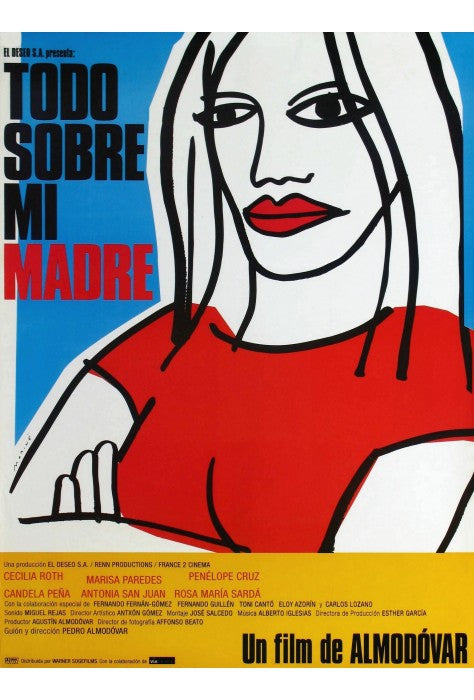
There's a particular kind of frustration most language teachers recognize. You've found the perfect film. The class is engaged — actually leaning forward, actually watching. And then you stop it to explain something about the culture. The geography. The history. The social dynamic. And you watch twenty-six faces go from interested to patient. Politely patient, if you're lucky.
The research gives us a useful frame for why this happens. Krashen's Affective Filter Hypothesis tells us that learners acquire language most effectively when their anxiety is low and their engagement is high. Every time you pause a film to deliver a cultural explainer, you're not just interrupting narrative momentum — you're raising the affective filter. You're signaling: this is now a lesson. Stop feeling. Start memorizing.
That's a real loss, because cultural context is not optional. It's the thing that makes authentic language meaningful. A student who doesn't understand why a character lowers their eyes in a particular social exchange, or why a seemingly casual invitation is actually a loaded one, isn't just missing cultural knowledge — they're missing the entire meaning of the scene. And meaning, as every input-based acquisition theorist from Krashen onward has argued, is the engine of language learning.
The Pre-Film Window Is a Priming Device, Not a Lecture
The instinct to pause and explain is understandable. Culture happens in real time on screen, and it feels like you have to catch it in the moment. But there's a better move: do the cultural work before the film starts, in a way that doesn't feel like front-loaded content delivery.
I used to hand out a "cultural background" sheet before we watched anything — a full page on context, history, social norms. My students would read it dutifully and remember almost none of it by the time the relevant scene appeared. Of course they didn't. Information without emotional context doesn't stick. That's not a teaching failure; that's just how human memory works.
What actually works is priming through questions, not facts. Instead of telling students that in this film, family loyalty will frequently override personal ambition — ask them: Have you ever had to choose between what you wanted and what your family expected? What happened? Now they have an emotional hook. When the character on screen faces that exact tension, students aren't just watching — they're recognizing. And recognition is the first step in retention.
The research on this is consistent. Activation of prior emotional experience before new input significantly increases depth of processing. Students aren't memorizing a cultural fact; they're connecting it to something they already know. That connection does the storage work that no amount of pre-loading can replicate.
Let the Film Do the Explaining
Here's what I've stopped doing: stopping. Unless there's a genuine comprehension crisis — students are so lost that the scene has no meaning at all — I don't pause the film to explain cultural content. I let it land. I let students feel uncertain about why something happened. Then I use that uncertainty as the lesson.
There's something important happening when a student doesn't quite understand a cultural dynamic they just watched. They're in a state of active wondering. That state is pedagogically valuable — it's the same condition that makes a good mystery novel unputdownable. If you pause and explain it away, you've resolved the tension before it had a chance to motivate learning. Let it stay unresolved until after the scene, or after the film, or until a student asks.
A student who asks "wait, why did she refuse the money?" is not confused. They're acquiring. They've noticed a gap between their expectations and what happened on screen. That gap, in Schmidt's Noticing Hypothesis framework, is exactly where acquisition begins. Your job in that moment isn't to fill the gap with a lecture — it's to help the student reach across it themselves.
Discussion That Does Real Cultural Work
The post-film discussion is where cultural instruction can happen without an affective penalty, because the emotional investment is already there. Students have feelings about what happened. They have opinions. They're ready to argue.
The key is asking questions that require cultural reasoning, not cultural recall. Don't ask: "What is the significance of X in Y culture?" Ask: "Why do you think she reacted that way? What would you have expected? What does that tell you about what matters in this world?"
These questions do two things simultaneously. They invite cultural comparison — students are reasoning about the culture they just watched by holding it against the culture they know. And they're doing it in the target language, producing output anchored to meaning they care about. That is the combination that acquisition research has consistently pointed toward for thirty years.
Culture Is Not a Footnote to Language — It Is the Language
There's a framing problem embedded in the way many of us were trained to teach culture: we treat it as content that supports language learning. Background information. Bonus material. The film is the vehicle; the language is the lesson; culture is the endnotes.
That's backwards. Culture is not separate from language — it's the system within which language has meaning. When a student learns that a particular phrase is used only in formal address, they're not learning a grammar rule; they're learning how power and respect are encoded in this language. When they understand why a character's word choice signals class, region, or education level, they're not getting a sociology lesson — they're understanding how the language actually works in the world where native speakers use it.
Film is the only instructional tool that lets students see language operating inside culture in real time, with stakes, with emotion, with consequence. That's the part textbook dialogue will never replicate — not because the writers aren't trying, but because authenticity cannot be manufactured.
The trick isn't to overlay culture onto your film unit. It's to stop separating them in the first place.
FilmArobics lesson plans are built around exactly this principle — cultural context is woven into every section, from pre-film framing questions to post-film discussion prompts, so you never have to choose between momentum and meaning. Browse the Spanish collection at filmarobics.com/collections/spanish.