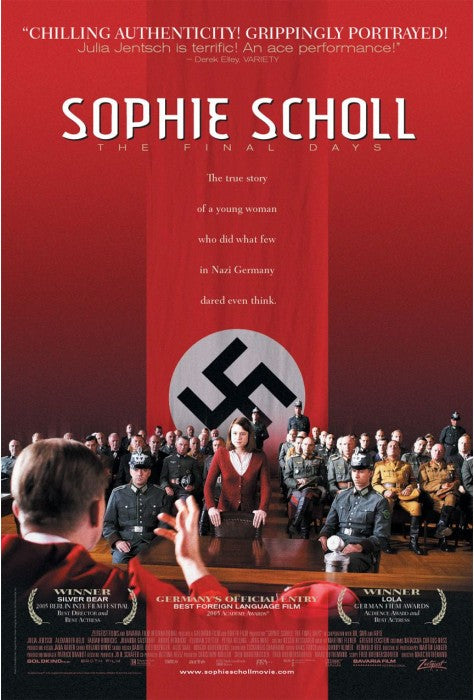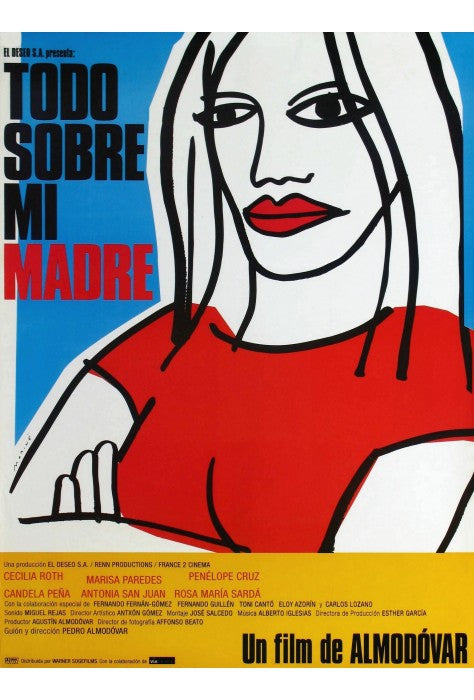
The moment comes somewhere in the first five minutes. You press play. The opening credits roll — in Spanish, in French, in Italian. The actors start speaking, fast and accented and completely unlike the classroom audio they have been conditioned on. And then you see it: the slow slump. Fifteen-year-olds physically withdrawing from the screen.
This is not laziness. It is a very predictable physiological response, and if you do not anticipate it, your film unit dies on day one.
The Subtitle Shock and the First-Film Problem
Most secondary language students have never sat with a subtitled foreign film. Their entire relationship with film is English-language. Even students who have reached Spanish 3 have, in many cases, never watched a full-length feature in the target language for pleasure — only clips, only textbook audio, only whatever controlled input you have managed to deliver inside a 50-minute period.
When you hand them a feature film, you are not just giving them language input. You are asking them to relearn how to watch. That is a cognitive demand on top of a linguistic one, and Krashen is very clear on what happens when anxiety spikes alongside comprehension difficulty: the affective filter goes up, and acquisition stops. The input keeps arriving. Nothing is getting through.
The research on this is consistent enough to be almost uncomfortable. Studies on foreign-language film anxiety — particularly work building on Young's 1991 framework on sources of language anxiety — show that unfamiliar task formats are a significant independent stressor. It is not just that the language is hard. It is that the task itself is strange, and strangeness costs cognitive resources that learners cannot afford to spend.
The Three Walls Students Hit
If you have shown enough films, you know that first-timers hit roughly the same three walls, usually in this order.
The first is speed. Authentic speech is fast. Not textbook-fast, not even audio-clip-fast — actually fast, with contractions and elisions and speakers who do not pause for your students to process. The brain tries to catch individual words and falls off the train almost immediately.
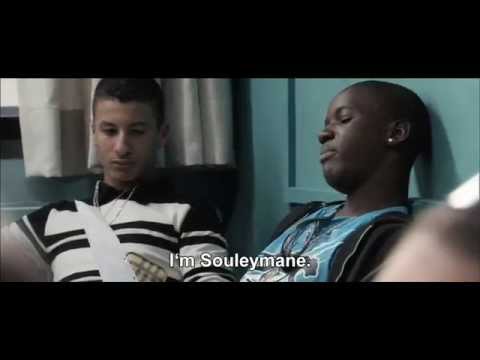
The second is subtitles. Students who have never read subtitles while watching a film do not know how to allocate attention between the screen, the dialogue, and the text at the bottom. They read the subtitle, miss the visual, re-read the subtitle, and feel like they are failing at three things simultaneously. Some of them stop trying.
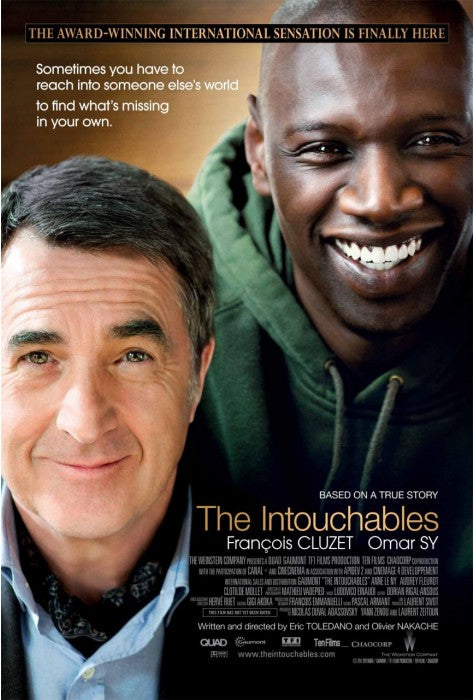
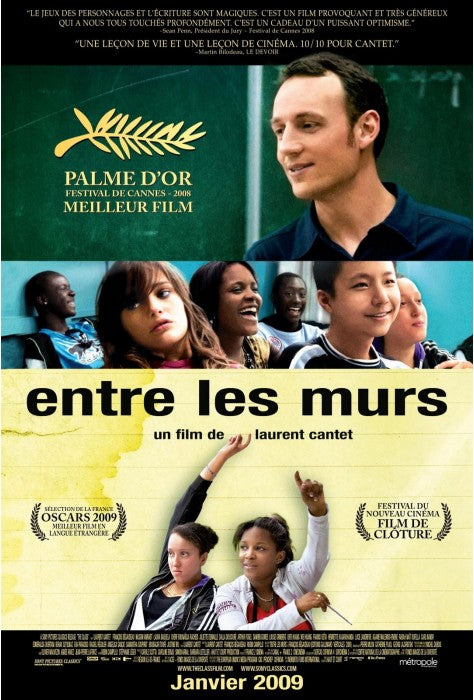
The third is cultural unfamiliarity. A student watching a Spanish film from Mexico City, or a French film set in a Marseille housing project, or a German film from the 1980s, is not just learning a language. They are navigating aesthetic conventions, humor registers, pacing norms, and social dynamics that are completely alien to what they know from American multiplex releases. When a scene lands flat — when a joke does not land, when a dramatic beat feels strange — they interpret that as a failure of their own comprehension, not as a cultural gap that can be bridged.
What to Do Before You Press Play
The first-film problem is almost entirely a pre-film problem. What you do in the 20 minutes before you press play determines whether those walls feel scalable or permanent.
Start with genre and format orientation, not language. Before any vocabulary or plot preview, have students watch a two-minute silent clip — no audio, no subtitles — and describe what they observe. Who are these people? What is the relationship? What are they feeling? This does two things: it lowers the language demand at the moment of highest anxiety, and it teaches students to read the visual register of a film that may be aesthetically different from what they know. They are practicing the skill of watching before they have to practice the skill of listening.
Next, normalize subtitles explicitly. Tell students that reading subtitles while watching is a learned skill, and that they are going to learn it today. Research on bimodal input — written and auditory simultaneously — shows that the combination actually accelerates comprehension over time (Vanderplank, 1988; Mitterer and McQueen, 2009). But students do not know this. They think struggling with subtitles means they are bad at the language. Naming the skill, framing it as learnable, and giving them one simple instruction — read the subtitle, then look up before it disappears — drops the anxiety measurably.
Finally, give them the first scene again, this time with audio and subtitles, and ask them one question only: what is the mood? Not vocabulary, not grammar, not plot. Mood. Because mood is comprehensible to everyone, regardless of proficiency level. When a student who was slumped in their chair five minutes ago correctly identifies that a scene is tense, or funny, or sad — they have just had their first success with authentic language input. That success is the foundation everything else sits on.
Why This Investment Pays Off
The reason to front-load all of this work is not just about making day one go smoothly. It is about what the research calls schema formation — the building of mental frameworks that allow learners to process new input more efficiently. Carrell and Eisterhold (1983) demonstrated that without prior schema, even technically comprehensible input fails to be processed correctly. Students decode the words and miss the meaning.
For a student who has never watched a foreign-language film, the film itself is the schema gap. The genre conventions, the viewing habits, the subtitle-reading automaticity — none of it is built yet. You are not just teaching language on day one. You are building the platform the language will sit on.
The good news is that once it is built, it transfers. A student who has worked through one well-scaffolded film unit approaches the next film with a completely different posture. The slump does not happen. They come in ready to watch, because watching is now a skill they have and know they have.
I have had students tell me at the end of a unit that they went home and watched another film in Spanish on their own. Not because I assigned it. Because the wall came down, and they discovered something on the other side of it. That is not a language outcome you can measure on a rubric. But it is the one that matters most.
The Structure That Carries Them Through
None of this works without the right structure around the viewing. Pre-film vocabulary tasks that build context rather than test recall. During-film checkpoints that ask for observation rather than comprehension. Post-film discussion that leads with reaction before it moves to language analysis.
That architecture is what separates a film unit that works from a film you played because you were tired on a Friday. The language is in the film. The acquisition happens in the structure around it.
If you are looking for lesson plans built exactly this way — designed to scaffold first-time film viewers through the full pre-, during-, and post-film sequence — FilmArobics Spanish lesson plans have been doing this work since 1995. Every plan is structured to carry students who have never watched a foreign-language film all the way through to real language production. The scaffolding is already there. You just have to use it.