
The Mixed Classroom Is the Real Classroom
Let's be honest about something the curriculum guides rarely acknowledge: your classroom is not the homogenous group the scope-and-sequence assumes it is. You have students who blow through reading comprehensions before others finish the first line. You have students who've been speaking Spanish at home since birth sitting next to students who met hola in August. This is not a failure of placement. This is secondary education in the real world.
The research on differentiated language instruction is clear on one point that often gets buried in the implementation details: the goal is not to give every student the same experience. It's to give every student an experience that sits just at the edge of their current competence — what Stephen Krashen's input hypothesis describes as i+1, comprehensible input that is slightly above the learner's current level. The problem with most differentiated instruction is that teachers are expected to build three different lessons for one class period. That's not differentiation. That's three times the planning for one teacher who already has four preps.
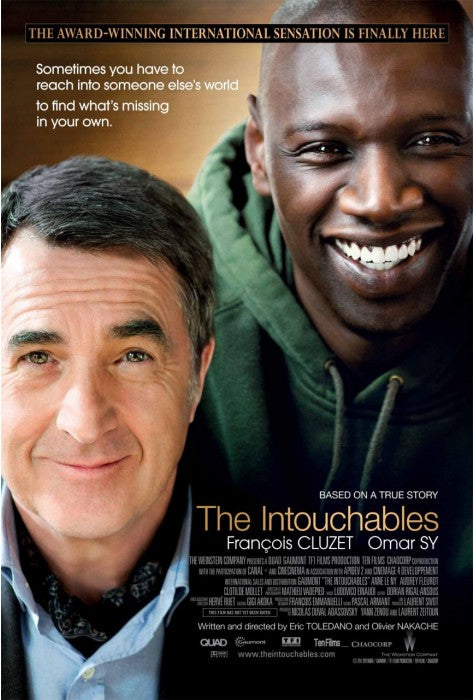
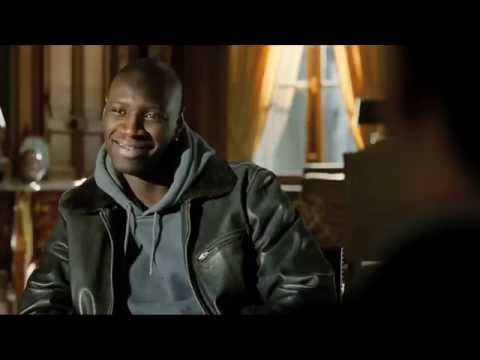
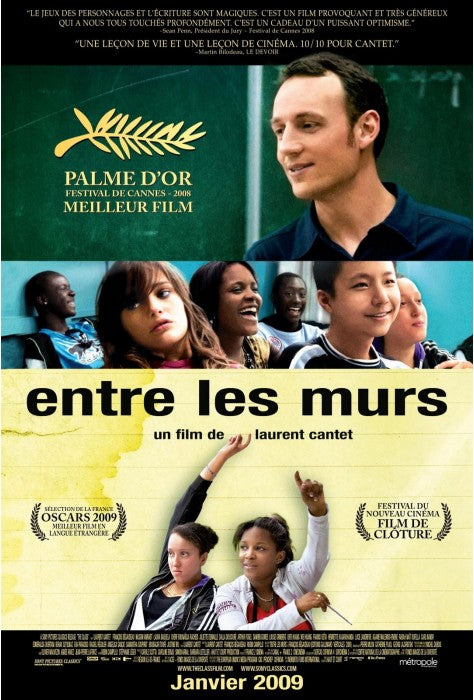
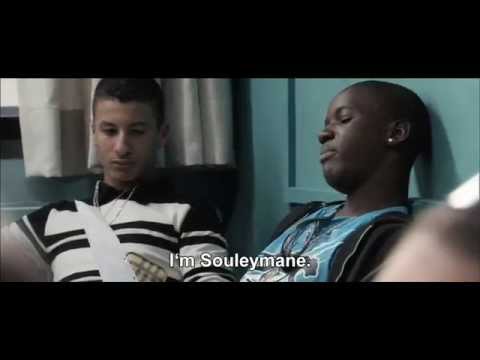
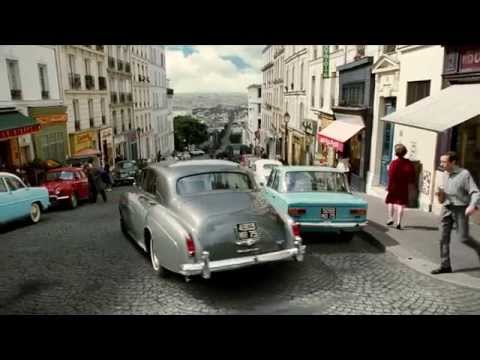
Film changes the equation. When you put an authentic film in front of a mixed classroom, you already have the most naturally differentiated input source available — because every learner in the room is processing a different version of what they're seeing, and all of them are processing something real.
Why Film Scaffolds Itself (If You Let It)
Here's what happens in a textbook lesson when the proficiency gap is wide: your advanced students finish the cloze exercise in four minutes and start poking each other, while your lower-proficiency students haven't gotten past the second paragraph. The pacing problem is built into the format.
A film scene doesn't have a pacing problem. The scene runs. Everyone watches. The beginning student catches the emotion on the actor's face, the location, the tone — enough context to understand that something serious is happening, that this character is afraid, that money is involved. The advanced student catches the slang, the regional idiom, the subtext in what wasn't said. Both of them experienced the scene. Neither of them was bored or lost in the same way a static text exercise would leave them.
This is the affective filter working in your favor. When the input is comprehensible enough to engage without being so easy it disengages, learners at every level stay present. The film does that work naturally. Your job is to design the tasks around the film to meet students where they are — not to redesign the film.
The Task Layering Framework
The practical approach that actually works in a mixed classroom isn't three separate lesson tracks. It's one lesson with layered tasks — the same scene, the same discussion, but questions and outputs that allow for different entry points.
Layer 1: Comprehension Access (All Students)
Every student watches the scene. The first task is comprehension-based and visual: What happened? Who was involved? How did the characters feel? These questions don't require high proficiency to answer — they require attention. They're also not throwaway questions. Comprehension is the foundation of everything that follows, and you'll find that even your strongest students sometimes get the facts wrong because they were listening for the language and missed the plot.
Lower-proficiency students should be able to answer these questions with a sentence or two in the target language, or in a mixed format if you've built that into your scaffolding policy. The goal is engagement and basic comprehension, not elegant output.
Layer 2: Language Focus (Approaching Grade Level)
The second layer asks students to attend to the language itself: What phrase did the character use to express disagreement? How did they soften the refusal? What tense was that, and why? These questions require more precise listening and some grammatical awareness. They reward students who have enough proficiency to notice structure while still being grounded in the concrete scene everyone just watched.
This is where vocabulary work, phrase identification, and structural analysis live. Students who are solidly at or near grade-level proficiency can do this independently. Students who are below can often do it with the transcript excerpt as support — and providing that support is not a cheat. It's scaffolding. The distinction matters.
Layer 3: Extension and Analysis (Advanced Students)
For your advanced students — the ones who genuinely need more — the extension isn't more of the same. It's deeper. Why did the director frame that conversation the way they did? What does the character's code-switching tell us about their social positioning? Compare how this character expresses conflict to how conflict is resolved in your own family or culture.
These prompts require advanced language production and critical thinking. They also produce class discussion that benefits every student in the room — because when an advanced student articulates a cultural observation out loud, the lower-proficiency student who couldn't have generated that observation still processes it, still adds it to their understanding, still grows.
The Grouping Conversation
One of the most effective moves in a film-based mixed classroom is strategic grouping for discussion tasks. Not homogenous grouping — that isolates students and limits the richness of conversation. Purposeful mixed grouping, where each student in a group has a defined contribution to make.
Think about it this way: after watching a scene, your lower-proficiency student can describe what happened. Your mid-level student can explain how the characters said what they said. Your advanced student can analyze why the scene was structured that way. Put them together and ask them to build a single group response — and what you get is collaborative meaning-making where every proficiency level has a genuine, non-tokenizing role to play.
This isn't just good inclusion practice. It's good language pedagogy. Vygotsky's zone of proximal development — the learning that happens in the company of someone slightly more capable — is being activated in every direction in that group. The advanced student reinforces their knowledge by explaining it. The beginning student acquires from hearing it explained in context. Everyone moves.
What Not to Do
Don't give your advanced students more worksheets. If the extension for high-proficiency students is just a longer version of the same task, you've missed the point. More repetition of what they already know is not differentiation — it's a punishment for being good at something.
And don't water down the film for lower-proficiency students by over-translating. A student who watches a Spanish film with English subtitles and fills in English answers has been taught English, not Spanish. The scaffolding should support access to the target language — not replace it.
The goal is to stay in the target language, stay in the film's world, and design tasks that let every student participate at the right edge of their ability. That is harder than it sounds, and it's also exactly what good curriculum design makes possible at scale.
The Honest Truth About Mixed Classrooms
No single lesson — film-based or otherwise — solves the mixed proficiency problem completely. What film does is reduce the planning burden while raising the engagement floor. When every student in the room is watching the same scene and genuinely trying to understand what's happening on screen, you've already accomplished something most textbook lessons can't: universal engagement with a shared, meaningful context.
Everything scaffolded on top of that shared experience is easier to differentiate, easier to discuss, and easier to assess than anything built on a text that half the room couldn't access in the first place.
If you're looking for lesson plans that build this task-layering structure into a ready-made unit — with differentiated comprehension questions, language-focus activities, and extension prompts already written — our film-based units are designed exactly this way. Browse the full collection at filmarobics.com/collections/spanish (or your language of choice) and see whether any of our current films match what your students are ready for.