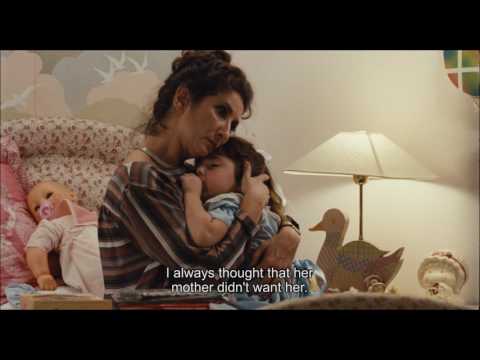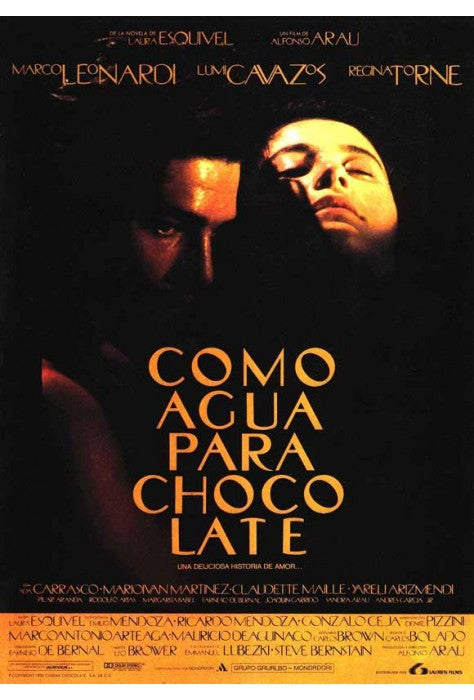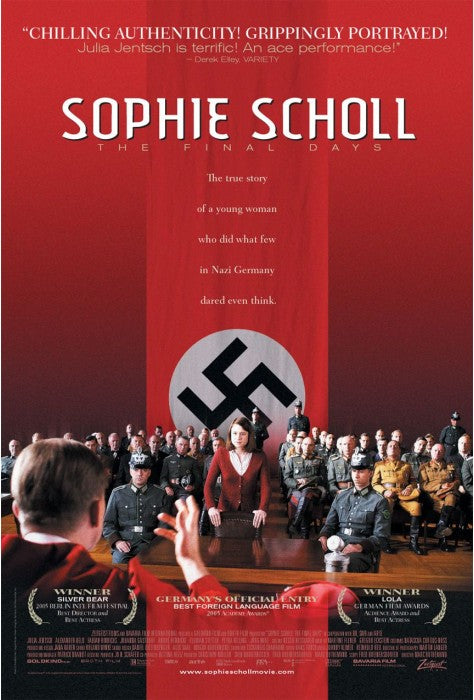
You have narrowed it down to two films. Both are in the target language. Both are age-appropriate. Both have the vocabulary your students need. And you are sitting there at 9 p.m. on a Sunday, unable to pick one.
This is not an unusual problem. It is, however, one that almost nobody writes about — because most of the guidance on film in the language classroom stops at "pick a good film." What "good" means when you are standing at the fork between two genuinely solid options is a different question, and it deserves a real answer.
The Wrong Criteria (and Why They Feel Right)
The most common tiebreakers teachers use are language level and plot accessibility. Both are reasonable instincts. Neither is the right call.
Language level matters less than it appears to. Krashen's comprehensible input hypothesis — the i+1 principle — does not say learners need input at exactly their current level. It says they need input just above it, embedded in enough context that meaning is recoverable. A film that is slightly harder than your students' current output level, combined with strong visual context and a structured task sequence, will often produce better acquisition than a film pitched precisely at their proficiency ceiling.
Plot accessibility is similarly misleading. A simple plot does not automatically produce engaged learners. What drives comprehension is emotional investment in outcome. The research on affective engagement and language retention — Schumann's work on appraisal theory is the foundation here — is consistent: when learners care about what happens next, they attend more carefully to language. A complicated plot with high stakes will often outperform a simple plot that nobody is emotionally tracking.
The Criteria That Actually Matter
1. Which film has more retrievable moments?
Think of these as anchor scenes — moments dense enough in language, gesture, and emotional context that students can return to them repeatedly without losing engagement. A film unit is not a single viewing. It is a structure of viewings, tasks, and discussions built around key scenes. The film with three or four genuinely rich anchor scenes — where a lot is happening linguistically and emotionally at once — will carry a longer unit better than the film with one great scene and forty minutes of serviceable filler.
When you are deciding between two films, watch each one and count the moments where you think: a student who barely understood that scene would still want to know what just happened. Those moments are your unit's skeleton. Count them. The film with more of them wins.
2. Which film gives your quietest students something to say?
There is a test worth running on any film before committing to it. Think of your three most reluctant speakers — the students who will give you one word if you are lucky — and ask: is there a moment in this film where even they will have an opinion? Not a linguistic opinion. A human one. Something happened on screen and they feel something about it.
Swain's output hypothesis tells us that pushed production — the moment a learner is reaching for language they do not yet fully control — is where acquisition accelerates. But pushed production only happens when students actually want to say something. The film that gives your quiet students a genuine emotional response is the film that creates those moments. The other film might be "easier" in every measurable way and still produce nothing. I have taught both kinds of films. The difference in a Period 3 class is not subtle.
3. Which film has more usable vocabulary in context?
This is different from overall vocabulary level. The question is not how hard the words are. It is how often the film repeats meaningful vocabulary in slightly different contexts, how much of that vocabulary is embedded in scenes where meaning is visually recoverable, and whether the words that appear are words students will actually need.
Nation's research on vocabulary acquisition through sustained input is instructive here: learners need roughly eight to twelve meaningful encounters with a word before it moves into productive use. A film that cycles the same thirty words through varied emotional contexts across its runtime is more valuable than a film that uses three hundred words once each. Look for lexical density and repetition, not just level. The word a student hears in a tense negotiation scene, then again in a quiet moment of reconciliation, is the word that sticks.
4. Which film connects to something your students are already carrying?
This is the criterion teachers sometimes dismiss as "softening the curriculum," and it is actually the most evidence-grounded one on the list. Norton's work on identity and language investment is clear: learners acquire language more rapidly when they perceive the content as relevant to their own lives, questions, or communities. This does not mean you need a film that reflects your students' literal demographics. It means you need a film whose core human question — loyalty, belonging, ambition, loss, justice — lands somewhere near something they are already thinking about.
I had a class once where I agonized over two films for a week. One was linguistically better calibrated. One had a protagonist who felt overlooked and was fighting to earn something they deserved. I went with the second one. The class came alive in a way that had nothing to do with proficiency level and everything to do with recognition. I could not have predicted it in advance. But I could watch both films with that question running in the background: does this character's situation resonate? Not in a forced, teachable-moment way. Just: will a sixteen-year-old feel something real here?
The Tiebreaker You Actually Have Permission to Use
If you have worked through all of that and are still undecided, use this: pick the film you are more interested in. Not the one you think is more appropriate. The one you are genuinely curious about.
Teacher enthusiasm is not a soft variable. It is an instructional input. The affective filter works in both directions — a teacher who is bored by the film raises the anxiety ceiling of the whole unit without meaning to. A teacher who is genuinely engaged carries students through harder material, sustains discussion longer, and asks better follow-up questions. The film that makes you a more engaged teacher is, all else equal, the better pedagogical choice. It is not a concession. It is pedagogy.
The Decision Matters Less Than What Comes After It
There is a version of this problem that is really about something else. Sometimes teachers spend forty-five minutes deciding between two films because they are not entirely confident that using film at all is defensible. If that is what is underneath the indecision, a better decision framework will not solve it. The research on film-based acquisition is not ambiguous — emotionally engaging, structured input produces measurable gains in both comprehension and production. The indecision is worth noticing, but it should not be confused with a genuine film-selection problem.
When both films are genuinely good, the decision matters less than what you do with whichever one you choose. A mediocre lesson plan built around a great film is still a mediocre lesson. A well-structured unit built around either of your two good options will work.
If you want a head start on the structure — the pre-film, during-film, and post-film architecture that turns a good film into a complete, teacher-ready unit — take a look at the FilmArobics Spanish lesson plans. They are designed so that the decision you agonized over on Sunday night does not have to be re-litigated every class period. The structure is already there.