Every language department has this student. They are smooth. They answer confidently, with good rhythm, appropriate intonation, the occasional idiom. They sound like they're acquiring the language faster than anyone in the room. Then one day you go off-script — a follow-up question they weren't expecting, a conversation that didn't go where they'd rehearsed it — and they stop. Completely. The fluency was real. The acquisition underneath it was thinner than it looked.
This is not a character flaw. It is a structural problem with how we measure language learning.
Fluency Is Not Acquisition
Bill VanPatten draws a sharp line between explicit knowledge and implicit knowledge in second language acquisition. Explicit knowledge is what you can explain — rules, patterns, rehearsed phrases. Implicit knowledge is the system underneath that runs automatically, the one that lets you understand and produce language without consciously applying rules. Fluency-sounding students often have highly developed explicit systems. They have learned to perform language learning. That is different from acquiring a language.
Krashen's monitor hypothesis describes exactly this: learners can use consciously learned rules to edit their output, and with enough practice, that edited output can become remarkably smooth. But the monitor requires time, focus on form, and knowledge of the rule. When those conditions drop — when a conversation moves fast, when the topic is unexpected, when the emotional stakes go up — the monitor cannot compensate. What you get is the actual acquisition level. For some high-performing students, that level is surprisingly low.
The most dangerous version of this student is the one who is so good at managing the performance that neither you nor they realize the acquisition hasn't kept pace with the grades.
What It Looks Like in Class
You know the cues if you're watching for them. They ask clarifying questions more than you'd expect for their supposed level. They answer questions about facts they've memorized but hesitate on opinion questions where there's no right answer to recall. They're fast and accurate on tasks they've seen before; they stall on novel tasks. They self-correct in ways that reveal rule-application rather than self-monitoring — the slight pause, the restart, the visible internal consultation.
I had a student in French 3 who could recite the subjunctive formation backwards and use it correctly in every drill I gave her. She got full marks on every quiz. Then I put her in a spontaneous paired conversation about what she thought was going to happen in the film we were watching. She looked at me like I had asked her to build a bridge. The language she reached for wasn't there the way she needed it to be.
She wasn't failing. She was revealing exactly where the gap was — and the gap was between what she could perform and what she actually owned.
Why Film Exposes the Gap (Without Punishing the Student)
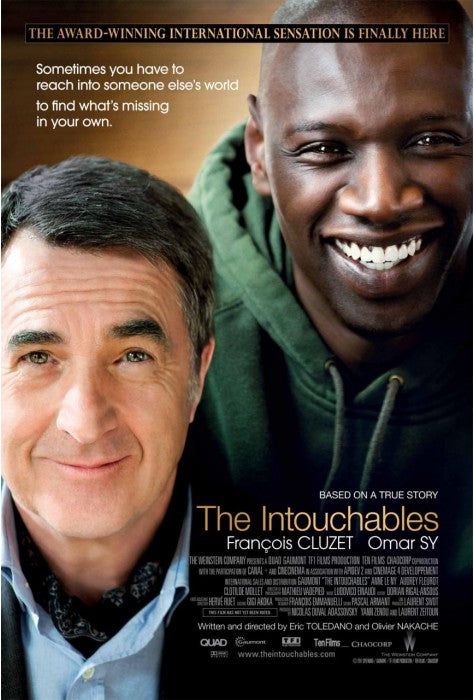
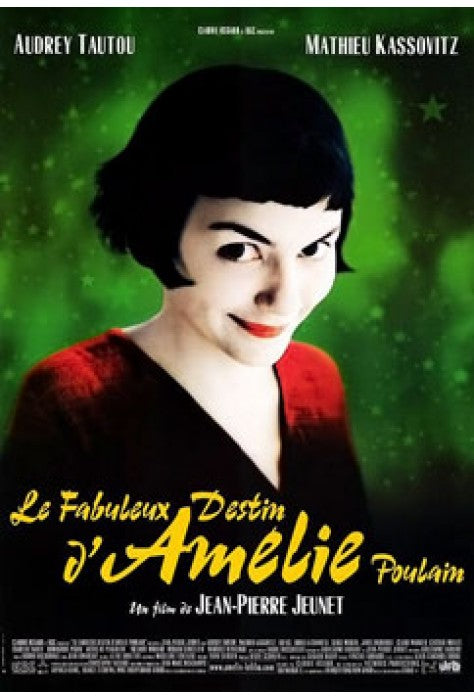
Film-based language tasks are structurally good at this problem because they require genuine meaning-making rather than performance. When a student watches a scene where a character makes an unexpected choice, and you ask what they think about it, there is no rehearsed answer. They have to reach for real language — the language they actually have — to express a real opinion about something that just happened.
Merrill Swain's pushed output hypothesis argues that learners need to be pushed beyond comprehension into production — into situations where they cannot simply decode meaning, but have to generate it. Film provides the comprehensible input that Krashen identifies as essential, and then the structured response tasks provide the pushed output that Swain shows is what turns input into production capacity. The student who can fluently recite a prepared paragraph but freezes on a follow-up question needs more Swain, not more Krashen.
The key is that film makes this safe. The student is not being exposed as a fraud. They are being given a task that neither rewards performance nor punishes the absence of it — it just requires them to respond to something real. The affective filter stays low because the stakes are about the film, not about their grade or their reputation.
What to Do When You Identify This Student
The first move is to change the task type, not the content. If a student is performing fluency, they will be excellent at close-ended tasks (summarize this scene, describe this character). Give them more open-ended response tasks that cannot be pre-rehearsed: What did you feel watching that scene? What do you think she should have done? What would you have said? These tasks have no correct answer to retrieve, so the monitor cannot do the work. What comes out is what they actually have.
The second move is to increase the speed of the exchange. Fluency-performers can prepare for a one-question-and-answer format. A quick three-turn conversation where you respond to what they said and ask a genuine follow-up — not a scripted one — changes the conditions. The monitor needs time. Take the time away. What you hear in that third turn is real acquisition.
The third move is to give them more input before you push more output. VanPatten is clear: explicit knowledge does not become implicit knowledge through drilling explicit knowledge harder. It becomes implicit through massive comprehensible input — encountering the language working naturally in context, again and again. Film is the most efficient delivery mechanism for this that exists in a classroom setting. A student who watches a film with structured attention and genuine comprehension is building the implicit system that their fluency performances are currently substituting for.
The Longer Game
What is happening with the fluency-performer is not unusual and is not their fault. They figured out how to succeed in a system that often rewards performance over acquisition. The goal is not to catch them or expose them — it is to give them real acquisition tasks so the system underneath catches up to the performance on top.
Film units, done well, do exactly this. The input is rich and emotionally salient. The tasks push genuine production. There is no rehearsed answer because the film itself is unrehearsed. The student who has been performing language learning gets, often for the first time, the experience of actually using it — and discovering that more of it was real than they thought.
If you want a film unit architecture that is built to move both types of learners — the genuine acquirers and the fluency-performers — toward the same place, the FilmArobics French lesson plans are designed with exactly that in mind. Fourteen sections that scaffold from input to output, from comprehension to production. Take a look at filmarobics.com/collections/french.