It happens fast. You ask the class a question. One student answers — and gets it badly wrong. Maybe they said something that accidentally means something else. Maybe the whole class laughed. Maybe you corrected them and three other students echoed the correction in that well-meaning-but-devastating chorus. The student nods. They write something down. And then they are gone — present in the chair, absent from the class — for the rest of the semester.
Language teachers know this student. They are probably in your period 3 right now.
The Shutdown Is Not About the Mistake
Here is what the research says about what actually happened. Stephen Krashen's affective filter hypothesis describes a psychological barrier that rises whenever a learner feels anxious, embarrassed, or at risk. When the filter is high, comprehensible input stops reaching the language acquisition device — not because the input disappears, but because the learner has stopped processing it. The language flows past them. Nothing sticks.
What raised that filter was not the mistake. Mistakes are normal. What raised it was the social visibility of the mistake. Elaine Horwitz's work on foreign language classroom anxiety identifies three specific triggers: communication apprehension, test anxiety, and fear of negative evaluation. That moment in the classroom — the error, the correction, the echo — hit all three at once.
The student did not decide to stop learning. Their nervous system made that call for them.
Why "Just Try Again" Doesn't Work
The well-intentioned response is to call on that student again the next day. Give them a win. Rebuild the confidence. And sometimes that works. More often, you watch them look at their desk the moment you make eye contact, and you silently decide to let it go for a while.
The problem is that "try again" still puts them at the front of the same social stage where the original damage happened. The affective filter is not irrational — it is reading the room correctly. The classroom is still the place where they failed publicly. Calling on them again asks them to walk back onto that stage without changing the stage.
I had a student one year — smart kid, genuinely strong intuitions in French — who mispronounced something in a way that made the class laugh in October. This was November and I still could not get a full sentence out of him. The filter was not dropping. He was just waiting for the year to end.
What Film Does That the Classroom Can't
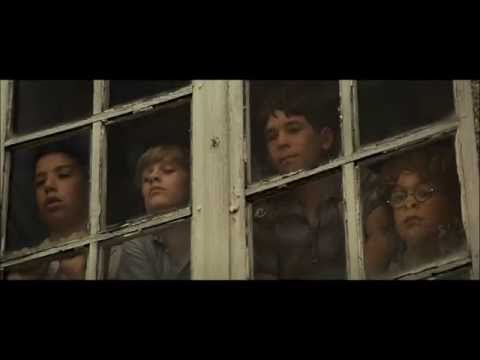
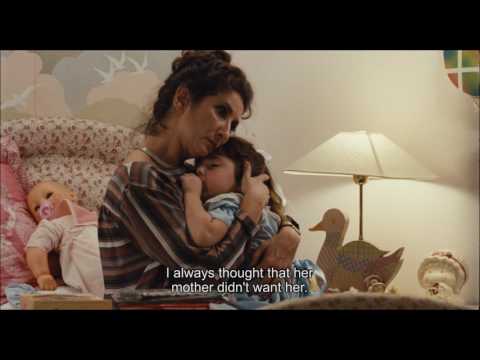
Film-based language work restructures the social geometry of the room. When attention is directed at a screen, the teacher is no longer the center of evaluation — the film is. Students are responding to characters, not performing for the class. The error risk is distributed across a shared experience rather than spotlighted on one person.
This is not incidental. Bill VanPatten's input processing research suggests that acquisition happens best when attentional resources are focused on meaning rather than form. When a student is genuinely engaged with what happens to a character on screen, they are not simultaneously managing social exposure. The filter drops — not because the classroom became safer in some abstract sense, but because the structure of attention shifted.
For the student who shut down in October, film is the re-entry ramp. It gives them a reason to respond that is not about being evaluated. "What did he mean when he said that?" is a question about the film, not an assessment of their Spanish. The stakes feel different even if the language is the same.
Three Moves That Actually Work
The first is the written response before the spoken response. During a film, have students write a sentence — just one — about what they think a character is feeling or what they think will happen next. Then invite anyone to share. The written step creates a draft they can read from, which removes the terror of spontaneous production in front of the room. For the student who shut down, being able to read their sentence is not a crutch — it is a legal re-entry point.
The second is the pair response before the class response. Anything that lets a student say something in the target language to exactly one other person before they say it to thirty reduces the exposure risk dramatically. Run a 90-second pair share after a film scene before you ask anyone to address the room. The student who was silent in October has now already said something out loud in Spanish today. That is a small thing that is not a small thing.
The third is the anonymous written response. A short written task on paper — not digital, not collected until the end of class — that asks students to respond to what just happened in the film. No names required initially. Some teachers do a "table collection" where responses are mixed before sharing. This one takes more setup, but for certain students it is the difference between engaging and not engaging at all.
None of these are workarounds. Swain's pushed output research is clear: students acquire language by being pushed to produce it. The goal is to get the student producing. These structures remove the social barrier that was stopping production, which is the actual problem.
What You're Watching For
When a student who went silent starts responding again — first in writing, then to a partner, eventually to the room — that re-entry looks slow from the outside. It is not slow. The affective filter that took thirty seconds to raise can take months to lower. Watching a student write one sentence about a film character and then read it aloud when asked is not a small win. It is the whole win, happening in real time, right in front of you.
Film gives that student something to care about that is bigger than their own social risk. When the character on screen is facing something real — a decision, a loss, a confrontation — students forget, briefly, that they are afraid. That brief forgetting is where acquisition happens.
If you're looking for a structured way to build these re-entry ramps into a full film unit — with pre-film, during-film, and post-film tasks designed to lower the filter at every stage — the FilmArobics Spanish lesson plans are built exactly for this. Each of the 14 sections scaffolds the response so students are never cold-called into the deep end. Browse the Spanish catalog at filmarobics.com/collections/spanish.