The Gap Has a Name
You've seen this student. She watches the film, laughs at the right moments, follows the story without subtitles, participates in discussion. Her conversational Spanish is genuinely impressive. Then you hand out the analytical writing prompt — "Describe how the director uses language to establish the protagonist's identity" — and she stares at the page like you've switched languages on her. Which, in a sense, you have.
The research on this is unambiguous. In the 1980s, Jim Cummins drew a now-famous distinction between two types of language competence: BICS (Basic Interpersonal Communicative Skills) — the fluid, context-rich language of conversation and daily interaction — and CALP (Cognitive Academic Language Proficiency) — the decontextualized, precise, discipline-specific language of school. Cummins' work showed that learners typically acquire BICS within two to three years of sustained input. CALP? Closer to five to seven. And the classroom almost never addresses the gap explicitly.
This matters enormously for what we're asking students to do with films. A film is a BICS-rich environment. Characters argue, joke, grieve, hesitate, negotiate. The language is contextual, emotional, fast. Students who are acquiring well thrive in that environment. But then we ask them to write an essay, analyze a scene, or defend an interpretation — and suddenly they need CALP. Words like implica, contrasta, refleja, se puede observar que. Register shifts. Hedging language. Disciplinary syntax. None of that arrives for free just because the input was rich.
The Film Is Not the Problem — the Handoff Is
Here's what usually happens. Teacher shows film. Students engage beautifully. Teacher assigns written analysis. Students produce thin, conversational prose — simple sentences, basic vocabulary, almost no analytical language. Teacher concludes the film didn't "transfer" to writing. Film gets blamed for the gap that was always there.
But the film isn't the problem. The problem is that nobody built a bridge from BICS to CALP inside the unit. The film delivered comprehensible input at the conversational register. The writing prompt demanded output at the academic register. Nothing in between taught students the transit.
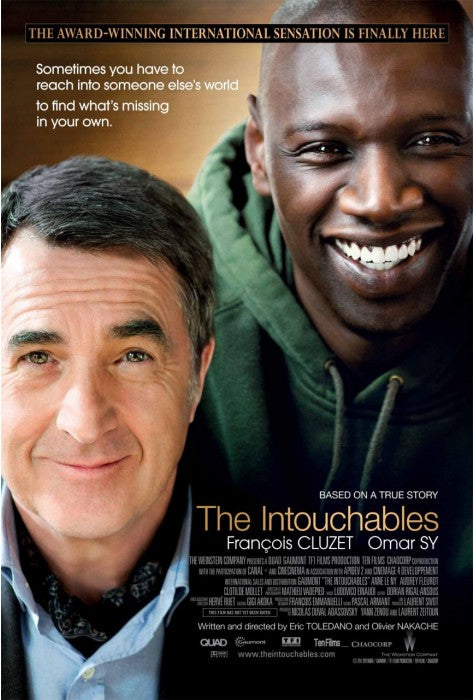
I had a French 3 class a few years ago where this became almost comically visible. We watched Les Intouchables, and the discussion afterward was some of the best spontaneous target-language conversation I'd seen in years. Students were arguing about class, disability, friendship — real ideas, in real French. Then I asked them to write a paragraph analyzing how the film depicted social inequality. The same students who had just debated with genuine passion submitted three-sentence responses full of the words you'd say to a friend, not the words you'd write in an essay. The BICS was there. The CALP was a different country.
What Academic Language Actually Looks Like in a Film Context
The good news — and this is the part that makes film an unexpectedly powerful vehicle for CALP — is that films are dense with academic language opportunities. They just need to be named.
Consider what happens when a student has to describe what a character implies rather than what they say. That is inference language. When they compare how a character speaks to their boss versus to their family — that is register analysis. When they explain how a flashback changes the viewer's understanding of a scene they already watched — that is sequencing and cohesive reference. These are the basic operations of academic language. And every film offers them, continuously, for the entire runtime.
Krashen's i+1 principle is directly applicable here. If a student's conversational Spanish is solid (that's the i), then the +1 is not more conversational Spanish — it's academic Spanish. The structures they don't yet have. Se puede argumentar que… En contraste con… A diferencia de… Lo que esto sugiere es… These forms are acquirable, but they need to appear in comprehensible context. Film analysis provides exactly that context — the meaning is transparent because they just watched the scene, so the form can be the focus.
Three Moves That Build CALP Inside a Film Unit
Sentence frames before the writing prompt
Not scaffolding in the condescending sense — scaffolding in the Vygotskian sense. Give students five to eight academic sentence frames in the target language before any analytical task. The difference between "here are words to use" and "here are the structures that allow you to say what you're already thinking" is enormous for the affective filter. Students who get frames feel capable. Students who get a blank page feel exposed.
In practice: En esta escena, el director sugiere que… / El comportamiento de [personaje] refleja… / A diferencia de la escena anterior… / Lo que resulta interesante es que… Write them on the board. Leave them there. Watch the written output change.
The scene-as-text protocol
Pick a two-minute scene. Watch it twice. First viewing: what happened? Second viewing: how did the filmmaker show it? The second question forces a different register. Students have to reach for language they don't automatically have — direction, contrast, implication, effect. That reaching is exactly where CALP is built. The scene is the comprehensible context. The analytical question is the +1.
Vocabulary sorting by register
After vocabulary work, have students sort words into two columns: words a character might say out loud, and words a critic might write about the character. Students often intuitively know the difference — they just haven't been asked to attend to it. Naming the register distinction makes it teachable rather than mysterious.
The Transfer Argument
Here's the part that makes this more than a Spanish class issue. Cummins' interdependence hypothesis holds that academic language competence is not language-specific at the conceptual level. Building CALP in Spanish builds CALP, period. When a student learns to say se puede argumentar que, they're also learning the move of advancing a claim. That move doesn't stay in the Spanish classroom.
Film units that deliberately bridge BICS to CALP aren't just teaching Spanish — they're teaching students how to think in school. Which is a lot to get from a sentence frame and a two-minute scene. But that's what deliberate design buys you.
The FilmArobics lesson plans build this scaffolded transition into every unit — pre-film vocabulary work that primes both conversational and academic language, during-film tasks requiring analytical observation, and post-film writing prompts with academic frames already built in. If you're finding the BICS-to-CALP gap every semester, it might be worth seeing how a structured lesson plan handles the handoff. The Spanish lesson plans are here.