
The Burnout Nobody Talks About in the Language Classroom
Ask any experienced language teacher to describe March — not the month on the calendar, but the feeling — and they'll give you some version of the same answer. The energy that launched September is gone. The activities that worked in October feel stale. You're still doing your job, but the spark that made the job worth doing has gone quiet.
This isn't a personal failing. It's a structural one. And understanding why it happens is the first step toward fixing it.
Why Language Teaching Is Especially Exhausting
Stephen Krashen's affective filter hypothesis tells us that anxiety suppresses acquisition — that a student who feels stressed, self-conscious, or bored simply cannot absorb language at the same rate as a student who feels safe and engaged. What the research says less often is that the same filter applies to teachers.
Language instruction is performance work. Every day, you're modeling fluency, holding space for student risk-taking, correcting errors without crushing confidence, and keeping 28 teenagers emotionally regulated enough to attempt a second language. That's exhausting under the best conditions. Under the worst — when the curriculum is repetitive, the materials feel hollow, and students are visibly checked out — it becomes unsustainable.
The research on teacher motivation mirrors what we know about student motivation: autonomy, mastery, and purpose are the drivers. When teachers feel like delivery vehicles for someone else's scripted curriculum, those three things erode fast. You stop feeling like a practitioner. You start feeling like a technician.
The Specific Problem With Textbook-Centered Units
Here's what a typical textbook unit asks of a language teacher: deliver vocabulary from a list, drill grammar through exercises, read a contrived dialogue, assess with a fill-in-the-blank quiz. Repeat for nine months.
The first time through, it's manageable. The second year, it's familiar. By year five, you could teach it in your sleep — and that's precisely the problem. Teaching something you could do in your sleep doesn't feel like teaching. It feels like babysitting with flashcards.
And students know it. They're not wrong to be disengaged — the materials genuinely aren't engaging. That creates a feedback loop: disengaged students make teaching harder, which drains teacher energy, which makes it even harder to inject the enthusiasm that engagement requires. The loop tightens. Burnout follows.
What Film Units Do Differently
A well-designed film unit breaks the loop at its source. Not by being "fun" — that's a low bar — but by restoring the thing that made most language teachers choose this work in the first place: the sense that language is a living thing, and that the classroom is a place where students connect with it.
The difference shows up immediately in room energy. When a class watches a scene where a character is fighting for something — their family, their dignity, their life — and students lean forward because they want to know what happens next, the teacher's job changes. You're no longer pushing students toward engagement. You're harvesting it. The film creates the motivation. Your job is to channel it into acquisition.
That shift is not trivial. Teachers who have moved to film-based units consistently report the same thing: they start looking forward to the lesson again. Not because the work is easier — a good film unit is rigorous — but because the work is alive. There's something real at stake in the room.
The Practical Side: What This Actually Looks Like
The objection that comes up most often is predictable: "I don't have time to build a whole unit around a film." That's a legitimate concern, and it's worth taking seriously. Building a film unit from scratch — selecting clips, writing comprehension scaffolds, designing pre- and post-viewing activities, sequencing grammar instruction around authentic dialogue — takes dozens of hours if you do it properly.
But the energy equation is still in the teacher's favor. Here's why: a well-built film unit doesn't just deliver content. It generates discussion that takes on a life of its own. Students who are genuinely invested in a story will bring energy to the room that you couldn't manufacture with a worksheet. That energy is renewable. You're not spending your reserves to create engagement — the unit does that work for you.
Teachers who use film units also report something surprising: the differentiation problem gets easier. In a mixed-proficiency class running a grammar drill, the advanced students are bored and the struggling students are anxious. In a film discussion, everyone has access to the story — the emotional content crosses proficiency levels. Advanced students can operate at a higher linguistic register while beginners contribute at their level. The conversation carries everyone.
The Longer Arc: What Sustains a Career
This isn't just about surviving March. It's about building a teaching practice that's sustainable over a twenty- or thirty-year career.
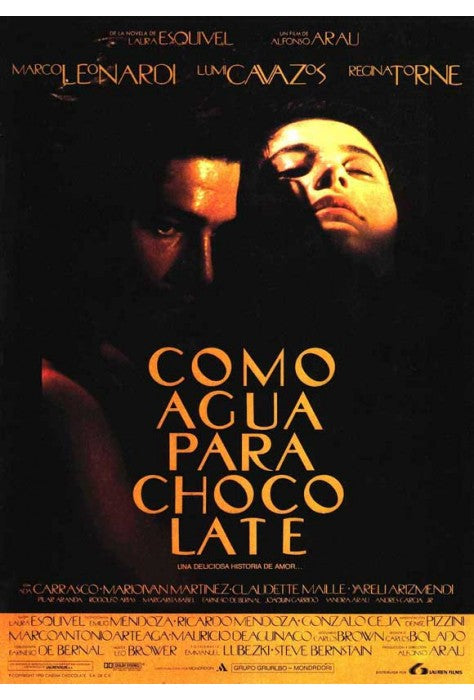
The teachers who last — and stay sharp — are almost never the ones who found a curriculum and stuck to it for decades. They're the ones who kept finding new material that challenged them, surprised them, and gave them something to bring to the room. Film does that in a way that textbooks structurally cannot. Films are specific. They have characters, history, cultural context, directors with intentions, actors with choices. Teaching a lesson built around Como agua para chocolate is not the same as teaching a lesson built around La vita è bella, even if the grammar objectives overlap. Each film is a new subject. The teacher gets to be a learner again.
Krashen talks about comprehensible input as the mechanism for student acquisition. But the same principle applies to professional growth: when teachers encounter material that is just beyond their current comfort zone — a film they haven't taught before, a cultural context they have to research, a piece of authentic dialogue that challenges their own fluency — they grow. The affective filter doesn't just apply in rows of desks. It applies in teacher preparation too.
A Note on the Energy in the Room
There's a moment that teachers who've used film units describe in similar terms. It usually happens mid-unit, somewhere in the second or third lesson. A student who has been quiet all semester says something — in the target language — about why a character made the choice they made. And the room responds. Not because you called on them. Not because there's a grade attached. Because they had something to say and the unit gave them a reason to say it.
That moment doesn't happen in a vocabulary drill. It happens when the material is real, the stakes feel genuine, and students have enough language to reach for what they mean. Building a classroom where that happens regularly is what sustains a career.
If you're looking for a ready-made unit that does this work for you — pre-film scaffolding, vocabulary in context, grammar through authentic dialogue, discussion activities that actually generate conversation — our lesson plans are built exactly this way. Browse the full catalog at filmarobics.com/collections/all and find the film that fits your class this semester.