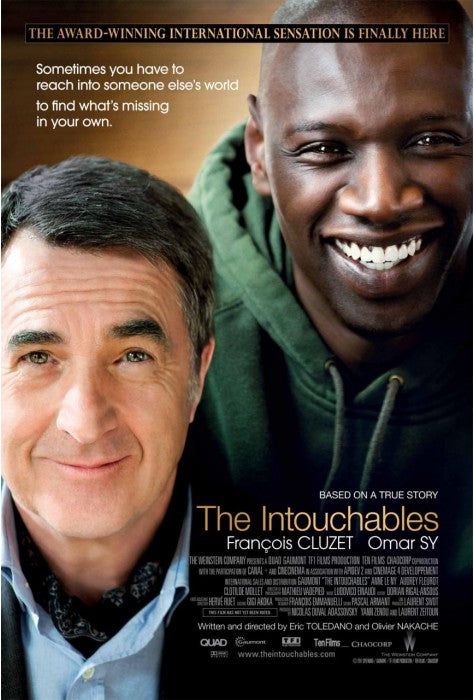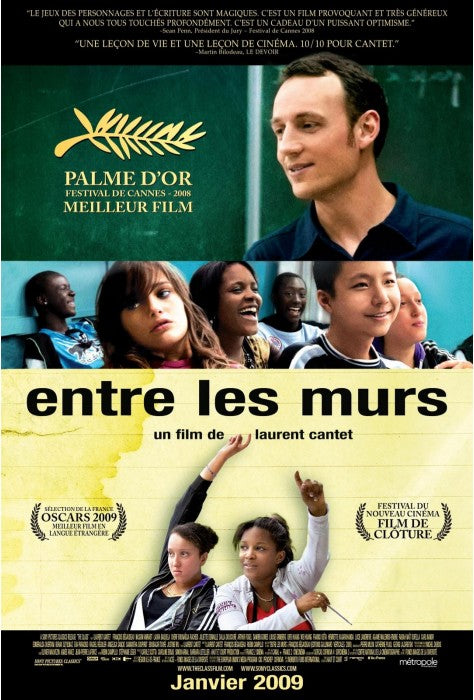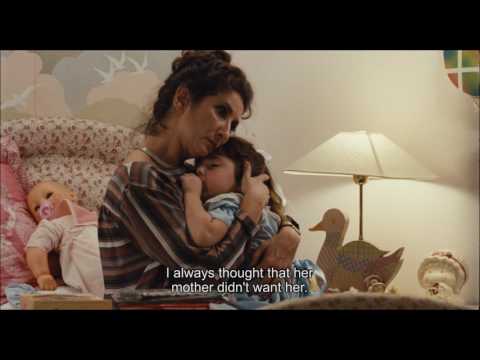
It happened on a Tuesday. Period 5, after lunch, the class that usually felt like pushing a boulder uphill. We were about fifteen minutes into the film when it hit — a line delivered with perfect deadpan timing by a character the students had already decided they loved — and the class laughed. Not politely. Not because they thought they were supposed to. They laughed because something landed.
I wrote it down in my notes that afternoon: 12:47. Everyone got the joke. Including Marcus, who I wasn't sure was following anything.
That moment is data. And most teachers let it go by.
What Genuine Laughter Actually Tells You
To laugh at a joke in a foreign language, you have to have done a remarkable amount of cognitive work without realizing it. You need to have parsed the sentence fast enough that the punchline lands in real time — not two seconds later, when it's already gone. You need to have understood the speaker's tone, the context of the relationship, the expectation that was set up and then violated. Humor is built on violated expectation. That's not a theory — that's what every linguist from Salvatore Attardo to Victor Raskin has documented. Incongruity is the engine of comedy in every language.
When a student laughs at a joke in the target language in real time, they have demonstrated spontaneous, integrated comprehension at a level that no multiple-choice question can get to. They understood fast enough, and deeply enough, that their body responded before their brain could second-guess it.
That is Krashen's i+1 made visible. The input was slightly above their current stable level — they had to reach — and they reached it. The laugh is the proof.
The Four Things That Laughter Tells You That Tests Don't
Speed of processing
Comprehension exercises measure whether a student understood eventually. Laughter measures whether they understood in time. Processing speed is one of the most important markers of genuine fluency, and it is almost impossible to assess with traditional instruments. A student who laughs at a French joke has just told you something very specific about where their processing is.
Pragmatic competence
Understanding what a character said is different from understanding what they meant. The gap between semantic decoding and pragmatic interpretation is where most intermediate learners live — they can follow the plot but miss the irony, the subtext, the implication. When students laugh at humor that depends on reading between the lines, they are demonstrating pragmatic competence. Canale and Swain identified this as one of the four pillars of communicative competence back in 1980. It is also one of the hardest to teach explicitly and the easiest to observe in a film classroom.
Cultural schema
Some jokes require cultural knowledge to land. A joke about family dinner dynamics in an Italian film might hit immediately with certain students and go over others' heads — not because of language level, but because of schema. The students who laugh have either absorbed the cultural context or brought it with them. Either way, you have just learned something about who in your room has that schema and who needs it built.
Lowered affective filter
Genuine laughter is incompatible with high anxiety. The affective filter — Krashen's model for how emotional state blocks acquisition — cannot be fully raised while someone is in the middle of laughing at a joke. The moment of laughter is a moment of lowered defenses. What follows a genuine laugh is often the best language production a shy or anxious student will give you all week. Watch for it. That's the window.
How to Use the Data in Real Time
The mistake is treating laughter as a social moment and moving on. The better move is a quick check: "Who got that? What made it funny?" Not in a testing way — in a genuine, curious way. This takes forty-five seconds. What it produces is a micro-discussion in which students have to articulate the linguistic and cultural mechanism of the joke, which means producing output that pushes their current level.
Swain's Output Hypothesis argues that pushed output — producing language just beyond current comfort — accelerates acquisition in ways that input alone doesn't. Making students explain why something was funny is exactly this. It is also, in my experience, one of the best discussions you will have all year. Because everybody wants to explain a joke they understood.
Map who laughed and when
Keep a simple running note during films: timestamp, what the moment was, who responded. After a few sessions, patterns emerge. The student who laughs first at wordplay has strong phonological sensitivity. The student who laughs at relationship humor but misses the slapstick is reading tone well. The student who laughs thirty seconds later is probably working harder to process than you thought — or they're translating in their head, which is a different kind of problem worth attending to.
This is not rigorous formal assessment. But it is better observational data than anything a fill-in-the-blank can give you, and it costs nothing but attention.
Build on the momentum
The minute after a class laughs together is not a minute to let slide. That is the moment of lowest affective filter, highest engagement, and greatest willingness to produce. A single well-placed question — "What did he actually say? Who can say it back?" — captures that window and turns it into output practice. The humor lowers the barrier; the question capitalizes on it. This is the architecture of the best film-based lessons: emotional entry point, comprehension anchoring, brief push into production.
What to Do When Nobody Laughs
This is data too, and it's worth taking seriously. Silence at a moment designed to be funny usually means one of three things: the input was too far above current level, the cultural context wasn't there, or the affective filter is too high for play. Each of those has a different instructional response — but all three are useful diagnostics. The class that laughs at a joke tells you what they know. The class that doesn't tells you what still needs building.
Either way, you're learning something that the chapter test never could have surfaced.
If you want a film unit where the instructional architecture is already designed to build toward and capitalize on these moments — with structured pre-film work that builds cultural schema, during-film tasks that prime for comprehension, and post-film activities that push output — the Spanish lesson plans at FilmArobics are built exactly for this. The 14-section format gives you the scaffolding; the students give you the laughter. Your job is just to pay attention when they do.