It happens every year, usually somewhere around week three. A student — often a confident one who did fine in Spanish — looks at the German case table and says it out loud: "This language is impossible." Sometimes it's quieter than that. They just go a little flat. The enthusiasm that carried them through the first week of Guten Morgen and Ich heiße meets the accusative case and doesn't survive the collision.
German has a reputation problem. And unlike French's reputation for being snobbish or Spanish's reputation for being easy, German's reputation — complex, rigid, full of rules that seem designed to punish you — is not entirely wrong. The grammar is demanding. The cases are real. The word order genuinely does work differently from English.
What's wrong is not the reputation but the conclusion students draw from it: that the complexity is a wall, not a door.
What the Research Says About Language Anxiety and German
Horwitz, Horwitz, and Cope's foundational work on foreign language anxiety (1986) identified three sources: communication apprehension, test anxiety, and fear of negative evaluation. German generates all three at an unusual rate — the grammatical complexity raises communication apprehension early, before students have any fluency to fall back on; the structured rule system creates persistent test anxiety because there's always another table to memorize; and the perception that German is "hard" means students fear looking incompetent in front of peers who might be faring better.
What Krashen's affective filter hypothesis adds is the mechanism: anxiety doesn't just make language learning feel harder, it actually blocks the acquisition process. When the affective filter is raised — when a student is anxious, self-conscious, or defeated — comprehensible input stops converting to acquired language. The input goes in and doesn't stick. You can teach a perfect lesson on dative case and have students leave knowing less than when they arrived, because the filter was up the whole time.
This is the German teacher's real problem. It isn't the cases. It's the anxiety the cases generate — and what that anxiety does to everything else you're trying to teach.
Why German Cinema Is Exactly Right for This
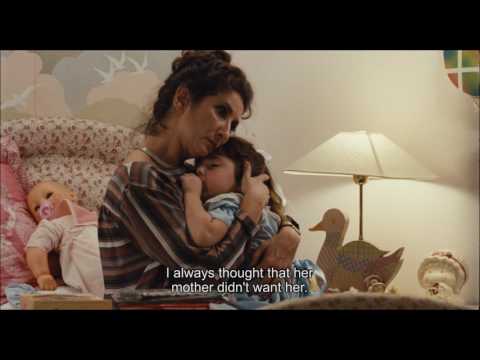
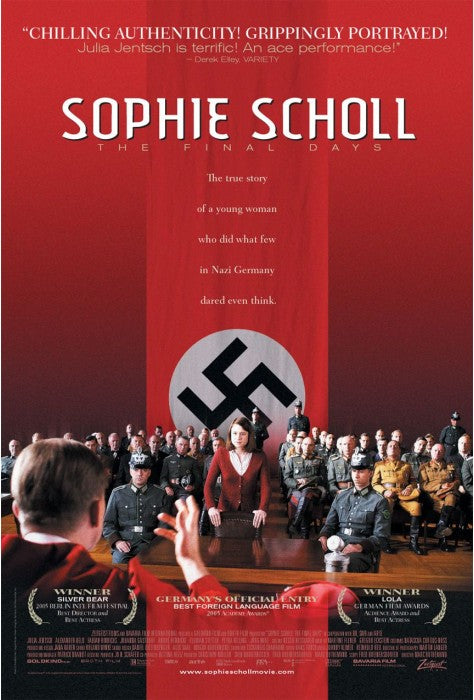
German cinema is — and this is worth saying plainly — extraordinary. Das Leben der Anderen, Lola Rennt, Goodbye, Lenin!, Der Baader Meinhof Komplex — these are films with real narrative drive, real emotional stakes, real characters speaking natural German in ways that illuminate how the language actually works in human mouths. That's the input Krashen is describing when he talks about comprehensible input in emotionally salient contexts. It's not a grammar exercise. It's a person in a crisis, speaking German, and students understand it because the context makes the meaning visible.
What teachers who've run German film units notice is that students who are defeated by the grammar workbook are completely fine during a film. They aren't counting cases. They aren't monitoring their output. They're watching people talk and figuring out what is happening. That's what acquisition actually looks like.
The case system, watched rather than studied, starts to look different. Students hear the difference between nominative and accusative in natural speech long before they can articulate the rule. That implicit acquisition — Ellis (1994) calls it incidental grammatical learning — happens below the threshold of conscious rule-application. And it sticks, because it's attached to a character and a scene, not a table in a textbook.
Three Moves That Change How Students Relate to German
1. The Character Investment Entry Point
Before the film starts, spend one class building a relationship with the main character — without touching grammar. Show a clip. Ask: What do they want? What are they afraid of? What would you do in their situation? Do this entirely through comprehensible input: teacher narration, visual support, simple German with cognates and gestures. Students who care about a character come to the film with something at stake. They're not watching to practice accusative. They're watching to find out what happens to someone they're already invested in.
The affective filter drops before the complex input arrives. That sequencing matters enormously.
2. Notice Tasks Instead of Accuracy Tasks
When you pause a scene and direct students' attention to language, do it with noticing tasks rather than accuracy tasks. "Did you hear how she asked that question? What was different about the word order?" is a notice task. "Conjugate that verb in all six forms" is an accuracy task. Notice tasks maintain engagement because they don't create a failure condition — there's no wrong answer to "what did you notice?" Accuracy tasks remind students of everything they don't know yet.
Schmidt's noticing hypothesis (1990) suggests that acquisition is facilitated when learners consciously notice features of the input. The key word is notice — not memorize, not drill, not produce correctly under pressure. Film gives you extraordinary material for noticing tasks because it shows you the same structures repeatedly in varied contexts, with the emotional and visual content to make them memorable.
3. Scene-Based Output Before Grammar-Based Output
When students write or speak about the film, ask them to respond to the scene first — "Tell me what just happened between these two characters" — before any grammar-focused task. Scene-based output requires students to access their acquired language rather than their monitored language (what they'd produce if they had time to run every word through the case table). The scene gives them something real to say, which lowers the monitoring pressure dramatically.
The practical result: German production gets longer, more natural, and uses fewer panicked English phrases inserted mid-sentence. Students have content they care about, so they find the words. The grammar comes along for the ride.
On the Reputation Itself
There's one more thing worth saying. The students who think German is impossible have been told, implicitly and explicitly, that German is a language of rules — and rules are what it takes to succeed. That framing makes every complex structure a verdict on their capability.
Film reframes it. When a student understands a German scene — when they laugh at a joke that landed, or feel the weight of a scene that's genuinely moving, in German, without pausing to decode — they've had an experience the grammar table cannot give them. They've been inside the language. And that changes what they think is possible.
That's not a small thing. It's often the thing that determines whether a student stays in the language past level two.
If you're teaching German and want a film unit that sequences exactly this way — character investment before grammar exposure, notice tasks built into every viewing section, output tasks grounded in scene rather than structure — the German lesson plans at FilmArobics are built for that classroom. Complete units, teacher-ready, $29.95.