There's a specific version of this you might recognize. You're introducing a French film unit. You mention the film is in French. Somewhere in the room — sometimes out loud, sometimes just clearly on a face — someone registers mild disdain. Not hostility. Just... that thing. The sigh. The slight eye-roll. The unspoken "of course it's French."
French has an attitude problem in American secondary schools. Not everywhere, not with everyone. But with enough students, often enough, that it's worth talking about. Because if you don't address it, it doesn't go away. It just becomes a low-grade resistance that dogs the whole unit.
Where the Attitude Comes From
It's worth being clear-eyed about this. The "French is pretentious" perception isn't random. It's a cultural inheritance — decades of media and casual conversation in which French is coded as the language of people who want to seem sophisticated. The beret. The condescension. The stereotype of the Parisian who ignores your attempted French and answers in pointed English.
Students absorb this before they ever walk into your classroom. And Krashen's affective filter hypothesis explains what it costs you: a raised filter means reduced intake. A student who has pre-decided that French is for snobs is not going to acquire French at the same rate as a student who is genuinely curious. The attitude is a cognitive barrier, not just a social one.
The standard response — point out that French is spoken by 300 million people across Africa, the Caribbean, Southeast Asia — is correct and almost completely useless. Students know intellectually that the stereotype isn't the whole picture. That knowledge doesn't move the filter. What moves the filter is experience. And that's what film can actually provide.
Film Breaks the Stereotype Because It Shows You the Whole Country
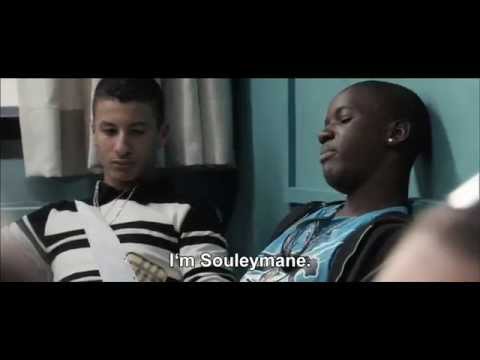
I've had students who came in rolling their eyes at French leave a unit telling me they want to visit Dakar. That's not because I gave them a lecture about Francophone culture. It's because they spent three weeks watching a film set in a world that had nothing to do with the Paris they had pre-imagined.
The research on identity and second language acquisition — particularly Norton's work on investment and Schumann's acculturation model — consistently shows that the learner's relationship to the target culture is one of the strongest predictors of acquisition outcomes. This is not a soft finding. It is structural. Students who feel antagonistic toward a culture acquire its language more slowly, with more difficulty, and with less retention. Film changes the relationship to the culture before it changes anything else.
When students see a French film set in Martinique, or a Québécois dark comedy, or a coming-of-age story from Marseille, the stereotype has nowhere to stand. The language is real, it's being used by real people in real situations, and none of it looks like what the student expected. That's the affective shift that creates the opening for acquisition.
The First Day Matters More Than You Think
How you introduce the film matters enormously. If you start with the film's plot or its language level or its cultural value, you are playing on the student's existing terms. You're confirming that this is a French class doing French class things.
Start instead with the story. Not "today we're starting a film in French." But: "There's a film I want you to watch. It's about two brothers who grow up in the same house and end up in completely different lives. By the end of the film, you're going to have a strong opinion about one decision one of them makes." That's a story pitch. It creates stakes before the language is even mentioned.
The language becomes the medium of a story the student already wants to know the end of. That sequence — story first, language second — is not a trick. It's what Krashen means by comprehensible input: the focus is on meaning, the language acquisition is a byproduct. The affective filter stays low because the student is engaged with what happens next, not braced against the language.
Three Moves for Resistant Classes
1. Lead With a Clip That Breaks the Picture
Before you show the whole film, find a two-minute clip that visually contradicts the students' mental image of French. Not a lecture. Not a map. A clip. Marseille street scene. Algerian-French dialogue that sounds nothing like the classroom. A scene from a Haitian film. Let them sit with the dissonance for a moment, then ask: "Is that what you expected?" You don't need to do more than that. The question does the work.
2. Build the Cultural Anchor Before the Language Task
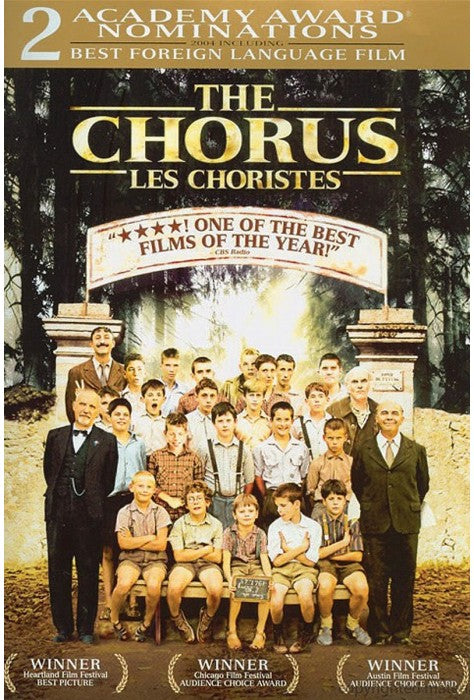
Resistant students are often not resistant to France — they're resistant to their image of France. Give them a brief, specific piece of context about where the film is set and who made it. Not a history lesson. Three sentences. "This film was made in 2001 by a director from Montréal. It did not get a wide release in France when it came out. It won a major audience award in the US." That's enough to shift the frame from "French cultural propaganda" to "someone made something that people responded to." The student is now watching a film, not receiving a lesson.
3. Let the Language Moment Be Surprising
Somewhere in the first third of a good film, there will be a moment where a student laughs or reacts or says something — and then pauses, slightly surprised that they just had a genuine reaction to something in French. Don't narrate it. Don't say "see, French isn't so bad." Just keep going. That internal recalibration is the most valuable thing that can happen in your classroom, and the worst thing you can do is interrupt it.
The Longer Picture
The student who came in resistant and left curious didn't change their mind because you argued with them. They changed their mind because they spent twenty classes with people who spoke French, faced problems, made choices, and lived lives that were recognizably human. That's what sustained exposure to authentic language does — it replaces a stereotype with a person. And you cannot dislike a language once you're attached to someone who speaks it.
If you want a film unit that handles the whole arc — pre-film attitude work, structured viewing tasks, post-film output — the FilmArobics French lesson plans are built to move students from wherever they start to genuine engagement. Every lesson plan covers pre-film through post-film in 14 structured sections, for $29.95. The attitude problem is solvable. The lesson plan is the architecture.