When "Correct" Isn't Right: The Pragmatics Problem Nobody Talks About
You ask a student to translate a line. They nail it — every word accurate, the grammar clean. You write it on the board. And then a native-speaking student in the third row makes a face.
That face is telling you something important. The translation was technically correct and pragmatically wrong. The student heard what the character said. They didn't hear what the character meant.
This gap — between linguistic accuracy and communicative meaning — is one of the least-taught and most consequential problems in language education. And it's almost impossible to address with a textbook.
The Research Has a Name for This
Michael Canale and Merrill Swain's 1980 framework gave us something language teachers still use: the distinction between grammatical competence and pragmatic competence. Grammatical competence is knowing the rules. Pragmatic competence is knowing when and how to use them — understanding that the same words, in a different context or with a different tone, mean something entirely different.
Austin's speech act theory takes it further. Words don't just describe the world — they do things. "It's cold in here" might be a statement of fact, a request to close the window, a complaint about whoever set the thermostat, or a way to change the subject. The sentence is identical. The meaning changes with every variable around it.
What Krashen's comprehensible input hypothesis adds — and this is the part that matters for classroom design — is that pragmatic meaning is embedded in context. You cannot acquire it from a word list or a grammar table. You acquire it from exposure to language in use, surrounded by the signals that make intent legible: facial expression, body language, relationship history, what just happened before the line was spoken.
Film, almost uniquely among classroom materials, provides all of those signals at once.
What It Looks Like in the Room
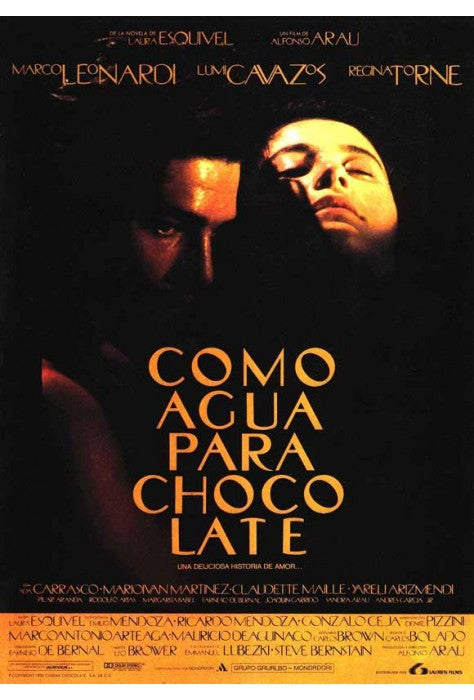
Here's a scene I've used more times than I can count. A Mexican film — a family dinner, two sisters, one line: "Qué interesante." Literally: "How interesting." Clean, simple, nothing a student couldn't translate in thirty seconds.
But the way she says it. The slight turn of the head. The pause before she picks up her fork. Her sister knows exactly what it means. It means: I don't believe you, I'm not impressed, and we'll talk about this later in a way you are not going to enjoy.
When I stopped the clip and asked students what she said, they translated it perfectly. When I asked what she meant, the room split three ways. Some got it. Some thought she was genuinely complimenting her sister. A few admitted they had no idea tone could do that much work in Spanish.
That split is your teaching moment. You can't manufacture it from a textbook. You can only catch it on film.
Three Tasks That Actually Teach Pragmatic Meaning
1. The Intention Gap Task
Pause the scene just before a line and ask: "What does this character want right now?" Not what they're going to say — what they want. Students write their prediction, then watch the line. Then you discuss the gap between what was said, what was wanted, and whether the character got it.
This forces students to attend to subtext before they hear the words. The research on prediction tasks — particularly the work of Vandergrift and Goh on metacognitive listening strategies — shows that this pre-listening orientation dramatically improves comprehension of implied meaning. Students aren't just decoding words; they're reading a situation.
2. The Register Rewrite
Take a line from the film. Ask students to rewrite it three ways: how a child would say it, how a stranger would say it, how the character's boss would say it. Then discuss why the character chose the words they did, to this person, in this moment.
What you're teaching is register awareness — the understanding that language isn't just what you say but to whom, in what relationship, at what stakes. This maps directly to real communicative competence. A student who can do this task is not memorizing language. They're acquiring it.
3. The Translation Audit
Give students a transcript excerpt with the subtitle translation. Ask them: where did the translation lose something? What did the translator have to decide? What would you change?
This is not a gotcha about subtitle quality — it's a window into how hard pragmatic meaning is to transfer across languages. Students who have done this task start noticing the gap in every film they watch, in every language. That noticing is exactly what Schmidt's noticing hypothesis predicts as the trigger for acquisition.
The Mistake That Kills This
The temptation, when you notice pragmatic errors, is to correct them like grammatical errors. "Actually, that phrase means X, not Y." That framing tells students pragmatic meaning is a lookup problem — there's a right answer, you just need to find it.
It isn't. Pragmatic meaning is contextual, relational, and culturally specific. The most effective move is to slow down and investigate: "Why do you think she said it that way? What else could she have said? What would have changed if she had?" Let the film do the teaching. Your job is to hold the space open long enough for students to reason through it.
When I tried explicit instruction on pragmatic meaning — here's what sarcasm sounds like in Spanish, here's how to express polite refusal — it landed about as well as explicit instruction on anything else: students could recognize the examples I'd taught and fell apart the moment a new one appeared. The film approach is messier and slower and it works. The difference is that students come away with a mental model of how tone and context interact, not a list of phrases to memorize.
Why This Matters Beyond the Classroom
The student who can decode words but not meaning will get to Mexico City, understand every sentence spoken to them, and still miss half the conversation. The student who can read pragmatic intent — who hears the subtext, reads the register, catches the irony — is actually communicating.
That second student didn't get there through a textbook. They got there through thousands of hours of exposure to language in context, surrounded by everything that makes meaning legible. Film is the fastest legitimate path to that exposure in a secondary school classroom.
If you're building toward that level of communicative competence — where students don't just translate but actually understand — the FilmArobics Spanish lesson plans are built around exactly this kind of layered meaning work. The pragmatics tasks are already in there. You don't have to build them from scratch.