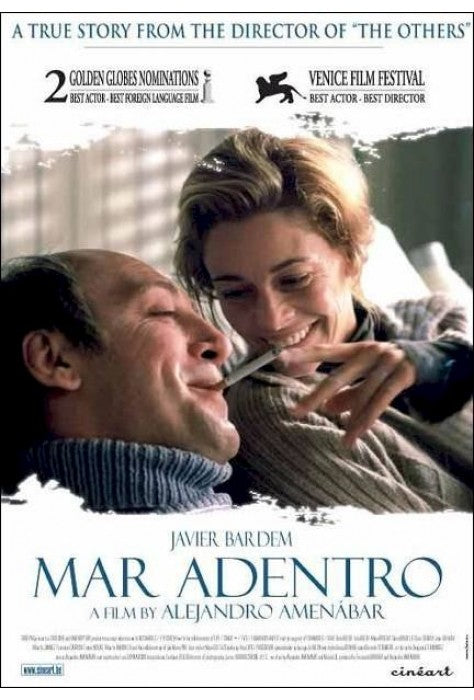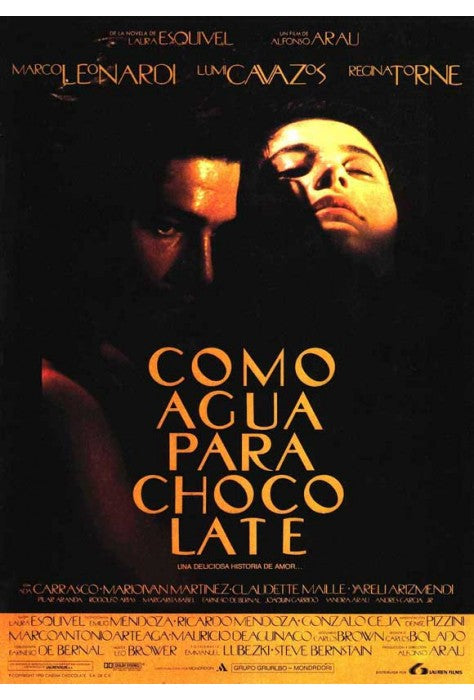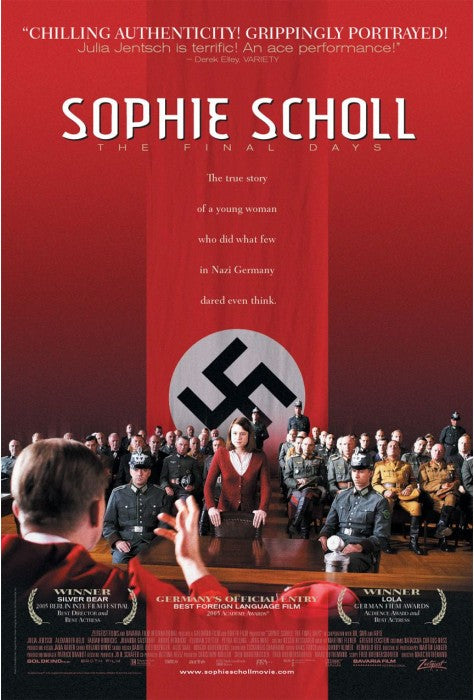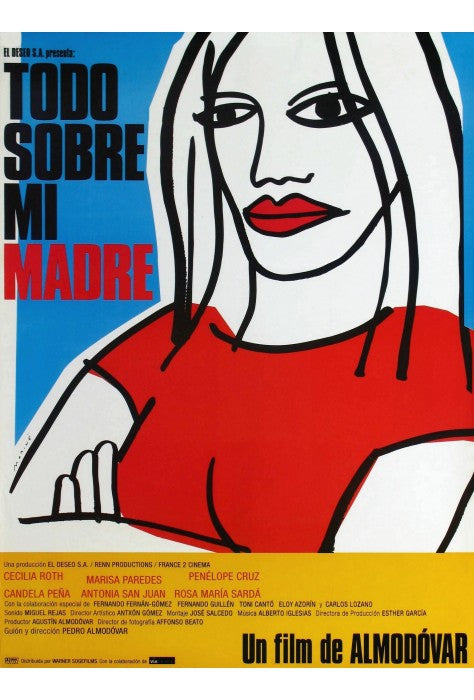
There is a question you have probably asked a hundred times during a film unit. You pause the film, you look at the class, and you say something like, ¿Qué acaba de pasar? And you get twelve blank faces and one student who already knew the answer before you asked.
Here is the uncomfortable truth behind that moment: the question did not belong to your students. It belonged to you. And a question that does not belong to the asker rarely produces real language.
The Research on Who Owns the Question
The research on input-based acquisition is fairly unambiguous about one thing: comprehensible input requires genuine gaps in understanding. Krashen called it i+1 — language just beyond what the learner already knows. But there is a parallel concept that applies to output, and it is equally important: Merrill Swain’s output hypothesis makes a strong case that learners do not just need to receive language — they need to produce it to notice what they can and cannot yet say.
The problem with teacher-generated questions in film units is structural. The teacher already knows the answer, the student usually suspects this, and the whole exchange becomes a performance of compliance rather than an act of communication. Both parties are faking a conversation.
What happens when the question belongs to the student? Something different entirely. Students producing genuine questions about a text — a film, a scene, a character’s decision — are doing something cognitively and linguistically rich: they are noticing a gap between what they understand and what they want to know. That gap is exactly where language acquisition happens.
What This Looks Like in Period 3 on a Tuesday
I started doing this by accident, honestly. We had watched the first thirty minutes of a film and I was supposed to lead a comprehension discussion. I had my questions ready. Then a student said, unprompted, Pero, ¿por qué no le dijo la verdad? — Why did he not just tell her the truth? — and half the class turned their chairs. The debate ran for twelve minutes. Nobody asked to go to the bathroom.
I quietly shelved my prepared questions and started taking notes on what they were arguing about. Those were the language production sites I had been looking for all year.
After that, I started building student-generated questions into the architecture of every film unit. Not as a free-for-all — structure matters — but as the engine rather than the passenger.
Three Ways to Put Students in the Question-Generating Seat
1. The Pre-Film Question Deposit
Before the film starts — or at the very beginning of class before a subsequent viewing session — students write two questions they want the film to answer. These do not have to be in the target language at first; you are building the habit. Eventually, you require L2 only.
The questions stay with them through the viewing. At the end, they return to their own questions and answer them in writing. The ones that were not answered become the discussion prompt. Unanswered questions generate authentic language at a rate no teacher-made question can match — because the student genuinely wants the answer.
2. The Pause Point Exchange
At strategic moments in the film — not random moments, but moments of narrative tension you have pre-identified — pause the film and give students ninety seconds to write one question. Then they exchange questions with a partner and answer each other’s. The teacher’s job in that moment is to circulate, listen, and bring the most interesting questions to the full class.
The affective filter drops dramatically when students are responding to a peer’s question rather than a teacher’s. They feel less evaluated. They produce more. Krashen would recognize exactly what is happening: the anxiety that blocks comprehensible input has been reduced, and the language can get in.
3. The Question Gallery
After a complete viewing, students post their questions on the board — physically or digitally. The class votes on the three they most want answered. Those three become the writing or discussion tasks for the week. The teacher does not generate a single prompt. The unit runs on student curiosity, which, it turns out, is considerably more durable than anything on a lesson plan.
The Language Payoff
Swain’s research on pushed output is directly relevant here. When students formulate questions in the target language, they are being pushed to the edge of their current competence. They have to recruit vocabulary, construct syntax, and encode meaning in ways that a comprehension answer — which can often be managed with a single word or gesture — does not require.
A student who writes ¿Por qué el protagonista no confía en su hermano a pesar de que parece honesto? has produced a subordinate clause, a negation, a conjunction, and a vocabulary item — confiar — that might not be on your word list. They produced it because they needed it, not because you asked them to practice it. That is acquisition, not performance.
There is also something worth naming about the emotional experience of having your question taken seriously. When a student’s question drives a fifteen-minute class discussion, that student has had an experience of the target language as a tool for real intellectual work. That experience is hard to replicate with a worksheet. It is also the kind of experience that makes students come back to the language.
What You Have to Give Up
The honest trade-off is control. Not chaos — structure. But you give up the predetermined arc of the discussion. You cannot know in advance exactly which grammar points will come up or which vocabulary items will be recruited.
Most experienced language teachers will recognize, if they are honest, that the predetermined arc rarely survives contact with an actual class anyway. You can either fight that or design for it. Student-generated questions are a way of designing for it — you are acknowledging that the class has its own intellectual trajectory and building tasks that ride that trajectory rather than resist it.
The other thing you give up is the safety of being the one who knows the answers. When a student asks a question that genuinely stumps you — about a cultural reference, a character’s psychology, a piece of slang — the appropriate response is to say so in the target language and make the research task part of the assignment. That is not a failure of teaching. That is modeling what it actually looks like to use a language to think.
Starting Small
You do not have to restructure your entire unit. Start with a single pause point — one moment in the film where you put down your prepared question and ask students to write their own. Watch what happens. The quality of language produced in that three-minute writing window will probably be the best work you see all week.
If you want this architecture built in from the start — pre-film questions, during-film tasks that create genuine information gaps, post-film prompts anchored to what students actually noticed — that is exactly what a structured film unit is designed to do. FilmArobics lesson plans build question-generating capacity into every phase of the unit, so students arrive at the discussion with real things to say. You can explore the Spanish language line at filmarobics.com/collections/spanish — every plan is $29.95 and ready to use.