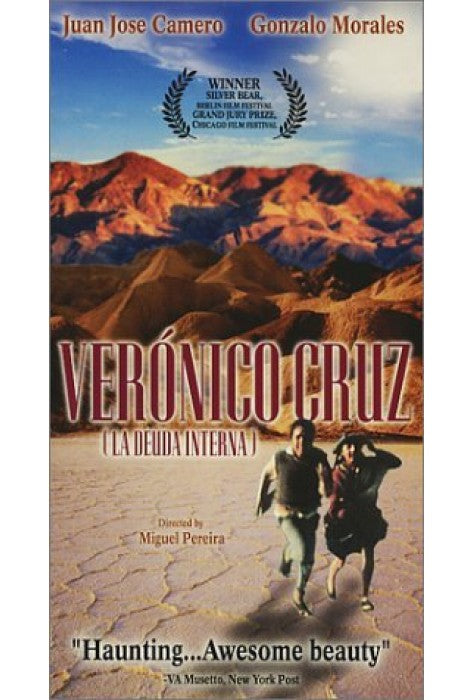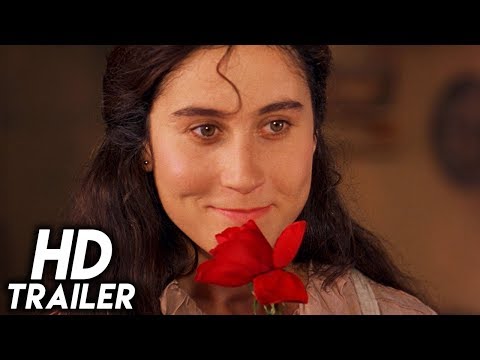
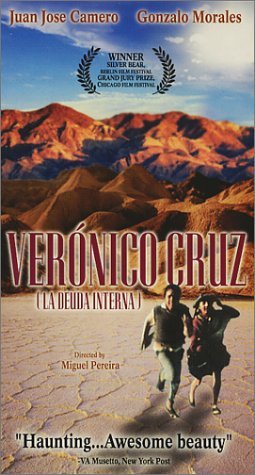
A young teacher from Buenos Aires arrives at a one-room school in the high Andes of Jujuy — northwestern Argentina, where the community is Quechua-speaking and the formal Spanish connecting them to the national government is a second language imposed from outside. Verónico Cruz is one of his students: curious, intelligent, and about to be called up for military service in a war Argentina will lose in the Falklands. Miguel Pereira's 1987 film is politically and linguistically specific in ways that make it one of the most demanding and rewarding films in the Spanish catalog for advanced students.
For Spanish students, the film offers something genuinely unusual: the Spanish of northwestern Argentina, Quechua-inflected and Andean, alongside the formal Spanish of the Buenos Aires-educated teacher and the bureaucratic Spanish of the military. Students hear Spanish as both a tool of connection and a tool of imposition — the same language that gives Verónico access to education is the language of the government that will send him to die in a war he did not choose. That tension is built into every scene.
📬 Stay in the loop. New lessons added regularly — join the list to hear when your film is available.
Key Themes for the Classroom
- Education and colonialism — The teacher's mission is to bring Buenos Aires's curriculum to a community with its own knowledge systems. Discussion: ¿Para quién es la educación? Whose interests does a national curriculum serve?
- Language and power — Quechua is the community's first language; Spanish is the language of access. Discussion: ¿Qué pierde una comunidad cuando adopta el idioma del gobierno?
- War and sacrifice — The Falklands War (1982) is treated with historical specificity. Students can research the war and return to the film with that context.
- Indigenous identity — Verónico's identity is multiple: Quechua community member, Argentine citizen, student. Discussion: ¿Quién es Verónico Cruz?
One Scene to Use
The early scene where the teacher delivers his first lesson and realizes the children are translating everything into Quechua in their heads to understand it — and does not judge them for it — is the film's declaration of intent. Have students discuss: What does the teacher do differently after that moment? How does his Spanish change?
One Low-Prep Classroom Activity
Ask students to write the teacher's letter home to Buenos Aires after his first week at the school — in Spanish, from his perspective. Then write Verónico's letter to a friend in the city describing the same week. Compare the two: what Spanish do they share, and where does the language diverge?
What to listen for: The Andean Spanish of the Jujuy highlands — with its Quechua-influenced rhythms and the specific vocabulary of pastoral life — is unlike any other Spanish in the curriculum. Verónico speaks the Spanish of a boy who has grown up far from Argentina's political centers; his teacher Rafael speaks the Spanish of a city man trying to make sense of a rural world while politics closes in on both of them. Ask students: ¿Cómo habla Verónico diferente a Rafael? The comparison teaches dialect variation and social difference simultaneously.
The full Spanish lesson plan for Verónico Cruz is ready at filmarobics.com/products/discover-identity-change-with-veronico-cruz — $29.95.
Students finish this unit with vocabulary for education, identity, and history — and a deeper sense of how many different Spanishes live inside the word "Spanish."
The full Spanish lesson plan for Verónico Cruz is ready at filmarobics.com/products/discover-identity-change-with-veronico-cruz — $29.95.
📬 Stay in the loop. New lessons added regularly — join the list to hear when your film is available.
Students finish this unit with vocabulary for education, identity, and history — and a deeper sense of how many different Spanishes live inside the word "Spanish."