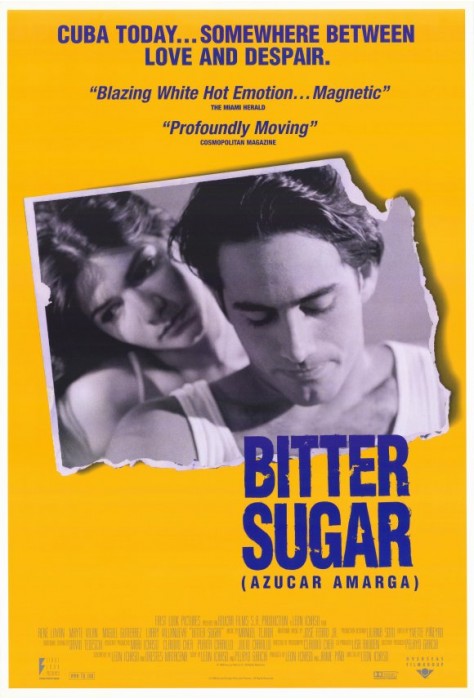
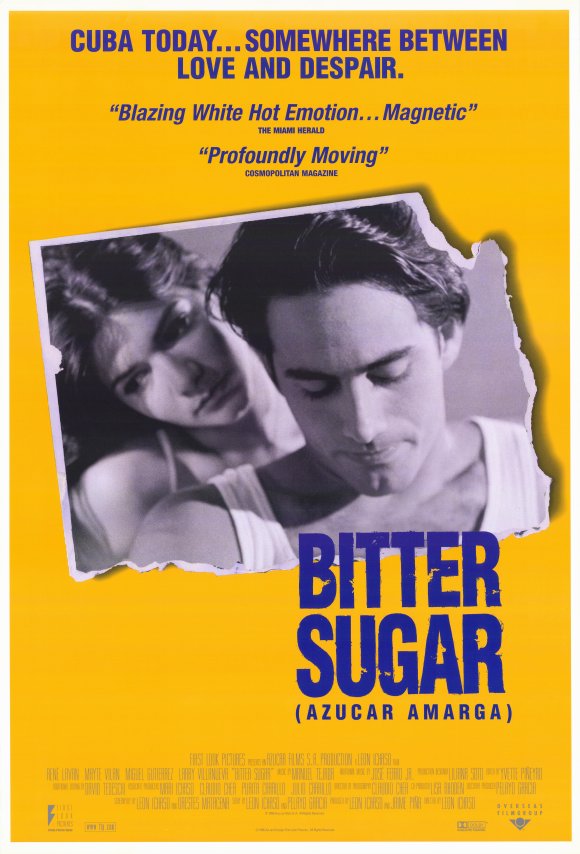
Cuba in the early 1990s, during the "Special Period" when the Soviet Union collapsed and Cuba lost almost all of its subsidies overnight: the electricity goes out for sixteen hours a day, food is rationed, and a generation of young Cubans is deciding, individually and in secret, whether to stay or go. Azúcar Amarga (Bitter Sugar, 1996), directed by León Ichaso, follows Gustavo, a committed Communist Party student, and his brother Tomás, who has decided to leave. The film is an argument about Cuba that Cuba never allowed to be seen — it was made outside the country and is still banned there — and it is one of the most politically honest films in the Spanish-language catalog.
For Spanish students, the film's Cuban Spanish is immediate and specific — the rhythm of Havana, the vocabulary of political commitment and disillusionment, the specific slang of Cuban youth under pressure. Students hear a Spanish that is phonologically different from Castilian or Mexican Spanish: the dropped final consonants, the fluid rhythm, the specific Cuban vocabulary (resolver, conseguir, el bloqueo). The political content ensures students are paying attention even as their ear is adjusting to an unfamiliar register, which is exactly how exposure to dialect variety should work in a language class. Bobby, the American tourist, provides a useful counterpoint — an outsider's Spanish encountering a Cuban world he can't quite read.
📬 Stay in the loop. New lessons added regularly — join the list to hear when your film is available.
Key Themes for the Classroom
- Political faith and disillusionment — Gustavo believes in the Revolution. The film watches that belief erode. Ask: ¿En qué momento empieza Gustavo a dudar? What specific event or scene marks the turning point?
- Individual freedom and collective obligation — Tomás's decision to leave is both personal and political. Ask: ¿Tiene Tomás razón al querer irse? What does he owe his country versus what he owes himself? The debate has no clean answer.
- Cuba and the United States — Bobby represents something the film treats with complexity rather than simplicity. Ask: ¿Cómo ven los cubanos en la película a los americanos? And: how does the Cuban–American relationship look different from inside Cuba versus outside it?
Scene to use: Gustavo's ideological argument with his brother — the moment they finally say what they've been thinking. The Cuban Spanish is fast, emotional, and full of the specific vocabulary of political commitment: la Revolución, el deber, la traición, el sacrificio. Ask students: ¿Quién tiene razón — Gustavo o Tomás? Then: ¿Es posible que los dos tengan razón a la vez? The debate works in Spanish and in English, but working it in Spanish requires students to use the vocabulary they just heard, which is the point.
Low-prep classroom activity: Students write a brief letter in Spanish — from Gustavo or Tomás, to the other, after the events of the film. The letter must use at least one expression of political belief, one expression of personal feeling, and one unanswered question. The constraint requires students to hold both the political and the personal in Spanish simultaneously — which is exactly what the film does, and exactly what sophisticated language use requires.
The full Spanish lesson plan for Azúcar Amarga is ready at filmarobics.com/products/azucar-amarga — $29.95.
Students walk away from Azúcar Amarga having heard Cuban Spanish carry the weight of a political crisis — and having argued, in Spanish, about what loyalty means when the thing you were loyal to is failing.
The full Spanish lesson plan for Azúcar Amarga is ready at filmarobics.com/products/azucar-amarga — $29.95.
📬 Stay in the loop. New lessons added regularly — join the list to hear when your film is available.
Students walk away from Azúcar Amarga having heard Cuban Spanish carry the weight of a political crisis — and having argued, in Spanish, about what loyalty means when the thing you were loyal to is failing.