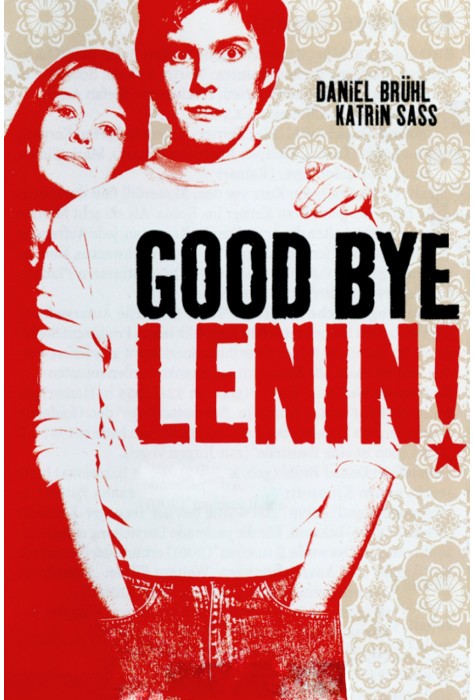

Alex Kerner's mother falls into a coma in October 1989 — just before the Wall falls. When she wakes up eight months later, her heart is so fragile that a shock could kill her. So Alex rebuilds the GDR inside her apartment: East German food, East German television news, East German neighbors playing along. Your students will start this film thinking it's a Cold War drama. Within twenty minutes, they'll realize it's about what we do for the people we love — and how far we'll go to protect them from a reality they can't survive.
Good Bye, Lenin! (Wolfgang Becker, 2003) offers two registers of German in perfect contrast: the stiff, formal, ideologically saturated language of East German official life, and the loose, contemporary unified German of 1990. Students hear both and feel the difference without being told what to feel. Vocabulary density is high, the pacing is generous, and the film's humor keeps engagement alive even in harder viewing moments.
📬 Stay in the loop. New lessons added regularly — join the list to hear when your film is available.
Key Themes for the Classroom
- Truth vs. love: Alex lies to his mother continuously and elaborately — out of love. Ask students: is it ever right to lie to protect someone? Where does the line fall? German has precise vocabulary for deception and protection — use it.
- History as personal experience: The fall of the Wall is one of the twentieth century's pivotal moments. This film makes it the backdrop to a family drama. Ask students: what major historical events have been the backdrop to your own family's stories?
- East Germany as a lost world: The film is genuinely elegiac about the GDR — not its politics, but its texture, its products, its rhythms. Discuss what it means to miss a world that was also oppressive. This is a sophisticated conversation, and students can have it.
- Consumerism and identity: When Western products flood East Berlin after reunification, Alex's mother is bewildered. Discuss: how much of who we are is defined by what we consume? What brands would you miss if they disappeared?
One Scene to Use
The scene where Alex commandeers a fake news broadcast — his friend films a segment with a fabricated "explanation" for why Coca-Cola actually originated in the GDR — is both hilarious and deeply sad. It's fake news as an act of love. Use it to discuss German media culture, the role of state television in the GDR, and the grammar of the passive voice in news writing (es wurde berichtet, es wurde entdeckt).
One Low-Prep Classroom Activity
Before watching, give students a list of East German consumer brands from the film — Spreewald pickles, Mocca Fix Gold, Club Cola. Ask them to find a Western equivalent for each. After watching, discuss: why does Alex's mother notice when the brands disappear? What do everyday objects have to do with identity? Three minutes of writing in German, then a class discussion.
The full German lesson plan for Good Bye, Lenin! is ready at filmarobics.com/products/good-bye-Lenin — $29.95.
📬 Stay in the loop. New lessons added regularly — join the list to hear when your film is available.
Students who finish this unit understand reunification not as a political event, but as something that happened to real families — in real German.