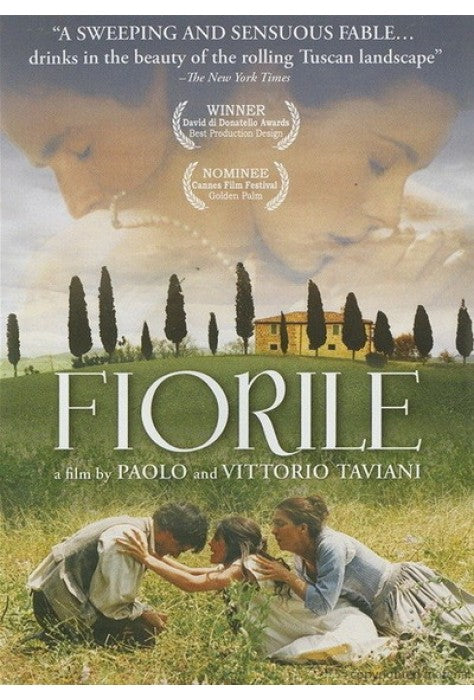
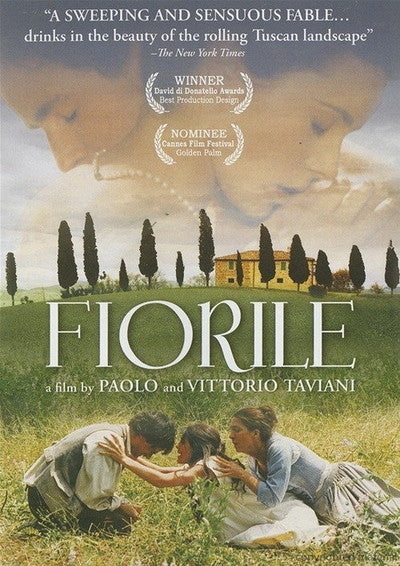
Italian family stories have a specific gravity — the pull of history, the weight of the dead on the living, the sense that what your grandparents did is still happening to you. Fiorile is one of the finest examples of this in Italian cinema. The Taviani brothers structure the film as a story told by a father to his children during a long car drive: the story of the Benedetti family, who have been cursed since the Napoleonic wars, and the gold that started it all. Each generation inherits the consequences of what came before, and the film moves between 1799, the 1940s, and the present with a precision that is breathtaking.
For Italian students, Fiorile is an extraordinary resource. The film spans two centuries of Tuscan Italian — the formal, elevated language of the early 19th century, the more clipped wartime register of the 1940s, and the contemporary spoken Italian of the frame narrative. Students hear Italian across time and register in a single film, with historical context that connects directly to Italian cultural literacy.
📬 Stay in the loop. New lessons added regularly — join the list to hear when your film is available.
Key Themes for the Classroom
- Generational inheritance — The curse isn't supernatural; it's structural. Each generation makes a choice that hurts the next. Ask: È colpa loro, o della maledizione?
- Betrayal and loyalty — The original crime is a betrayal. Every subsequent generation re-enacts it or tries to escape it. The vocabulary of trust, greed, and consequences runs throughout.
- Tuscany and Italian history — The Napoleonic invasion, Fascism, and the present day are all present. Students encounter Italian history through one family's experience rather than through a textbook.
Scene to use: The 1799 opening — Elisabetta meets the French soldier Jean, and they fall in love across the barrier of enemy languages. The Italian and French dialogue is slow enough to follow, emotionally clear enough to feel, and the language of impossible love across enmity is right there on the surface. Ask: Come comunicano Elisabetta e Jean senza parlare la stessa lingua? The question opens a discussion about how communication exceeds language — and then immediately circles back to the importance of language.
Low-prep classroom activity: Have students write a brief family story in Italian — two generations, one choice that changed everything. It doesn't have to be real. The task requires past tense narration, cause-and-effect connectives (perché, quindi, di conseguenza), and at least one character who made a mistake for understandable reasons.
What to listen for: The film's frame structure — a father telling his children the family story during a car drive — creates two layers of Italian: the contemporary narrating voice and the historical enacted voices. The distinction between them is a language lesson in itself. Ask students to identify one moment where the narrating Italian and the historical Italian feel different. Then: what makes them different? Vocabulary? Rhythm? Sentence structure? The analysis develops the metalinguistic awareness that distinguishes advanced from intermediate language learners.
The full Italian lesson plan for Fiorile is ready at filmarobics.com/products/fiorile — $29.95.
Students walk away from Fiorile having heard Italian across two centuries of history — and having thought seriously about what we inherit from the people who came before us.
The full Italian lesson plan for Fiorile is ready at filmarobics.com/products/fiorile — $29.95.
📬 Stay in the loop. New lessons added regularly — join the list to hear when your film is available.
Students walk away from Fiorile having heard Italian across two centuries of history — and having thought seriously about what we inherit from the people who came before us.