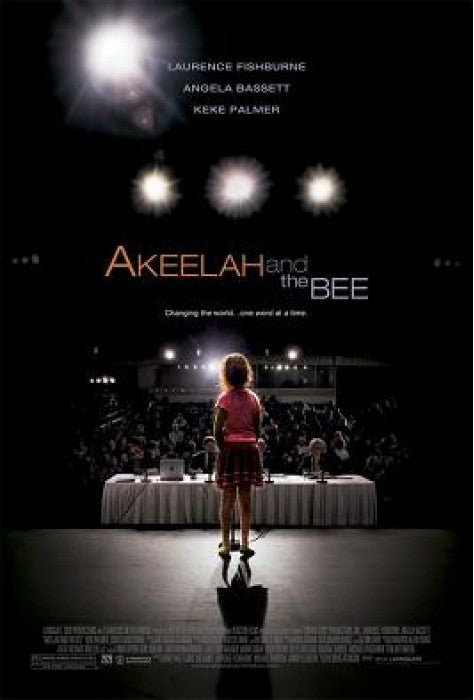
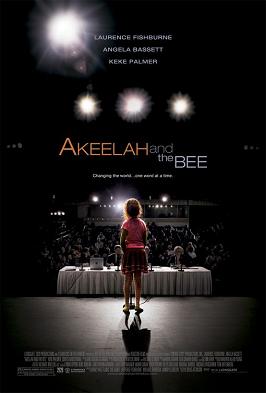
The spelling bee is, at bottom, a language test under pressure — and every ESL student in your class knows exactly what that feels like. Akeelah and the Bee makes that experience visible and gives it a face: Akeelah Anderson, eleven years old, from South Los Angeles, who turns out to have a gift for words she wasn't supposed to have because of where she comes from. The film is about spelling, but it's really about who gets to own language and what it costs to claim it.
For ESL students, the film operates on multiple levels. Akeelah's journey is explicitly about words — their roots, their meanings, their origins in Greek, Latin, and Arabic — which makes the film a live vocabulary lesson. But more than that, it's about what happens when a student who sounds different from the dominant culture walks into a competition built for people who sound like something else entirely, and wins anyway. For students who are learning English as a second language, that story lands.
📬 Stay in the loop. New lessons added regularly — join the list to hear when your film is available.
Key Themes for the Classroom
- Language as power and identity — Akeelah speaks differently at school than she does at home, and she's challenged about it by both communities. Ask: Should she code-switch? Is it a betrayal or a strategy? This question has no clean answer and generates real discussion.
- Community and individual achievement — Dr. Larabee quotes Marianne Williamson early in the film: "Our deepest fear is not that we are inadequate." The quote becomes a community chant by the end. Ask students what changes when that message goes from individual to collective.
- Word roots and etymology — The film is a natural platform for teaching prefixes, suffixes, and etymology as strategy. Students who watch Akeelah work through unknown words start applying the same thinking.
Scene to use: Akeelah at the regional spelling bee, facing a word she's never seen before. She closes her eyes, spells it on her thigh, reaches back through etymology, and gets it right. The moment is wordless but not speechless — it's the fullest possible demonstration of what knowing language actually means. Use it to discuss: what strategies is she using? Which ones can students use in English?
Low-prep classroom activity: Give students five English words with clear etymological roots (e.g., telescope, biography, thermometer, microphone, democracy). Have them break each word into its parts, define each part, and guess the meaning before checking. Then: have them invent a new English word using two of those roots and define it. The game surfaces the structural logic of English vocabulary.
What to listen for: Akeelah navigates multiple Englishes throughout the film: the South Los Angeles African American English she speaks at home, the more formal Standard American English required for the bee, and the registers in between. The coaching relationship with Dr. Larabee — who also navigates his professional English and his community English — models exactly the code-switching that ESL students themselves practice. Ask students: When does Akeelah change how she speaks, and why? The answer teaches students that code-switching is a skill, not a compromise.
The full ESL lesson plan for Akeelah and the Bee is ready at filmarobics.com/products/akeelah-and-the-bee — $29.95.
Students walk away from Akeelah and the Bee having learned that English belongs to everyone who learns it — and having seen what claiming it looks like when the stakes are real.
The full ESL lesson plan for Akeelah and the Bee is ready at filmarobics.com/products/akeelah-and-the-bee — $29.95.
📬 Stay in the loop. New lessons added regularly — join the list to hear when your film is available.
Students walk away from Akeelah and the Bee having learned that English belongs to everyone who learns it — and having seen what claiming it looks like when the stakes are real.