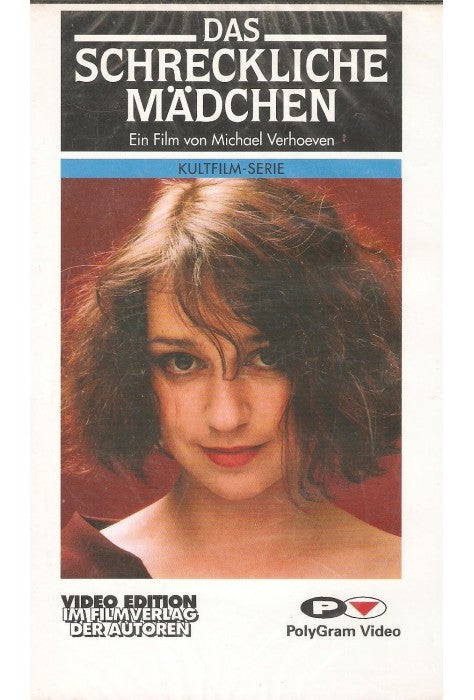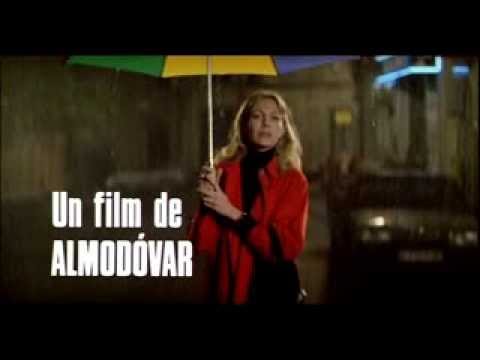
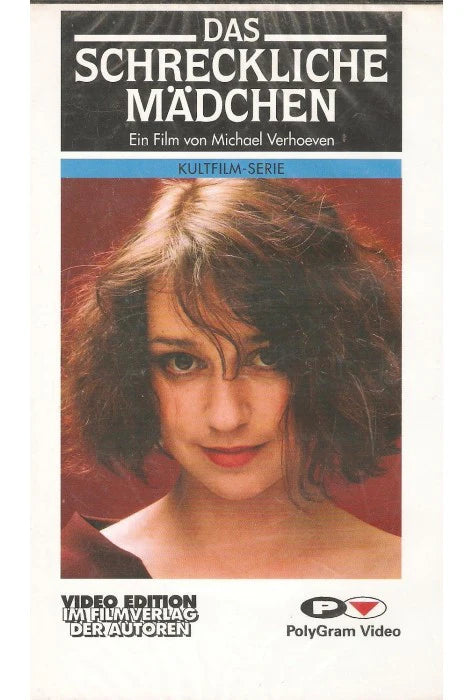
Sonja is a good student in a Bavarian town. She wins an essay competition and decides to write her prize-winning essay on the Nazi period in her own town — because she's been told there isn't much to find. There turns out to be quite a lot to find. And the town, which has spent forty years not finding it, does not thank her. Michael Verhoeven's Das Schreckliche Mädchen (The Nasty Girl, 1990) is based on the true story of Anna Rosmus, and it is one of the funniest, most structurally inventive German films about collective memory available to a classroom. It is also genuinely important: a film about what communities do with their past when the past is uncomfortable.
For German students, the film offers contemporary Bavarian German in a range of registers — Sonja's increasingly confident public speech, the local officials' evasions, the archivists' obstructions. The language of bureaucratic resistance is on full display and explicitly teachable: students learn how German institutions say "no" without saying no, which is a real and learnable register. The film's structural inventiveness — mixing documentary footage with acted scenes, breaking the fourth wall, using theatrical settings — keeps it dynamic throughout and gives students multiple entry points.
📬 Stay in the loop. New lessons added regularly — join the list to hear when your film is available.
Key Themes for the Classroom
- Collective memory and selective forgetting — The town has collectively decided not to know its own history. Ask: Warum will die Stadt nicht über die Nazizeit sprechen? Is there a difference between forgetting and choosing not to remember?
- Civic courage — Sonja keeps going despite serious social and professional consequences. Ask: Was motiviert Sonja, weiterzumachen? Students debate whether her persistence is heroic, obsessive, or both.
- Institutions and individuals — The town's institutions protect the town's memory. Ask: Welche Institutionen versuchen, Sonja zu stoppen? Students map the mechanisms of institutional resistance in the film.
Scene to use: Sonja's first encounter with serious institutional obstruction — when she realizes that the town's archives are not simply incomplete but actively arranged to prevent her research. The German in this scene is the German of official evasion: polite, procedural, and completely designed to produce a dead end. Ask students: Was sagt der Archivar wirklich? What is being said under the formal language? Students translate the bureaucratic German into plain German — a genuinely useful exercise.
Low-prep classroom activity: Students write a brief letter in German from Sonja to the town's mayor — after she has made her findings public — explaining, formally and specifically, what she found and why the town needed to know. She must use formal Sie address, state one fact she uncovered, explain one consequence of the concealment, and make one concrete request. The formal register exercise requires students to write in the German of civic discourse, which is a distinct and learnable register.
The full German lesson plan for Das Schreckliche Mädchen is ready at filmarobics.com/products/das-schreckliche-madchen — $29.95.
Students walk away from Das Schreckliche Mädchen having heard German used for civic courage — and having thought about what it costs to ask questions a community has decided not to answer.
The full German lesson plan for Das Schreckliche Mädchen is ready at filmarobics.com/products/das-schreckliche-madchen — $29.95.
📬 Stay in the loop. New lessons added regularly — join the list to hear when your film is available.
Students walk away from Das Schreckliche Mädchen having heard German used for civic courage — and having thought about what it costs to ask questions a community has decided not to answer.