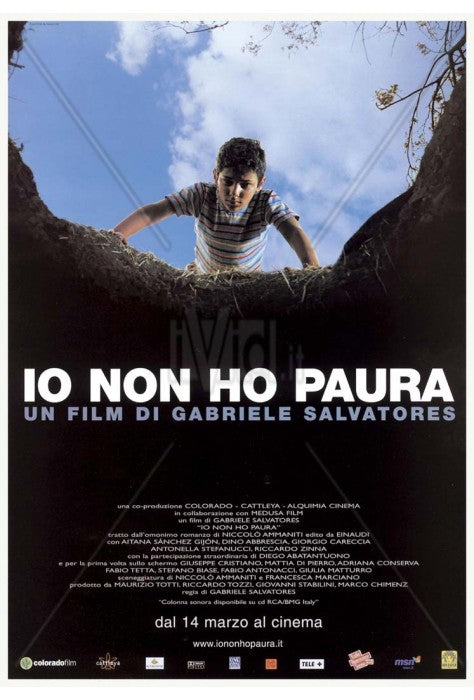
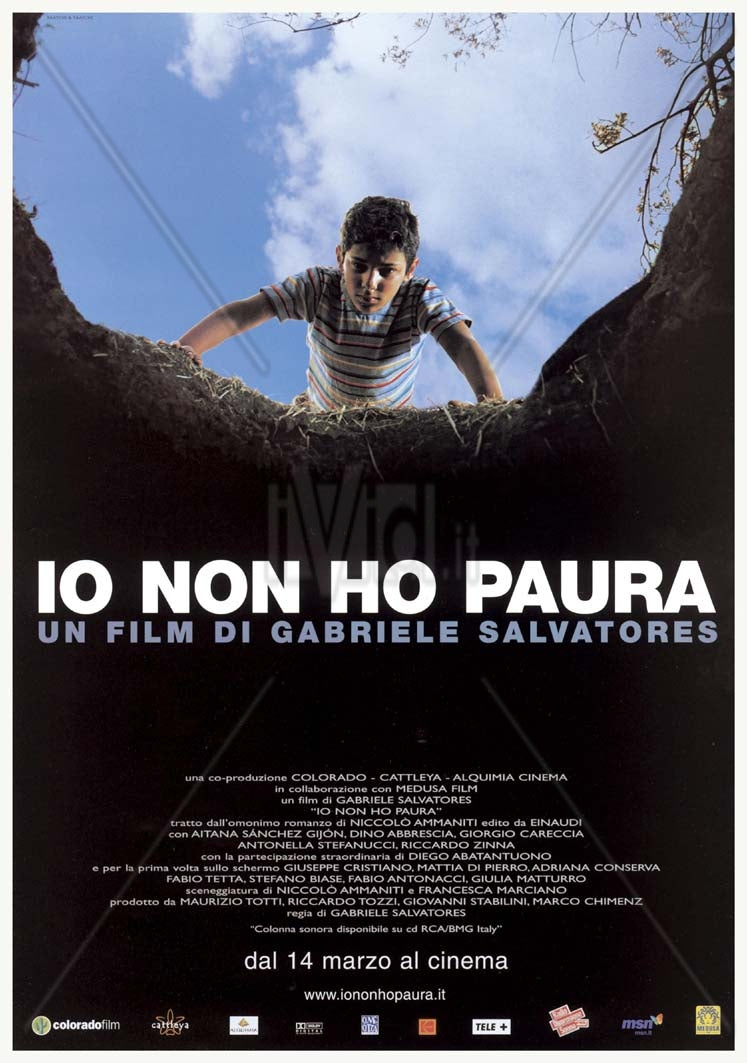
Michele is ten years old. He finds a boy living in a pit in the countryside near his southern Italian village. The boy is a kidnap victim. Michele's father is one of the kidnappers. The film is narrated from Michele's perspective as he tries to reconcile what he knows about his father with what his father has done — and it is written with the clarity and cruelty of a child's moral vision, which sees things adults have learned not to see. Your Italian students will not be able to look away.
Io Non Ho Paura (Gabriele Salvatores, 2003) is set in a remote southern Italian village in 1978 and uses the Italian of childhood and conspiracy — simple sentences that carry enormous weight, adult conversations that a child overhears and must decode. The Italian landscape is both beautiful and threatening, and the film uses it the way the best Italian cinema does: as a moral environment, not just a setting.
📬 Stay in the loop. New lessons added regularly — join the list to hear when your film is available.
Key Themes for the Classroom
- Childhood and adult corruption: Michele cannot understand what his father has done because the vocabulary of adult corruption is not available to him yet. Ask students: at what age does a person become capable of understanding moral compromise? What Italian vocabulary marks that transition?
- Loyalty and the right thing: Michele has to choose between protecting his father and saving the kidnapped boy. Ask students: what would they have done? The answer must be in Italian.
- Southern Italy in the 1970s: The film captures a specific moment in Italian history — the anni di piombo (years of lead) — when kidnapping for ransom was a feature of Italian criminal life. Use this to discuss Italian postwar social history.
One Scene to Use
The first time Michele finds the pit and sees Filippo — looking up from the dark with no language left for what has happened to him — is one of Italian cinema's most quietly devastating moments. After watching it, ask students: what would you say to someone in that situation? Write three Italian sentences: the first thing you would say, and why.
One Low-Prep Classroom Activity
Give students five Italian phrases that Michele uses to make sense of what he's seeing: non capisco, non è possibile, è mio padre, devo farlo, ho paura. They arrange these in the order Michele might think them across the film. The activity is narrative comprehension expressed through grammar: ordering thoughts in Italian requires tense, causality, and progression.
The full Italian lesson plan for Io Non Ho Paura is ready at filmarobics.com/products/io-non-ho-paura — $29.95.
📬 Stay in the loop. New lessons added regularly — join the list to hear when your film is available.
Students who work through this unit leave with the Italian of moral crisis — the language as it sounds when someone is trying to do the right thing without any of the words for what the right thing is.