You have done everything right. You designed a pair activity. You gave clear instructions. You set a timer. You said, in your best target-language voice, "En español, por favor." And then you walked around the room and listened to every pair conduct their conversation in English, at speed, with enthusiasm, about something completely unrelated to your lesson.
This is not a classroom management problem. It is a task design problem. And it has a solution that most teacher training programs do not cover.
Why Pair Work Collapses
The SLA research on collaborative output tasks is actually quite optimistic about what pair work can do. Swain's output hypothesis (1985, 1995) established that producing language — not just receiving it — is essential for acquisition. Collaborative dialogue, in theory, pushes learners to notice gaps in their interlanguage and negotiate toward more accurate production. This is real and it works.
The problem is that output only drives acquisition when learners are operating at i+1. When a pair activity asks students to produce language at a level that feels genuinely risky — where they might not have the words, where the grammar is unstable, where the social stakes of fumbling in front of a peer are high — the rational response is to retreat to L1. English is always there. English is easy. English is what the conversation actually wants to be in.
The affective filter operates at the pair level too. A student who would struggle gamely through a teacher-directed activity will often bail on the same task in a peer context, because the social calculation changes. Being wrong in front of a teacher is embarrassing. Being wrong in front of your actual friend is worse.
I watched this happen so consistently in my first years of teaching that I started to think pair work just didn't work for language learning. It does work. But not when the task is abstract and the students have no shared referent to anchor the conversation.
What Film Changes
This is the structural fix: give students something to talk about.
This sounds obvious. It is not. A pair activity that says "discuss your weekend plans in Spanish" is asking students to generate both the content and the language simultaneously. That is a very high cognitive load. Most students do not have interesting weekend plans, or they have plans they lack the vocabulary to describe, or they simply do not want to share them with their lab partner in a language they are still learning.
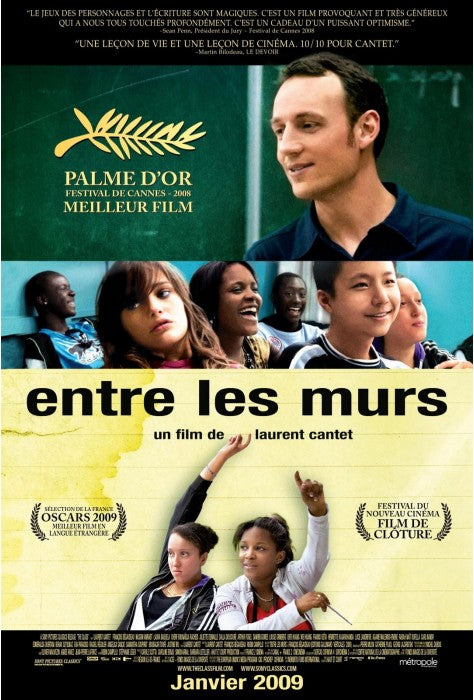
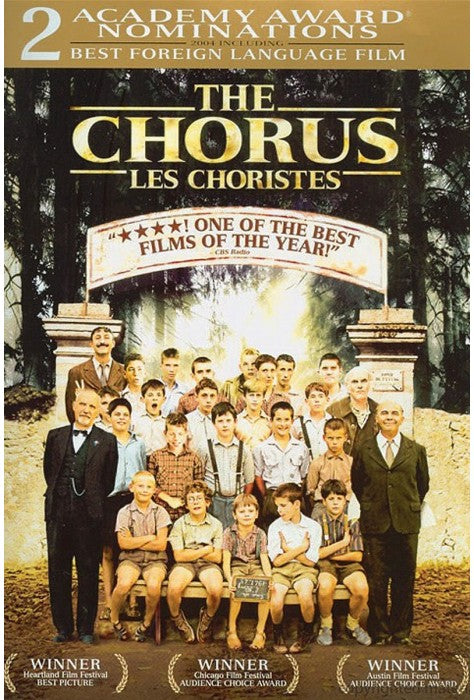
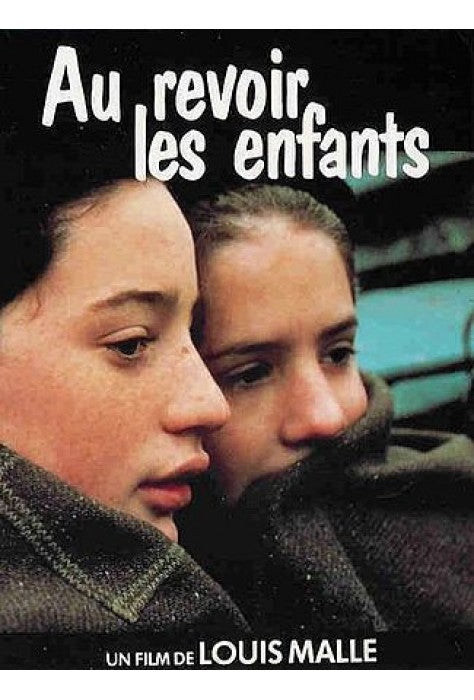
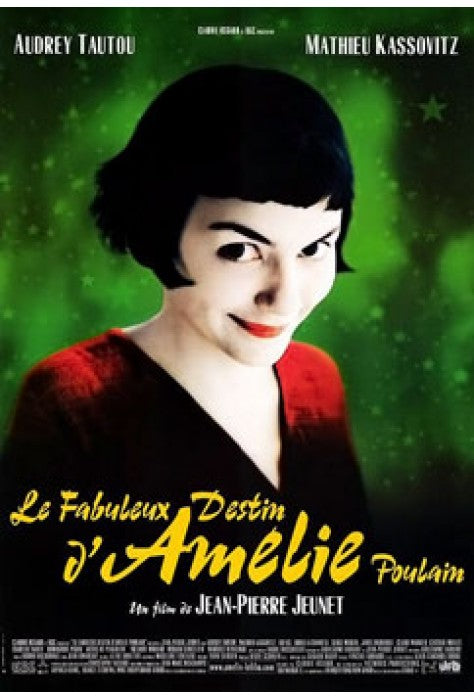
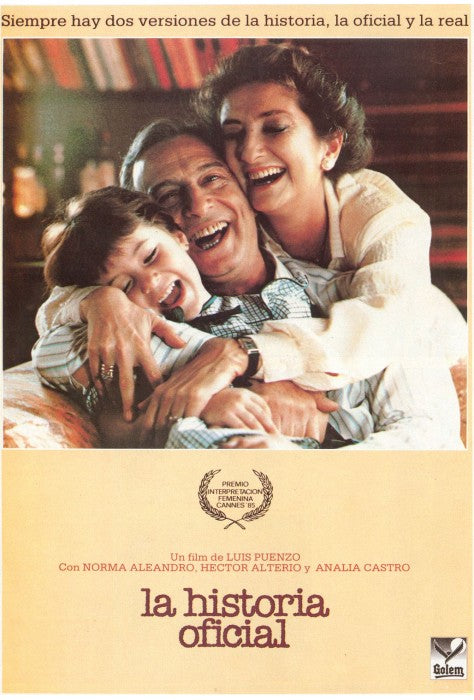
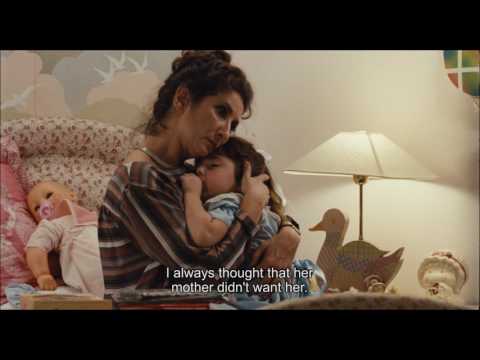
A pair activity anchored to a film scene is completely different. The students have just watched something. They have emotions about what happened. They have opinions about the characters. They have a shared referent that is specific enough to anchor precise language — not "what are your plans" but "do you think he was right to say that to her" or "what does the director want us to think about this family." The cognitive load of content-generation collapses because the content is already there, on the screen.
The research on this is straightforward. Long's interaction hypothesis (1981, 1996) holds that acquisition is driven by negotiation of meaning — moments where a miscommunication or a knowledge gap requires interlocutors to push toward clarity. Pairs anchored to a shared film experience are rich with genuine meaning gaps: who understood the scene differently? Who caught a line the other missed? Who interpreted the character's motive differently? These are real things to negotiate about. A pair activity about hypothetical weekend plans almost never produces genuine negotiation — it produces performance of compliance.
The Three Reasons Pair Activities Fail Without Film
No shared content. When students are generating content and language at the same time, language loses. Content is harder. The path of least resistance is to figure out what you want to say in English and then either say it in English or translate it badly. Neither produces acquisition.
No real stakes. Telling your partner that you like to play video games on weekends carries approximately zero communicative stakes. Arguing about whether a character in a film made the right decision — when your partner has a different reading of the scene — carries real stakes, because you actually disagree about something. Genuine disagreement produces genuine output.
No protection against silence. When a pair activity stalls — and they stall constantly — students have no resource to restart it. With film, the scene is always there. "Wait, did he actually say that, or did I misread it?" is a question that sends students back to something specific, resettable, rewatchable.
What This Looks Like in Practice
The pair activities that work in film units are almost always retrospective and interpretive, not predictive or personal. Three task types that consistently produce real target-language output:
The misread scene. Pick a scene that is genuinely ambiguous. Ask pairs to each write their interpretation independently, then compare. The moment of comparison — "wait, you thought she was lying?" — is exactly the kind of negotiation that Swain says drives acquisition. Students have to produce precise language to defend a specific reading.
The missing line. Pause the film at a high-stakes moment just before a character speaks. Each student in the pair writes what they think the character will say. Then you play the scene. The gap between what they predicted and what actually happened is content for five minutes of real conversation.
The character decision. After a key scene, each student takes a side — one defends the character's choice, one argues against it. The constraint: you cannot use English, and you cannot agree. Students who cannot find the word they want will reach for something close. That reaching is language acquisition happening in real time.
The Practical Reality
None of this eliminates code-switching entirely. Students will drift to English. The question is not whether they will but how often and how long. Pair activities anchored to film reduce drift because there is always something to come back to. The scene is a shared external reference point that is not dependent on either student's willingness to generate content. When the conversation stalls, you can send them back to the screen.
The other thing that helps is keeping the pairs small and the tasks short. Eight minutes of genuine target-language negotiation about something students actually care about is worth more than twenty minutes of nominal pair work in which English was used for fifteen. Frequency beats duration. Genuine negotiation beats compliance.
If you are tired of designing pair activities that collapse and want a unit architecture where the tasks are already structured to produce real output — where the film does the content-generation work and your students spend their energy on language — the FilmArobics Spanish lesson plans are built on exactly this logic. Each $29.95 unit includes structured collaborative tasks designed to keep students in the target language, not because you told them to, but because the task made it possible.