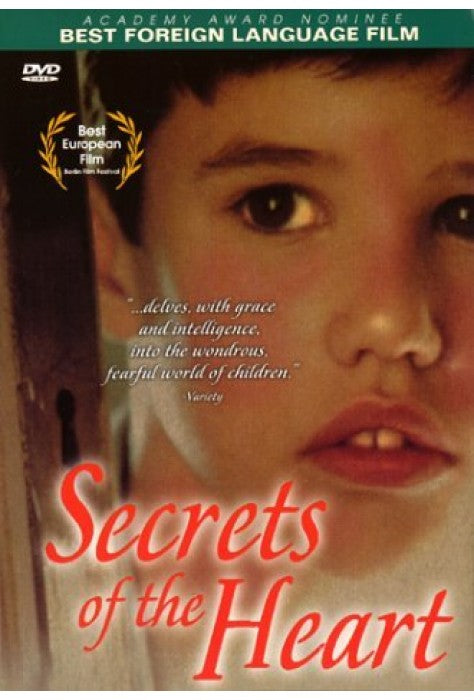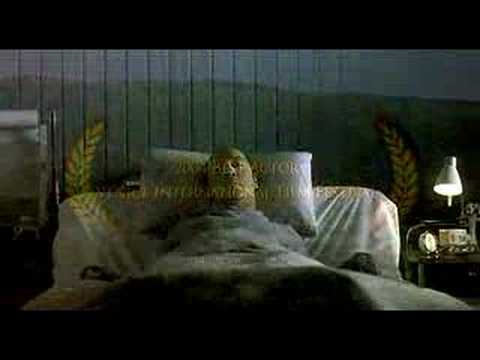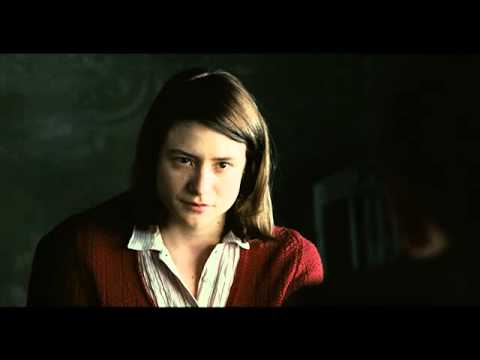

Javi is nine years old in rural Navarre. There is a room in his house that is always locked. His father died before he can remember. Adults speak in half-sentences around him, and the village has things it doesn't talk about. Secretos del Corazón (Secrets of the Heart) is Montxo Armendáriz's 1997 film about childhood in post-Franco Spain — specifically about what it's like to be a child surrounded by a silence that has a history you're not old enough to be told. For a Spanish class, it is one of the most effective available films for teaching how the Spanish Civil War's aftermath lives in language, silence, and family architecture.
The Basque-accented Castilian Spanish in the film is warm and specific — the rural Spain of the 1960s and 70s, with its codes of Catholic respectability and its buried Republican history. Students hear a Spanish that is simultaneously intimate and guarded, and the film's central mystery (the locked room, the dead father) is never fully resolved, which generates exactly the kind of interpretive discussion that makes a language class alive.
📬 Stay in the loop. New lessons added regularly — join the list to hear when your film is available.
Key Themes for the Classroom
- Secrets and family history — The locked room is a metaphor for the things Spanish families didn't discuss after Franco. Ask: ¿Qué secreto guarda la familia de Javi? And then: ¿Por qué no se habla de ello?
- Childhood curiosity and adult silence — Javi's investigations are the film's engine. Ask: ¿Cómo responden los adultos cuando Javi hace preguntas? What language do they use to deflect him?
- Post-Franco Spain — The film is set in the period of transition — Franco is still present in the background. Ask: ¿Cómo afecta la historia política al silencio familiar?
Scene to use: Javi's conversation with his uncle about the locked room — the uncle's careful non-answers, the way he changes the subject without seeming to. The Spanish of adult evasion with children is fully present: warm, indirect, and completely deliberate. Ask: ¿Qué dice el tío exactamente? ¿Y qué no dice? Students identify the gap between speech and information.
Low-prep classroom activity: Students write a brief scene in Spanish between a child and an adult — the child asks a question the adult doesn't want to answer. The adult must deflect three times in three different ways, and the child must find one way to push past each deflection. The constraint produces interactive evasion and persistence in Spanish, which is both grammatically useful and dramatically interesting.
What to listen for: The film's Spanish is the Spanish of a specific silence: post-Francoism, the early 1980s, a rural Navarre community that has spent decades not talking about certain things. The adults speak with the careful indirection of people who have learned that some truths cost too much. Javi's child Spanish, by contrast, is direct and wondering — he asks the questions the adults have stopped asking. Ask students: ¿Qué preguntas hace Javi que los adultos nunca hacen? The comparison reveals how political culture shapes even private language.
The full Spanish lesson plan for Secretos del Corazón is ready at filmarobics.com/products/secretos-del-corazon — $29.95.
Students walk away from Secretos del Corazón having heard the Spanish of family silence — and having understood that what a culture refuses to say is as important as what it says.
The full Spanish lesson plan for Secretos del Corazón is ready at filmarobics.com/products/secretos-del-corazon — $29.95.
📬 Stay in the loop. New lessons added regularly — join the list to hear when your film is available.
Students walk away from Secretos del Corazón having heard the Spanish of family silence — and having understood that what a culture refuses to say is as important as what it says.