Every German teacher has the same scar. You taught the four cases. You made the chart. You color-coded the nominative, accusative, dative, and genitive until the poster was almost beautiful. You drilled. You quizzed. Students got eighty-five percent on the test.
And then a native speaker visited the class, said something perfectly ordinary, and every student in the room looked at you like you had been lying to them about German for three years.
You were not lying. But the chart was not enough — and the research explains exactly why.
What the Chart Actually Teaches
Declarative knowledge and procedural knowledge are different things. Robert DeKeyser's work on skill acquisition makes this distinction clearly: knowing a rule and being able to apply it under real-time processing pressure are fundamentally separate cognitive acts. The chart gives students declarative knowledge — they can state the rule. But applying the accusative correctly while simultaneously tracking meaning, constructing a sentence, managing pronunciation, and following a conversation in real time is a procedural demand that the chart never trained.
Bill VanPatten's input processing research adds another layer. Learners processing a new language attend first to meaning and only secondarily to form. When a German learner is watching a scene unfold — tracking what the character wants, what the stakes are, what the other character's face is doing — they are not simultaneously scanning for accusative markers. The grammatical signal arrives, but it does not register as data. It is noise in the context of the story.
This is not a flaw in the learner. It is the normal architecture of language processing. The question is what to do about it.
What a Scene Gives You That a Chart Cannot
When a character in a film reaches for something, hands something to someone, or has something taken from them — the case relationship is dramatized. It is not abstract. "Er gibt dem Mann das Buch" lands differently when you are watching someone hand a specific book to a specific man under circumstances you care about, as opposed to reading it in a column next to five similar sentences about unspecified transactions between unnamed people.
Emotional salience is not a soft benefit. It is a mechanism. Krashen's affective filter hypothesis identifies anxiety as the primary barrier to input becoming intake. When input arrives embedded in a scene students are emotionally invested in, the filter is lower, and the linguistic signal — including the grammatical signal — has a better chance of entering long-term acquisition. The dative is not just in the sentence. It is in the moment, and the moment matters to the student.
The other thing a scene provides is repetition without repetition. A well-chosen film will use dative constructions dozens of times across its runtime, always in context, always with meaning, always with the visual and emotional scaffolding that helps the form attach to something memorable. No drill sheet achieves this. The drill sheet provides repetition — but it is the same sentence skeleton, with different nouns plugged in, and the monotony is exactly the problem. The brain optimizes away from patterns that carry no new information. The film never runs out of new information.
Three Practical Moves for Case Instruction Through Film
1. The Noticing Task Before the Scene
Before playing a scene heavy in dative constructions — a gift, a conversation between people of different social status, an instruction — give students one sentence: "Every time something is given or said to someone, write down the verb." Not the case. Not the article. Just the verb. You are not asking them to analyze yet. You are asking them to notice that something is happening in a pattern. Schmidt's noticing hypothesis is precise about this: acquisition requires conscious attention to form. But conscious attention does not have to mean grammatical analysis. It can mean flagging the pattern before you name it.
2. The Form-Meaning Connection After the Scene
After the scene, surface what students noticed. Now name it. "You noticed that every time something is given, or said, or shown to someone — there is a pattern in the article before the person's name. Let's look at three examples from what you just watched." This is not grammar instruction in the traditional sense. It is grammatical confirmation — students are not encountering the rule cold, they are having a pattern they already noticed given a name and a frame. That is a very different cognitive event, and retention is significantly stronger.
3. The Output Task Tied to the Scene
Ask students to write three sentences about something that happened in the scene — something given, taken, said, or shown. The constraint: they must use the dative correctly. They have the context. They have the vocabulary. They have the emotional hook of the scene still in working memory. Now they produce. This is Swain's output hypothesis in practice: production forces students to notice the gap between what they want to say and what they can currently say — and that gap is the engine of grammar development. The student who writes "Ich gebe der Frau..." and hesitates over the article is doing the work the chart never made them do.
Which Scenes to Look For
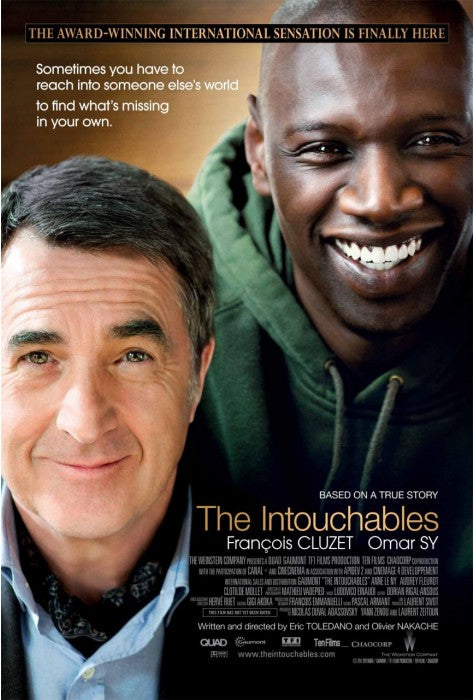
Not every scene is case-rich. The scenes worth selecting for case instruction tend to involve transactions — emotional or physical. Someone receiving news. Someone handing over something valuable. A conversation between a young person and an elder where the social register is clear. Family dinner scenes. Courtroom scenes. Any scene where the characters' relationships to each other and to objects are part of what makes the moment work dramatically — those are your grammar lessons. The drama is not a distraction from the grammar. The drama is the reason the grammar sticks.
It takes time to build a library of these moments. Most German teachers do it through experience, watching films with half an eye on the linguistic content and half on the story. The other option is a lesson plan that has already done that work — identifying the scenes, scaffolding the noticing tasks, and sequencing the output activities so the grammar instruction is woven into the unit rather than bolted onto it.
If you teach German and want that architecture ready to use, the German lesson plan library at FilmArobics is built exactly for this. The case system is not a separate grammar unit. It is inside the film, where it belongs.