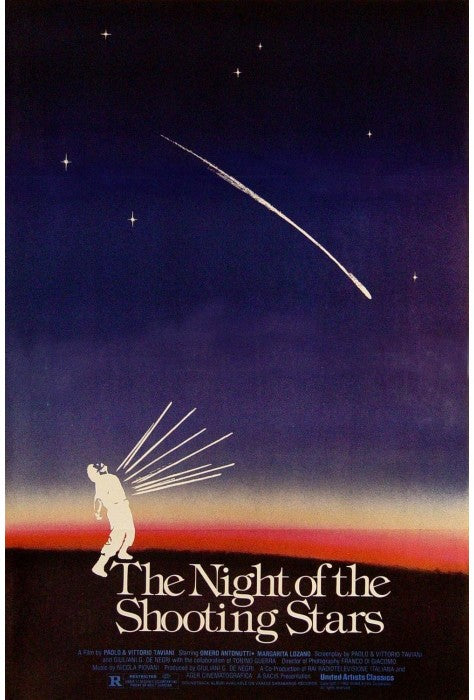
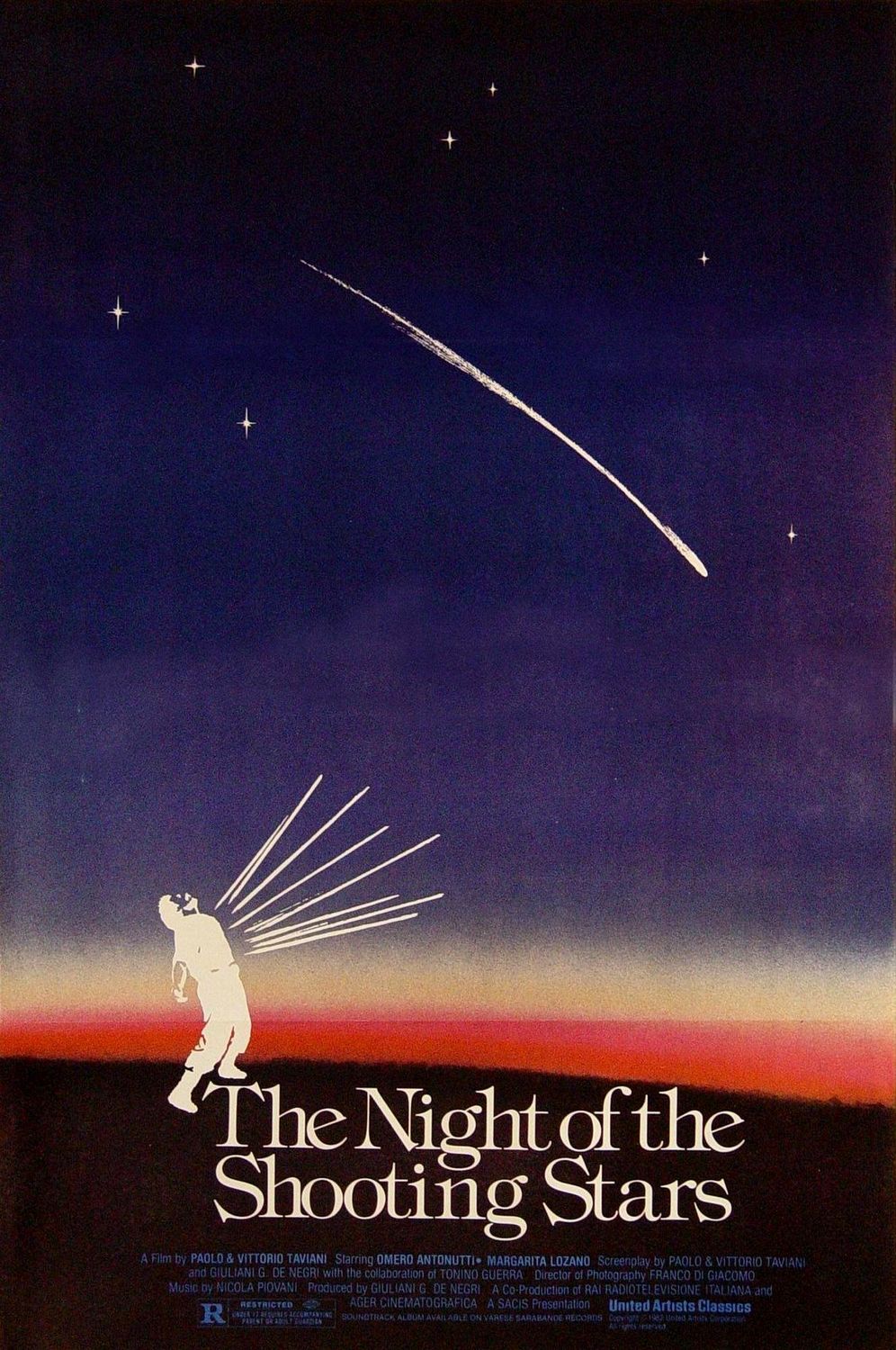
Cecilia is six years old in August 1944, and San Miniato, Tuscany is about to become a war zone. The retreating Germans are in the town; the Americans are approaching; and the local population must decide whether to wait in the cathedral as the Germans have told them to or to try to escape through the fields toward the Allied lines. Sandra and Paolo Taviani tell this story as a memory — an old woman's recollection of the night that ended her childhood — and the film that results is one of the most extraordinary accounts of the Italian Resistance available in classroom materials.
For Italian students, the film is both historical document and literary construction — Cecilia's memory is unreliable in the way all childhood memory is unreliable, and the film uses this to talk about how we construct stories from catastrophic events. The Tuscan Italian is warm and specific, and the scenes of community decision-making — hundreds of people arguing about whether to flee — show Italian collective speech at its most alive.
📬 Stay in the loop. New lessons added regularly — join the list to hear when your film is available.
Key Themes for the Classroom
- Collective decision and individual courage — The choice to flee or to stay is not simple. Ask: Chi ha ragione — quelli che fuggono o quelli che rimangono? Is there a right answer?
- Memory and its construction — Cecilia is not sure what she actually saw and what she invented to fill the gaps. Ask: Perché è importante che la narratrice sia una bambina? What does her unreliable perspective add?
- Italian Resistance and wartime community — The film shows the Resistance not as heroics but as community survival. Ask: Cosa rende qualcuno un resistente in questo film? Is it ideology, or is it something simpler?
Scene to use: The community gathering in the cathedral — hundreds of people, competing voices, the arguments for staying and for going erupting simultaneously. The Italian in this scene is cacophonous, specific, and emotionally immediate: the language of a community making its most important collective decision. Ask: Come decidono le persone in questo momento? And: What makes some voices more persuasive than others?
Low-prep classroom activity: Students write a brief memory in Italian — as old Cecilia, describing one specific moment from the night of San Lorenzo. She must acknowledge what she is certain of, what she has constructed, and one detail so specific it must be real. Past tense, first person, and the specific Italian of memory that knows itself to be imperfect.
What to listen for: The film is narrated as a memory — an old woman telling the story of the night she was six years old. The narrator's Italian is warm, reflective, and marked by the specific vocabulary of memory: ricordo, mi sembra, come se — the Italian of looking back across a long distance. Ask students to identify three memory markers in the narration and use them in their own writing: a brief account of something they remember from childhood, narrated in Italian from the perspective of an older person looking back. The exercise teaches the Italian of retrospective narration — a distinct and learnable register.
The full Italian lesson plan for La Notte di San Lorenzo is ready at filmarobics.com/products/notte-di-san-lorenzo — $29.95.
Students walk away from La Notte di San Lorenzo having heard Tuscan Italian carry the most difficult night in one community's experience — and having thought about how we tell stories about things we only half-remember.
The full Italian lesson plan for La Notte di San Lorenzo is ready at filmarobics.com/products/notte-di-san-lorenzo — $29.95.
📬 Stay in the loop. New lessons added regularly — join the list to hear when your film is available.
Students walk away from La Notte di San Lorenzo having heard Tuscan Italian carry the most difficult night in one community's experience — and having thought about how we tell stories about things we only half-remember.